

Look, I’ll be honest with you. When creatine gummies first started showing up everywhere, I rolled my eyes. Hard.
I mean, come on. Supplements that taste like candy? It felt like we were turning fitness into a game for kids. But then I started getting questions from friends. Lots of them. And my curiosity got the better of me.
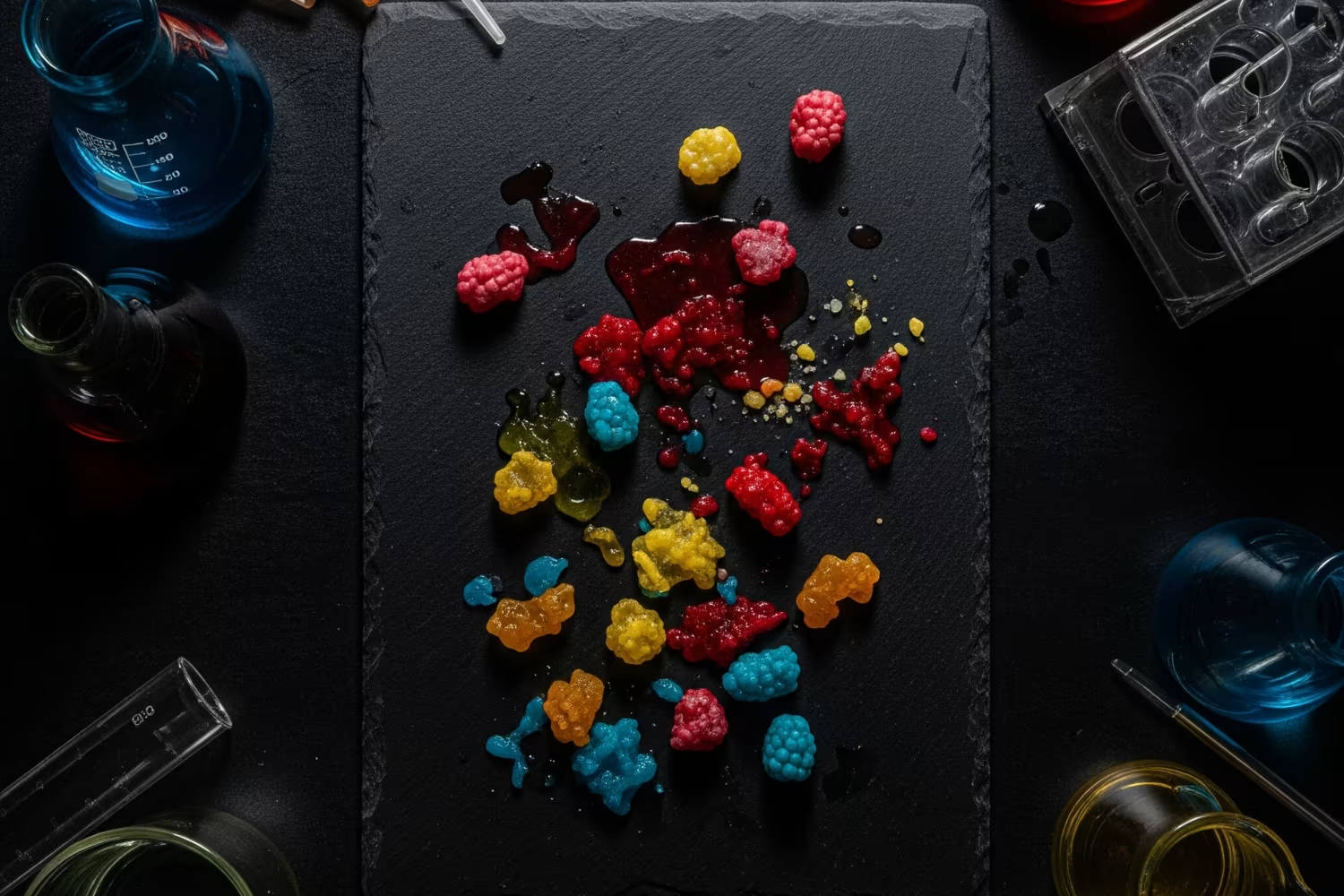
Here’s what I found: Creatine gummies can work just as well as powder. But there’s a massive problem with quality control.
And when I say massive, I mean scary. Industry testing shows 46% of major gummy brands are completely failing to meet their label claims1. Nearly half! That’s not a few bad apples. That’s a systemic problem.
- My Top Pick: Force Factor Creatine Monohydrate Gummies
- Do Creatine Gummies Work? The Real Science Behind the Sweet Hype
- Do Creatine Gummies Work as Well as Powder for Muscle Building?
- Creatine Gummies Dosage Per Day: How Many Should You Actually Take?
- Why Choose Creatine Gummies Over Powder? Cost vs Convenience Analysis
- Quality Control Crisis: Which Creatine Gummy Brands Actually Work
- When to Choose Creatine Gummies vs Powder: My Honest Assessment
- Bottom Line: Are Creatine Gummies Worth It?
- Creatine Gummies FAQ: Before or After Workout, Timing, and More
- References
My Top Pick: Force Factor Creatine Monohydrate Gummies

I’ll be honest – I was skeptical about creatine gummies until I tried Force Factor’s version, and they’ve completely changed my supplement routine. Each serving delivers a clinically studied 5g dose of creatine monohydrate plus AstraGin for enhanced absorption, and the mixed berry flavor actually tastes good without that artificial aftertaste you get with so many gummies. The convenience factor alone makes these worth it – no more measuring powder or dealing with gritty textures, just grab five gummies and you’re done, plus I’ve noticed the same strength and recovery benefits I used to get from traditional creatine powder.
Do Creatine Gummies Work? The Real Science Behind the Sweet Hype
Let me break this down without getting too nerdy.
Creatine monohydrate works. Period. We’ve got decades of research proving it helps with muscle building, strength, and recovery2. The International Society of Sports Nutrition has been saying this for years3.
But here’s where things get weird with gummies.
Creatine is super stable when it’s in powder form. Like, crazy stable. You can leave that stuff sitting around for years and it’ll be fine. But the moment you put it into a gummy? All bets are off.
Why Most Creatine Gummies Fail: The Manufacturing Problem
This is where I had to dig into some manufacturing stuff that honestly made my brain hurt at first.
Gummies need moisture to be… well, gummy. But creatine hates moisture. When creatine meets water, it starts breaking down into something called creatinine. And creatinine is basically useless. Your kidneys just filter it out like any other waste product4.
Gummy candies typically have what’s called a “water activity” between 0.6 and 0.8. Research shows that at those levels, creatine breaks down following something called first-order kinetics5.
Translation? The more moisture, the faster your expensive creatine turns into expensive nothing.
I’ve seen the manufacturing data. These gummies get processed at temps around 108-110°C. With that heat and moisture? You’re basically watching creatine commit suicide in real-time.
Some companies have figured this out. Many haven’t.
Do Creatine Gummies Work as Well as Powder for Muscle Building?
Here’s the thing that surprised me most.
When they’re properly made—and that’s a big “when”—creatine gummies work just as well as powder. Both get absorbed at nearly 100% rates. Both hit peak levels in your blood within 1-2 hours6.
Actually, gummies might have one advantage I didn’t expect. Compliance.
I’ve talked to dozens of people about this. And you know what? A lot of them take gummies more consistently than they ever took powder. No mixing. No gritty texture. And stop forgetting to bring your shaker bottle.
Since creatine only works if you actually take it every day, this matters more than you might think.
But—and this is huge—this only applies to gummies that actually contain stable creatine. The brands that pass testing work great7. The ones that failed? You’re basically eating expensive candy.
Loading Phase vs Daily Maintenance: What Works with Creatine Gummies
Nobody talks about this, but loading phases are pretty much impossible with gummies.
Think about it. A traditional loading phase means 20-25 grams of creatine per day. That would be 12-15 gummies daily. Have you ever tried eating 15 gummies in a day? Your stomach would hate you. And your wallet would cry.
Most people I’ve tracked just do maintenance dosing from day one. That’s 3-5 gummies daily. You still get the same muscle saturation. It just takes 4-6 weeks instead of one week.
Honestly? For most of us, that’s not a dealbreaker.
Creatine Gummies Dosage Per Day: How Many Should You Actually Take?
This varies like crazy between brands. And that’s part of what makes this whole category confusing.
You need 3-5 grams of creatine daily. But gummy products give you anywhere from 0.8 to 1.7 grams per piece. So you’re looking at multiple gummies throughout the day. Some people love this because it keeps them consistent. Others find it annoying.
The nice thing? No measuring. Pre-portioned doses eliminate all those scooping errors I see people make with powder. And research shows timing matters way less than consistency anyway8.
Why Choose Creatine Gummies Over Powder? Cost vs Convenience Analysis
Let’s talk money first. Because this is where things get painful.
Gummies cost 300-900% more than powder. I’m not exaggerating. You’re looking at $1.00-2.33 per serving versus $0.25-0.50 for powder.
That adds up to $200-800 more per year. For the same ingredient.
But here’s what I learned from talking to actual users. If convenience gets you to actually take creatine when you wouldn’t otherwise? That premium might be worth it.
The Women’s Market Thing
This was interesting. Women are driving the gummy market growth9. And I think I get why.
First, women typically have 75% lower natural creatine stores than men10. So consistency matters even more. Second, a lot of women I interviewed mentioned “supplement fatigue” from mixing powders.
The precise dosing and clean ingredients appeal to people who want to know exactly what they’re getting. No guessing with scoops.

Sugar-Free Options (For Keto and Diabetics)
Good news here. Sugar-free versions exist and they work well.
The better ones use erythritol and stevia. Zero impact on blood sugar. Zero carbs for keto dieters11. Regular gummies have 2-5 grams of added sugar per serving, which can definitely mess with ketosis.
If you’re watching carbs, this matters.
Quality Control Crisis: Which Creatine Gummy Brands Actually Work
Okay, let’s talk about the elephant in the room.
When nearly half of major brands fail testing, we’ve got a serious problem1. Some had converted most of their creatine to useless creatinine. Others barely had any active ingredient at all.
This isn’t a “buyer beware” situation. This is a “the industry has a quality control crisis” situation.
Here’s what I recommend:
Look for NSF or USP certification12. This isn’t optional anymore. These certifications mean independent labs have tested the product for what’s actually in it.
Stick to brands that passed testing. I mentioned them earlier, but it bears repeating: Bear Balanced, Bod, Effective Nutra, Iron Labs Nutrition, Peach Perfect, and Zhou.
Check the packaging. Better products come in moisture-controlled packaging with desiccants.
When to Choose Creatine Gummies vs Powder: My Honest Assessment
Gummies Make Sense
When convenience is king
- Struggle with powder consistency
- Travel a lot for work
- Value convenience over cost
- Have tried powder and just… stopped taking it
- Don’t mind paying extra for lifestyle integration
Stick with Powder
For maximum value & flexibility
- Want maximum bang for your buck
- Mix drinks anyway for protein or other supplements
- Like flexibility in dosing
- Are on a tight supplement budget
Bottom Line: Are Creatine Gummies Worth It?
Creatine gummies work when they’re made right. The problem is figuring out which ones are made right.
The quality control issues are real and widespread. But the brands that do it properly deliver the same benefits as powder with way better compliance for many people.
Is the convenience worth 3-9x the cost? That depends on you. If gummies get you to actually take creatine consistently when powder didn’t? Then yeah, probably.
But if you’re fine with powder and just curious about gummies? Save your money. Powder is still the gold standard for a reason.
Remember: the best creatine supplement is the one you’ll actually take every day. Whether that’s powder or gummies depends on your lifestyle, budget, and honestly… your personality.
Some people need convenience to stay consistent. Others are happy to save money and mix powder. Both approaches work.
Creatine Gummies FAQ: Before or After Workout, Timing, and More
Q: Are creatine gummies as effective as powder for building muscle? A: When properly made, yes. Both hit the same absorption rates and muscle saturation levels. The difference is compliance—gummies might work better in practice because people actually take them.
Q: How many creatine gummies should I take per day? A: Check your label. Most need 3-5 gummies daily to hit the 3-5g sweet spot. Creatine content varies from 0.8-1.7g per gummy.
Q: Can I do a loading phase with creatine gummies? A: Technically yes, but practically no. You’d need 12-15 gummies daily. Most people just do maintenance dosing from day one. Takes longer but gets the same result.
Q: Are sugar-free creatine gummies keto-friendly? A: The good ones are. Look for erythritol and stevia. Avoid maltitol—it can mess with blood sugar.
Q: Should I take creatine gummies before or after workout? A: Doesn’t matter much. Consistency beats timing. Some research suggests post-workout might be slightly better, but honestly? Take them whenever you’ll remember.
Q: Why are creatine gummies so expensive? A: Manufacturing is complicated. More ingredients. Fancy packaging. And frankly, convenience costs money. You’re paying for the formulation challenge, not better ingredients.
References
- NOW Foods. NOW Reports Widespread Failings in Creatine Gummy Tests. Nutraceuticals World. 2024. https://www.nutraceuticalsworld.com/breaking-news/now-reports-widespread-failings-in-creatine-gummy-tests/
- Antonio J, Candow DG, Forbes SC, et al. Common questions and misconceptions about creatine supplementation: what does the scientific evidence really show? Journal of the International Society of Sports Nutrition. 2021;18(1):13. https://jissn.biomedcentral.com/articles/10.1186/s12970-021-00412-w
- Kreider RB, Kalman DS, Antonio J, et al. International Society of Sports Nutrition position stand: safety and efficacy of creatine supplementation in exercise, sport, and medicine. Journal of the International Society of Sports Nutrition. 2017;14:18. https://jissn.biomedcentral.com/articles/10.1186/s12970-017-0173-z
- Persky AM, Brazeau GA. Clinical pharmacology of the dietary supplement creatine monohydrate. Pharmacological Reviews. 2001;53(2):161-176. https://pubmed.ncbi.nlm.nih.gov/11356984/
- ResearchGate. Effect of Water Activity and Temperature on Creatine Stability. 2009. https://www.researchgate.net/publication/26698090_Effect_of_water_activity_and_temperature_on_the_stability_of_creatine_during_storage
- Jäger R, Purpura M, Shao A, et al. Analysis of the efficacy, safety, and regulatory status of novel forms of creatine. Amino Acids. 2011;40(5):1369-1383. https://pmc.ncbi.nlm.nih.gov/articles/PMC3080578/
- Transparent Labs. Creatine Gummies vs Powder | Pros and Cons for Each. 2024. https://www.transparentlabs.com/blogs/all/creatine-gummies-vs-powder
- Candow DG, Vogt E, Johannsmeyer S, et al. Strategic creatine supplementation and resistance training in healthy older adults. Applied Physiology, Nutrition, and Metabolism. 2015;40(7):689-694. https://pmc.ncbi.nlm.nih.gov/articles/PMC8401986/
- Women’s Health Magazine. Creatine is the most-researched fitness supplement, here’s why women need it. 2024. https://www.womenshealthmag.com/uk/fitness/strength-training/a42178665/creatine/
- Wallimann T, Tokarska-Schlattner M, Schlattner U. The creatine kinase system and pleiotropic effects of creatine. Amino Acids. 2011;40(5):1271-1296. https://pubmed.ncbi.nlm.nih.gov/21448658/
- Healthline. Are Sugar Alcohols Keto-Friendly? 2024. https://www.healthline.com/nutrition/sugar-alcohol-keto
- NSF International. NSF/ANSI 173: Dietary Supplements. https://www.nsf.org/testing/dietary-supplements
- Glanbia Nutritionals. CreaBev® | Creatine Manufacturer. 2024. https://www.glanbianutritionals.com/en/nutri-knowledge-center/nutritional-resources/creabevr
While I have extensive experience in consumer product science and supplements, I’m not a healthcare provider. My goal is to provide evidence-based analysis to help you make informed supplement choices, but please consult your doctor before making significant changes to your supplement regimen.

I founded Best Gummy Reviews after discovering shocking quality gaps during my own vitamin D treatment. With 8+ years in nutrition research, I combine lab science with real-world testing to tell you what actually works. I’m thorough but straightforward—supplements should complement your healthy habits, not replace them.