
Table of Contents
The difference between a human gummy and a pet gummy isn’t just about flavor. It’s a fundamental gap in safety, dosage, and design. What’s a harmless supplement for you can be a toxic dose for your pet. This is due to ingredients like xylitol, wildly different nutrient needs, and separate manufacturing rules. Understanding these distinctions is the only way to safely support your pet’s health. A critical question many owners have is: are human gummies safe for dogs? The short answer is no.
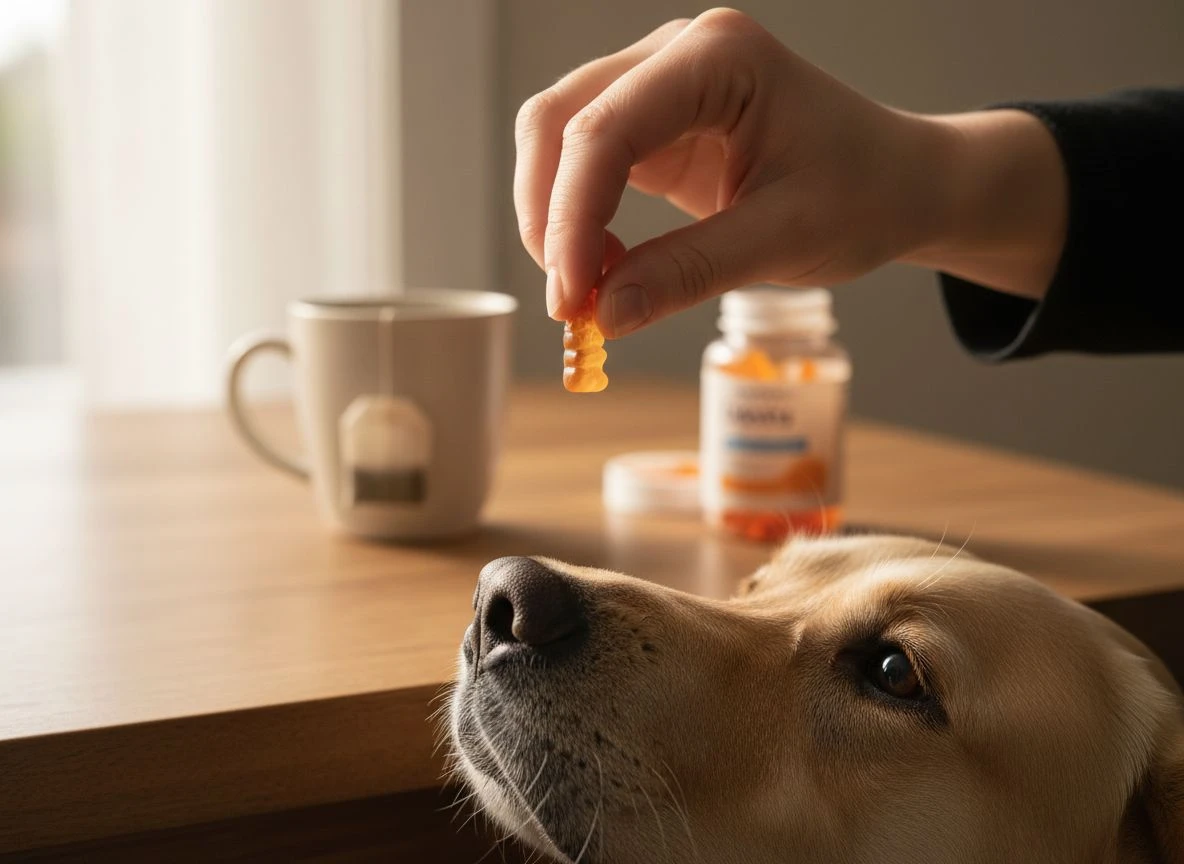
I was at a friend’s house last month and saw it happen. She took a “healthy” vitamin C gummy for herself. Seeing her dog’s hopeful eyes, she started to break one in half. “Wait!” I practically yelped. She was stunned. It was a sugar-free gummy. That one innocent act could have sent her lab to the emergency vet. It was a perfect, heart-stopping example of how our good intentions can backfire. We want to share our wellness routines with our furry family, but it can go terribly wrong.
This isn’t a rare fear. The American Veterinary Medical Association (AVMA) notes that human dietary supplements are a leading source of toxic exposure for pets. That’s the scary part everyone warns you about.
But here’s what most articles don’t give you: the why behind the warning. You also need practical knowledge to confidently choose what’s actually safe. This guide goes beyond “don’t do it.” We’ll dissect the toxic ingredients hiding in plain sight (spoiler: it’s not just xylitol). We’ll explain the profound science of dosage and why a simple “half for you” doesn’t work. We’ll pull back the curtain on how manufacturing and regulation differ completely. Finally, we’ll turn you into a label-reading expert. Let’s build a foundation of knowledge, not just fear.
Toxic Ingredients in Pet Gummies to Avoid
The critical danger isn’t just overdose. It’s the specific ingredients in human gummies that are safe for us but toxic for pets. Xylitol can cause fatal hypoglycemia and liver failure in dogs within 30 minutes. Other sweeteners, flavorings, and even “healthy” actives like alpha-lipoic acid and iron pose severe, specific risks to animal physiology.
Let me tell you about a case from the ASPCA Animal Poison Control Center (APCC) files. A healthy dog found and ate a single sugar-free vitamin gummy from a purse. Within an hour, he was weak and disoriented. His blood sugar had plummeted dangerously due to one ingredient: xylitol. This wasn’t a massive overdose—it was one gummy. That’s how little it takes.

Why Xylitol is Fatal for Dogs
Xylitol is public enemy number one for dog owners, and for good reason. In humans, it’s a low-glycemic sweetener. In dogs, it triggers a rapid, massive release of insulin. This causes blood sugar to crash (hypoglycemia) [2]. Symptoms like weakness, stumbling, and seizures can appear in as little as 30 minutes. Even if the hypoglycemia is treated, xylitol can cause acute liver injury days later. It’s a double-hit toxin. It’s also frighteningly common in “sugar-free” or “diabetic-friendly” human gummies.
Dangerous Sweeteners and Additives in Gummies
But the ingredient scrutiny can’t stop there. The human gummy aisle is a minefield of novel sweeteners. While research is ongoing for pets, ingredients like erythritol and allulose raise red flags until proven otherwise—why risk it? Furthermore, “natural flavors” can hide compounds like garlic or onion powder. These are toxic to dogs and cats. Artificial dyes and preservatives, while not acutely toxic, can cause gastrointestinal upset in sensitive pets.
Toxic Active Ingredients for Pets
Here’s where well-intentioned sharing goes catastrophically wrong. Ingredients beneficial to humans become poison in a pet’s body.
- Iron: Common in prenatal vitamins, iron is highly caustic to a pet’s gastrointestinal tract. It can cause vomiting, bloody diarrhea, and potential organ damage [1, 2].
- Alpha-Lipoic Acid (ALA): An antioxidant for humans, it’s particularly dangerous for cats. Even small amounts can cause severe neurological toxicity, including seizures and tremors [5].
- Vitamin D3: This is a fat-soluble vitamin. Excess D3 isn’t flushed out—it’s stored. In dogs, it leads to calcium imbalances that cause kidney failure and death [6].
Red Flag Ingredients in Human Gummies for Pets:
- Xylitol (Priority #1)
- Alpha-Lipoic Acid (ALA)
- Iron (especially in high doses)
- Vitamin D3 (in high/potent doses)
- Caffeine, Green Tea Extract, Guarana
- “Natural Flavors” (potential hidden garlic/onion)
- Artificial Sweeteners (erythritol, allulose—err on side of caution)
Look, I test gummies for a living. I wouldn’t let my dog near 99% of the human products on my shelf. The formulation gap isn’t a suggestion—it’s a biological imperative. This is a core reason why human gummies are not safe for dogs.
Bioavailability Differences in Pet Gummies
The fatal flaw in giving “just a piece” of your gummy to your pet isn’t just size—it’s biology. Pets don’t process nutrients on a simple weight scale. Their metabolism, organ function, and nutrient conversion rates are species-specific. A dose that supports you can overwhelm their system. This leads to dangerous accumulation, especially with fat-soluble vitamins.
That “half for you” mentality is a dangerous fallacy. Here’s the physiology behind it. Veterinary nutritionist Dr. Susan Wynn points out a foundational difference. Most pet multivitamins are formulated to provide only about 20% of a species’ daily requirement. They act as a dietary gap-filler. Human supplements, in contrast, often deliver 100% (or more) of the human daily value [1]. Giving a pet a fraction of a human dose still rockets them past their intended intake ceiling.
The risk isn’t linear; it’s exponential due to metabolic weight. A dog’s metabolism doesn’t scale evenly with size. A 60-pound dog isn’t just a small human. Their liver and kidneys process compounds at a different, often slower, rate. This is where bioavailability becomes critical. Bioavailability is how much of a nutrient their body can actually use and clear.
Take vitamin D3, common in many human bone-support gummies. In humans and dogs, it’s fat-soluble. This means excess isn’t flushed out—it’s stored in fat tissue and the liver. For a dog, the toxic threshold is shockingly low. Purina notes that this accumulation can directly lead to kidney failure and death [6]. A gummy giving you a healthy boost could push a dog into a toxic range over just a few days.
Here’s a sobering exercise. Calculate your weight versus your pet’s. Now imagine if every nutrient in that gummy was concentrated for a body that size. That’s the reality their organs face. The formulation science isn’t about making a smaller, chicken-flavored gummy. It’s about completely re-engineering the dose for an entirely different physiological universe.
How Pet Gummy Manufacturing Differs
If you think the difference is just flavor and dosage, you’re missing the foundational layer. The very systems that govern their creation are built on entirely different planets. The rules, inspections, and quality seals are not the same. One industry operates on a principle of post-market surveillance (reacting to problems). The other, at its best, is built on proactive verification.
GMP Standards for Pet vs Human Supplements
Both industries have GMPs, but their enforcement and specificity are worlds apart. For human supplements, the FDA’s GMPs set a floor for quality. Compliance is famously inconsistent, relying heavily on facility inspections. The pet supplement world has a powerful, voluntary seal that goes beyond this: the National Animal Supplement Council (NASC) Quality Seal.
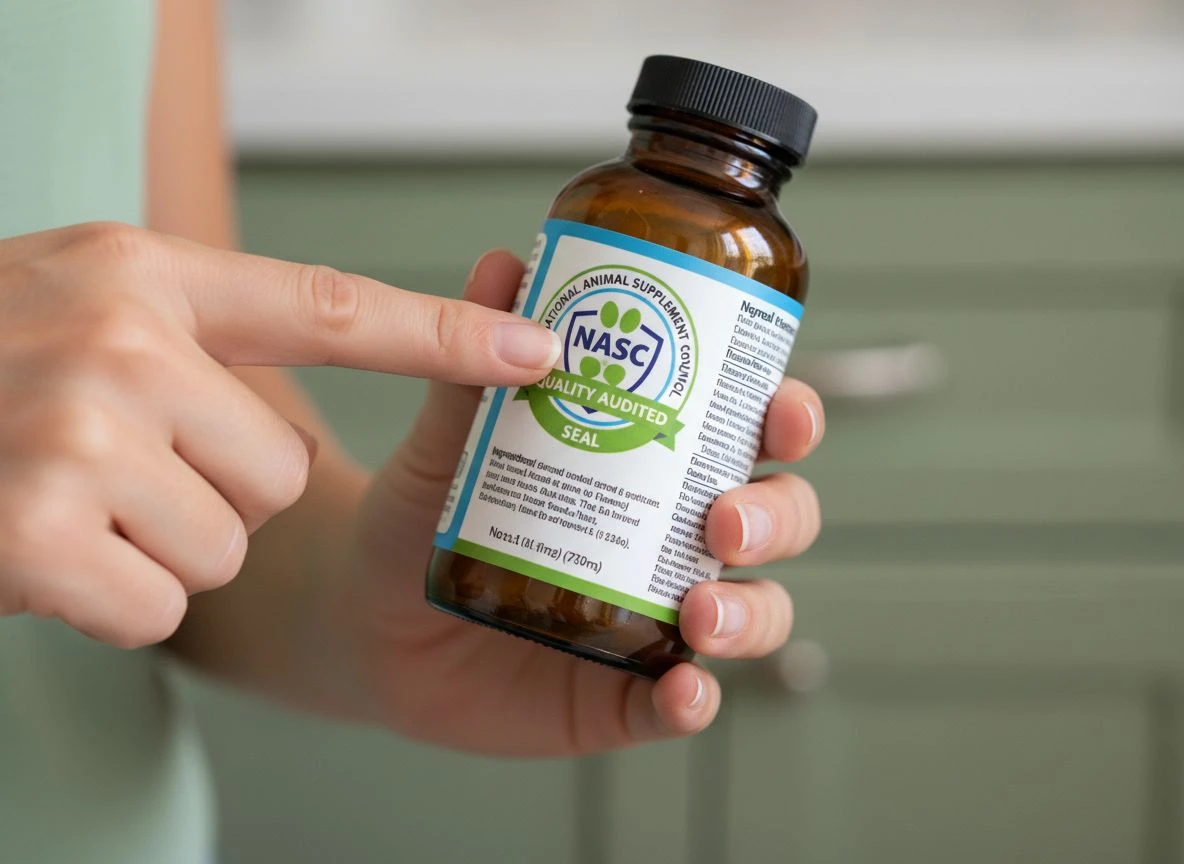
To earn it, a company must pass an audit. They must adhere to strict labeling and adverse event reporting rules. They must also submit products for random independent testing. It’s a proactive badge of verification. It simply has no direct equivalent for your daily multivitamin. When you see that NASC seal, you know the product was made for an animal’s body with rigorous oversight.
AAFCO vs FDA Pet Supplement Regulation
This is where the “feed grade” vs. “food grade” distinction gets real. The FDA regulates human supplements as a category of food. The Association of American Feed Control Officials (AAFCO) provides the model regulations for animal feed, which includes supplements.
A “food grade” ingredient is purified to human-edible standards. A “feed grade” material is purified and monitored for animal consumption. This may involve different contaminant screens relevant to species-specific toxicology. One isn’t universally “better” than the other; they are appropriateness standards. A human-food-grade xylitol is catastrophically toxic to dogs. The right “feed grade” ingredient for a pet supplement is the safe one.
Are Gummy Flavors Safe for Pets?
In human gummies, “natural flavor” is a marketing boon. In pet supplements, it’s a critical safety and efficacy variable. Pet companies must engineer palatability without using onion, garlic, xylitol, or excessive sugars. These could harm an animal. This often leads to using specific proteins or fats as flavor carriers. These can interact with active ingredients, affecting stability.
Furthermore, that irresistible meaty flavor is a double-edged sword. It ensures pets take their supplement. It also makes a bottle of “beef-flavored” joint gummies a potent overdose risk if a dog gets into the whole bag. The flavor formulation is thus a core part of the safety protocol, not just an afterthought.
Digestibility of Pet Gummy Formulas
Beyond the ingredients list, the very structure of a gummy is a critical point of difference. A human gummy is engineered to be stable, chewy, and palatable for us. For pets, that same matrix presents unique risks related to appeal, breakdown, and even physical danger.
You know how I wrote about how a hot car melted my gummies? That’s a perfect example of formulation stability. Human gummies are made with specific gelatin or pectin blends. They hold shape in a range of temperatures a human might encounter—a warm pocket, a sunny kitchen.
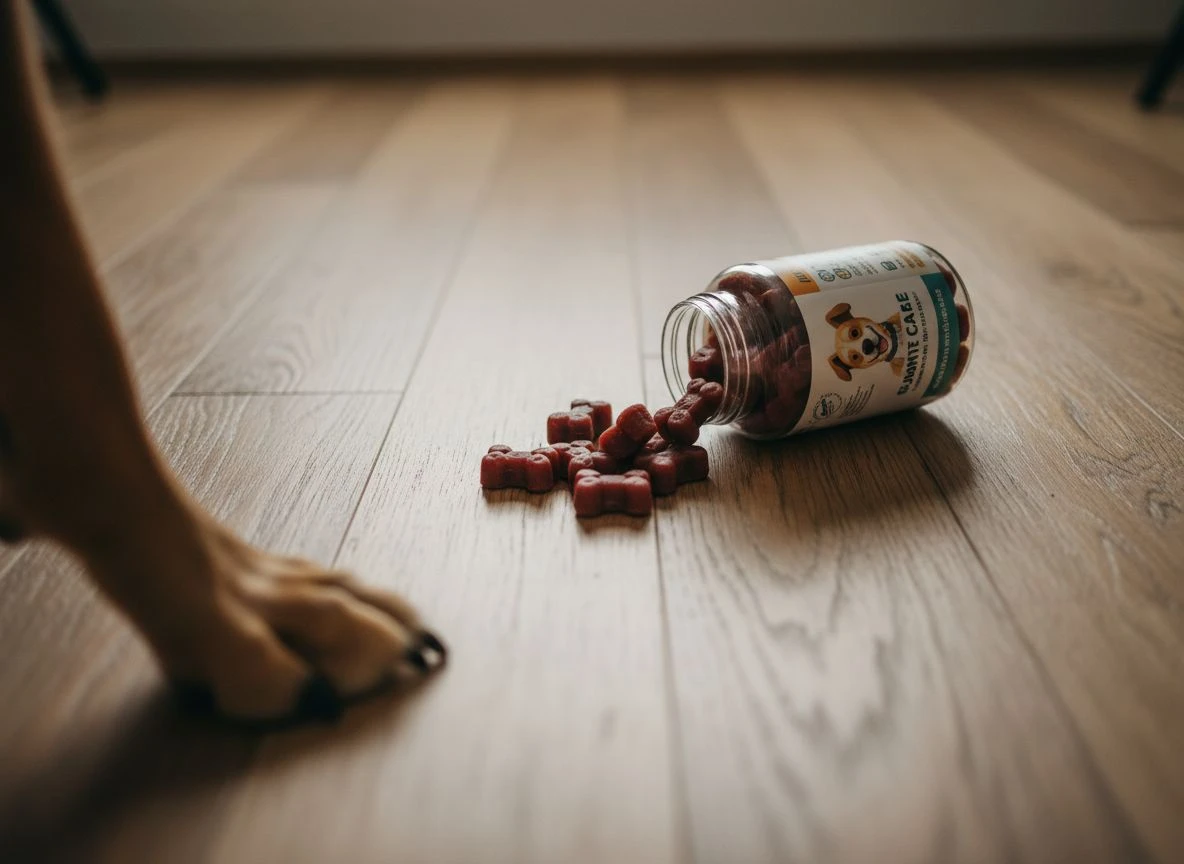
Pet gummies, however, are formulated with different knowledge. They know a dog might stash one in a 98-degree mouth for minutes. They know the bottle could end up in a warm dog bed. The chewable, palatable nature that we love is precisely what increases the overdose risk. If a pet finds the container, they’re designed to be enticing. A dog might happily consume a whole bottle as a tasty snack [5].
This gets into species-specific palatability. We crave fruit flavors; dogs go wild for liver, and cats for fish. Manufacturers use these targeted flavors to make pet supplements appealing only to the intended species. This is a safety feature. The shapes matter, too. A cute heart or bear shape for humans is a potential choking hazard for a dog that might swallow it whole. Pet chews are often designed as larger, more abrasive shapes that encourage chewing.
Finally, there’s digestibility. A canine or feline digestive system has a different pH level than ours. This means the gummy binders (gelatin or pectin) can break down at a different rate. This affects how and when the nutrients are released. A nutrient timed for slow release in a human gut might dump its entire load too quickly in a pet’s stomach. Or it might not break down fully, rendering it useless. The matrix isn’t just a delivery vehicle; it’s a timed-release system calibrated for a specific species’ biology.
How to Read a Pet Gummy Label
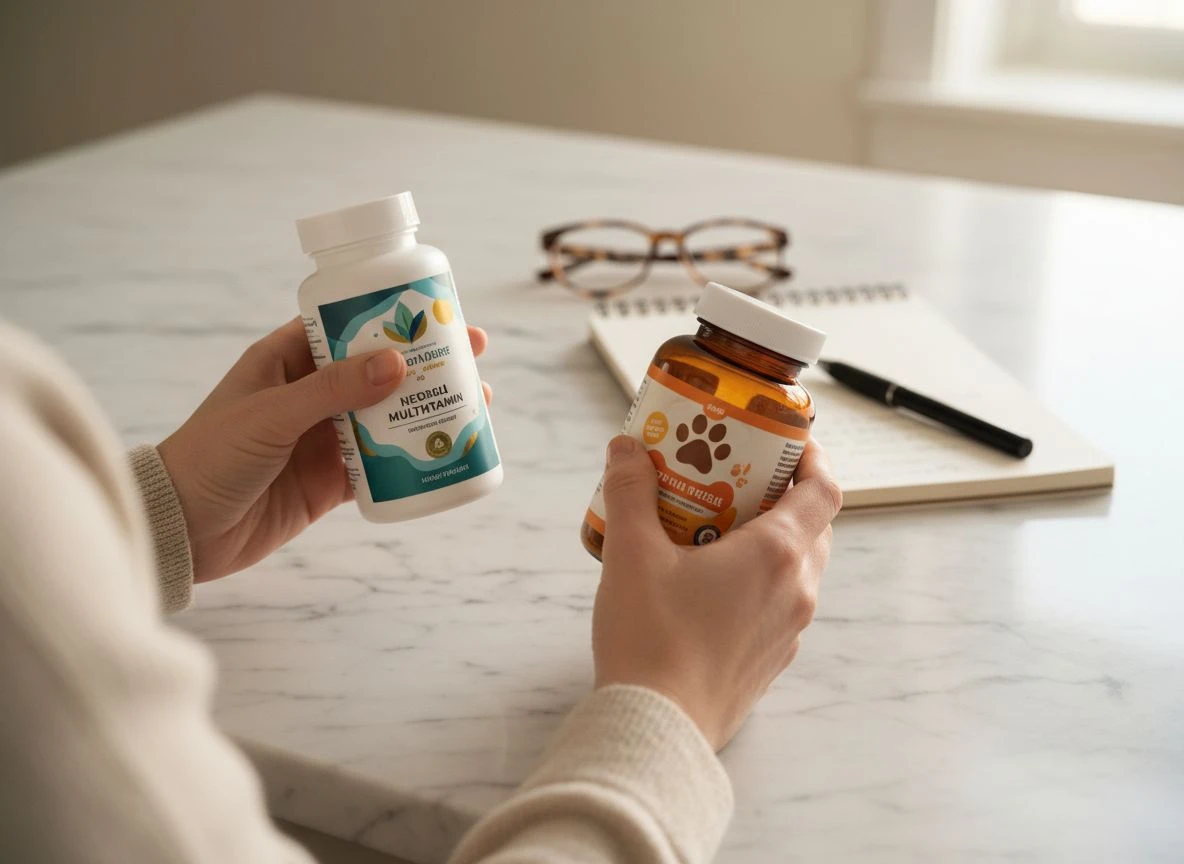
Here’s your quick take: Reading a supplement label correctly is your most powerful tool for pet safety. You’re not just checking the dose; you’re conducting a forensic search for red-flag ingredients and inappropriate concentrations. I’ll show you exactly where to look and what the hidden dangers are.
Alright, go grab a bottle of your gummy vitamins and, if you have one, a bottle of pet supplements. Seriously, go get them. I’ll wait. Having them in hand turns this from abstract advice into a real-life skill.
Scan This, Not That: Your Side-by-Side Guide
| Your Human Gummy Label | Your Pet’s Gummy Label |
|---|---|
| 1. The Supplement Facts Panel (Active Ingredients) | 1. The Guaranteed Analysis / Supplement Facts |
| SCAN FOR: Megadoses (100%+ DV) of the AVMA’s high-risk nutrients: Iron, Manganese, Alpha-Lipoic Acid (ALA), Methionine, and Vitamin D3 [5]. For example, a human multivitamin gummy might contain 18 mg of iron (100% DV), a potentially severe dose for a pet. | SCAN FOR: Much lower concentrations, appropriate for species and weight. A pet formula should provide a fraction of daily needs, not 100%. Look for specific weight-based dosing instructions on the front label. |
| 2. The Inactive Ingredients List | 2. The Inactive Ingredients List |
| SCAN FOR: Sweeteners like Xylitol (an immediate emergency), but also Sorbitol, Maltitol, or “Sugar Alcohols” which can cause digestive upset in pets. Look for artificial colors (Blue 2, Red 40) and flavors that offer no benefit. | SCAN FOR: Species-specific palatants like liver powder or fish oil. Check that sweeteners are pet-safe (e.g., glycerin, cane molasses) and that binders (gelatin, pectin) are simple. Avoid carrageenan or excessive gums. |
| THE RED FLAG CHECKLIST: • Iron (high dose = GI corrosion) • Manganese (neurotoxin in excess) • Alpha-Lipoic Acid (ALA) (especially toxic to cats) • Methionine (can cause acidosis) • Vitamin D3 (fat-soluble, accumulates, causes kidney failure) [5,6] |
THE SAFETY CHECKLIST: • NASC Quality Seal (indicates verified quality) • Species-Specific Claims (“for dogs” not “for pets”) • Clear Weight-Based Dosing (“for dogs 20-50 lbs”) • Contact Info for the Company |
Now, with your labels in hand, go through this checklist line by line. It’s not about good or bad brands—it’s about appropriate formulation. If you find any of those red-flag ingredients or massive doses in your pet’s bottle, it’s time for a serious talk with your vet. This is how you move from worry to informed action. This process definitively answers are human gummies safe for dogs.
Is Human-Grade Safe for Pet Supplements?
Let’s be clear: “human-grade” is one of the most misunderstood—and potentially dangerous—terms in pet supplements. It refers only to the quality and sourcing of the ingredients, meaning they are edible for human consumption. It does not mean the formulation is safe, appropriate, or even bioavailable for your pet. A “human-grade” gummy can still be a toxic dose for a 20-pound dog.
’Human-Grade’ is a Marketing Term, Not a Safety Guarantee.
I see this all the time in CBD, a category I’ve investigated heavily. A company like Pet Releaf points out the obvious: a human CBD gummy contains a concentration for a 150-pound adult, not a 15-pound terrier. Even if the CBD oil itself is pristine “human-grade,” that dosage is a hazard. The gummy also likely contains human-friendly additives. These might be citric acid for tartness, certain natural flavors, or a sugar substitute. They offer zero benefit to a dog and may cause digestive upset.
This is the critical disconnect. “Human-grade” speaks to ingredient purity from a contamination standpoint (a good thing!). But it says nothing about species-specific physiology. The classic example is xylitol—a “human-grade” sweetener that’s lethal to dogs. Or vitamin D: a “human-grade” dose that meets 100% of my daily need could cause kidney failure in my dog in a matter of days.
So, please, see “human-grade” for what it often is: a marketing tactic. It borrows the halo of human food quality. Your focus must be on pet-specific formulation. That means the right dosage, the right nutrient forms, and the right inactive ingredients made for their body. The sourcing standard is just the starting point, not the safety seal.
Are Human Gummies Safe for Pets? FAQ
If you’re skimming, here’s the capsule: Never give human gummies to pets. The risks—from toxic sweeteners like xylitol to wildly inappropriate vitamin dosages—far outweigh any theoretical benefit. If ingestion happens, call your vet or the ASPCA Animal Poison Control Center immediately. Always choose a supplement formulated specifically for your pet’s species and weight.
What should I do if my dog eats a human gummy?
Act fast. Don’t wait for symptoms. Call your veterinarian or the ASPCA Animal Poison Control Center (888-426-4435) immediately. Have the bottle handy to tell them the exact ingredients and dosage. Time is critical, especially with xylitol. It can cause a dangerous drop in blood sugar within 10-60 minutes.
Is “just half a gummy” okay for my small dog?
This is a dangerous game. A human gummy’s dose isn’t linear. That “half” could still deliver a megadose of Vitamin D or iron relative to your dog’s body weight. As Dr. Susan Wynn notes, pet multis often provide only ~20% of a daily requirement, while human versions give 100%. There’s no safe fraction without a vet’s specific calculation. This clearly shows human gummies are not safe for dogs.
Are there any human supplements that are ever safe for pets?
Almost never, and never without explicit veterinary direction. It’s not about the ingredient purity, but the formulation. A “human-grade” omega-3 might be pristine, but the concentration per gummy is for a 150-pound human, not a 15-pound dog. This is why brands like Purina stress that a balanced pet food usually makes supplements unnecessary. Adding human versions risks harmful excess.
How do I choose a high-quality pet gummy?
Look for a product with clear dosing instructions based on your pet’s weight (e.g., “for dogs 20-50 lbs”). Seek out the NASC (National Animal Supplement Council) Quality Seal. This indicates the manufacturer meets specific standards. The ingredient list should be simple, avoiding artificial colors and vague “natural flavors.”
Why are pet gummies often less potent than human ones?
Because they’re designed to complement a complete diet, not fulfill 100% of daily needs. Pets get most nutrients from their food. A pet gummy addresses a specific gap—like joint support—with a species-appropriate, bioavailable dose. A high-potency human gummy, in contrast, would risk toxicity through accumulation. This is especially true with fat-soluble vitamins.
Choosing Safe Pet Gummies for Wellness
Here’s the takeaway: Protecting your pet isn’t about avoiding one scary ingredient. It’s about rejecting the entire premise of human-pet interchangeability. The formulation differences stem from fundamental biology. This includes species-specific metabolism, digestive quirks, and weight-based dosing that make a human “serving” a potential overdose. Safe supplementation rests on three pillars: avoiding known toxins, respecting precise dosage science, and choosing products made under appropriate manufacturing controls.
Don’t let marketing terms like “human-grade” lull you into a false sense of security. True care means using knowledge, not guesswork. So, are human gummies safe for dogs? The evidence is clear: they are not.
Your action plan is clear: Only purchase supplements from reputable brands. They should formulate specifically for your pet’s species and provide clear, weight-based dosing. Look for the NASC Quality Seal or other verifiable third-party testing. And always, always start that conversation with your veterinarian. You have the power to support their wellness—safely and effectively—by choosing the right tools for the job.

I founded Best Gummy Reviews after discovering shocking quality gaps during my own vitamin D treatment. With 8+ years in nutrition research, I combine lab science with real-world testing to tell you what actually works. I’m thorough but straightforward—supplements should complement your healthy habits, not replace them.