
Table of Contents
Here’s the short answer about sugar free gummy vitamins: The sugar or sweetener in your gummy isn’t just about taste. It’s a core part of the formula. It affects texture, shelf life, and even your health. Swapping pills for gummies can help you remember to take them. But many “healthy” gummies sneak in as much sugar as candy. You’re forced to choose between consistency and unwanted additives.
I hit my own wall with traditional vitamins years ago. Let’s call it profound pill fatigue. Gummies were a revelation. Suddenly, taking my supplements felt like a treat, not a chore. But that victory lap was short. As I happily chewed, a nagging thought hit: I’m essentially eating candy every morning. A closer look at the label confirmed it. My “health” product was just a vehicle for sugar.
Turns out, I wasn’t alone. Over 74% of consumers now check sugar content when buying supplements. It’s a smart move. The American Heart Association recommends a max of 25g of added sugar daily for women and 36g for men. A single serving of a gummy can pack 2-8 grams. That adds up fast, especially if you take more than one.
So, we’re stuck in a sweet dilemma. We want the ease gummies offer, but not the metabolic baggage of daily sugar. This is where sugar alternatives come in—stevia, monk fruit, allulose, sugar alcohols. They promise a way out. But it’s a complex landscape of trade-offs between taste, texture, and your teeth.
In this article, I won’t just list sweeteners. We’ll decode the functional chemistry behind them. Why can’t makers just swap sugar for stevia? What’s the real deal with “sugar-free” labels? Let’s look past the marketing and find the smartest choices for your routine.
Sugar’s Hidden Role in Gummy Vitamins
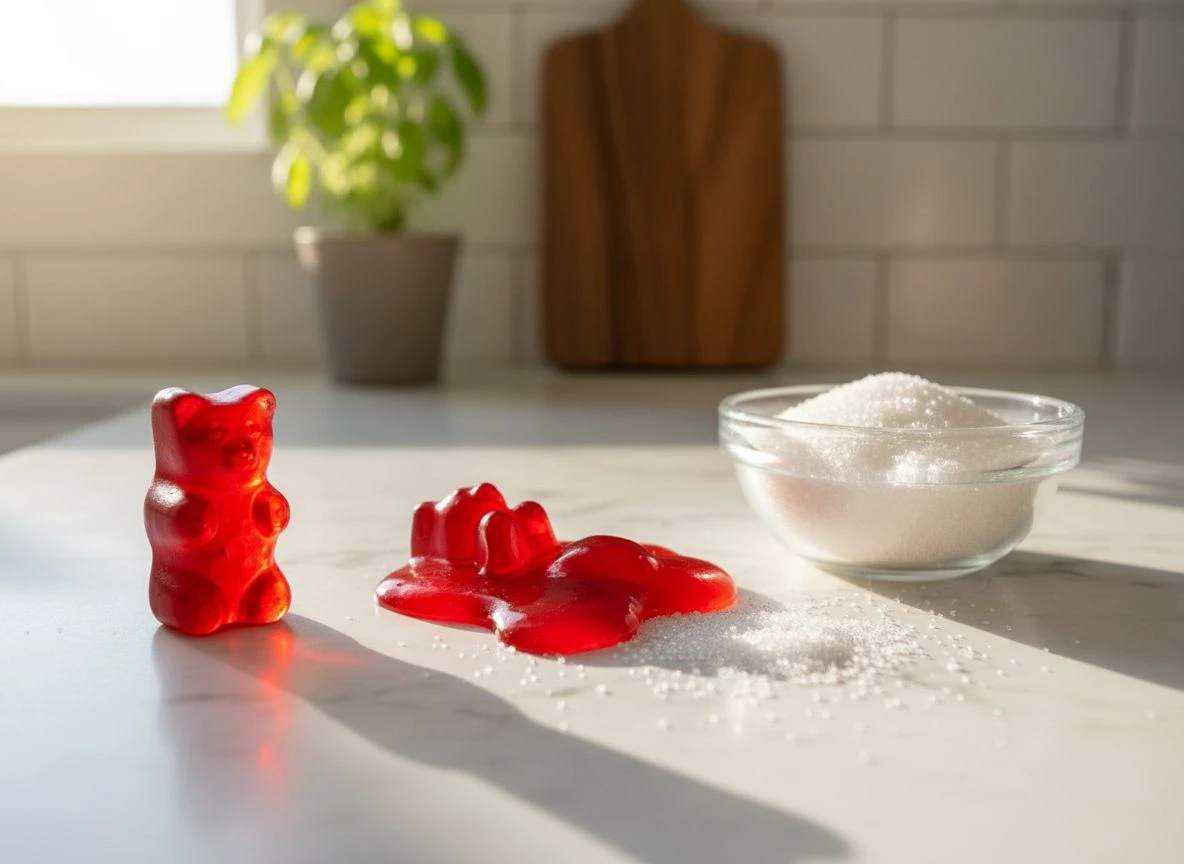
Here’s the core truth: sugar in gummies is a key structural ingredient. It provides the chew, preserves freshness, and adds bulk. Removing it forces makers to solve a complex engineering puzzle, not just a sweetness one.
I learned this the hard way. Early in my testing, I tried making “healthy” homemade gummies. I used just gelatin, juice, and vitamins. The result was a sticky, rubbery mess. It grew fuzzy patches in under a week. It was a spectacular failure. It taught me more than any textbook: sugar is a multi-tasking workhorse.
In a traditional gummy, those 2 to 8 grams of sugar per serving do critical jobs. First, it’s a bulking agent. Sugar crystals give the gummy its substance and structure. Remove it, and you’re left with a flimsy, sticky gelatin blob. Second, it’s a humectant. That’s a fancy word for a moisture-preserver. Sugar binds to water molecules. This keeps the gummy soft and chewy. It stops it from turning into a stale, hard pebble over time. This same property also helps stop microbial growth. It acts as a natural preservative. No wonder my sugar-free experiment molded so fast.
So when a brand swaps to stevia or monk fruit, they only solve the sweetness problem. They still need to replace sugar’s physical functions. This is where other ingredients come in—usually sugar alcohols like erythritol or soluble fibers. They provide the necessary bulk and texture. It’s never a one-to-one swap. It’s a complete system redesign. Understanding this is the first step to decoding your label. “Sugar-free” is just the beginning of the story.
What Sugar-Free Gummy Labels Really Mean
The “sugar-free” label on sugar free gummy vitamins often signals a swap. Brands trade sugar for citric or other acids for flavor. You trade a cavity risk for a direct enamel erosion risk. Over 3,000 sugar-free gummy SKUs are now on the market. This acidic swap is widespread but rarely discussed.
The Problem with Citric Acid
When manufacturers remove sugar, they lose more than sweetness. They lose a key flavor carrier. The result is often a bland or metallic-tasting gummy. To fix this, many brands lean hard on citric, malic, or ascorbic acid. These ingredients provide the bright, tangy “fruit” flavor we expect. They do it without adding sugar grams to the label.
From a formulation perspective, it’s a clever solve. But from a dental health perspective, it’s a problem. As Dr. Zariah Chappell notes, these acids are used to make sugar-free products palatable. You end up chewing a mildly acidic substance daily. It’s a perfect setup for enamel wear.
Are Sugar-Free Gummies Bad for Teeth
Here’s the distinction most people miss. Sugar causes cavities through a secondary process. Bacteria in your mouth feed on it. They produce acid as a byproduct, which then erodes enamel. The damage is indirect.
Acidic gummies apply the enamel-dissolving agent directly. Citric acid chelates calcium. It literally binds to and pulls minerals from the tooth surface. Every chew is a brief acid bath. The Scripps article warns this erosion can be just as harmful. It might be more so, because it’s a guaranteed chemical reaction. It doesn’t depend on oral bacteria.
Identifying High-Acid Gummy Formulas
You don’t need a chemistry degree. Flip the bottle and look at the “Other Ingredients” or “Supplement Facts” panel.
First, scan for acid names: Citric Acid, Malic Acid, Ascorbic Acid (Vitamin C), and Lactic Acid are common. If one is listed in the first 3-5 ingredients, the acid content is significant.
Second, consider the product type: “Sour” or “tangy” flavored gummies are almost always high in acid. This is especially true for sugar-free citrus, berry, or tropical flavors. Probiotic gummies are another culprit. Many strains need an acidic environment for stability.
My practical advice? Don’t just check for “sugar-free.” Check for an acid-heavy ingredient list. If you find one, don’t panic. But do consider rinsing your mouth with water after taking them. Wait at least 30 minutes before brushing to avoid brushing softened enamel.
Here’s a quick action for you: Go look at your current gummy bottle right now. Where does “Citric Acid” fall on the list? That simple check tells you more about its dental impact than the “Sugar-Free” banner at the top ever will.
Bulk Versus Intense Sweetener Differences
Here’s the core mistake most people make. They see stevia or monk fruit on a label. They think the sweetness and the texture come from that one ingredient. In reality, sugar-free gummies rely on a two-ingredient system. Bulk sweeteners (like erythritol) provide the physical structure and mouthfeel. High-intensity sweeteners (like stevia) provide the potent sweetness. One can’t do the other’s job.
Erythritol Xylitol and Allulose Benefits
These are your sugar alcohols and rare sugars. They’re called “bulk” sweeteners because you use them in volumes similar to sugar. Their main job isn’t just sweetness. It’s to physically replace the granules, the chew, and the moisture-preserving qualities of sugar.
- Erythritol is the most common for a reason. It’s about 70% as sweet as sugar. It provides a cool mouthfeel and has virtually zero calories. Our bodies don’t metabolize it. Crucially, it’s less likely to cause digestive distress than other sugar alcohols like maltitol. In my testing, gummies using erythritol hold their shape well. They have a clean, firm chew.
- Xylitol is similar in sweetness to sugar. It’s famous for its dental benefits. It actually inhibits cavity-causing bacteria. However, it’s more expensive. It has a higher glycemic index and laxative potential than erythritol, so you see it less often.
- Allulose is the new star. It’s a “rare sugar” that behaves almost identically to sucrose. It caramelizes, provides bulk, and has no bitter aftertaste. The FDA recognizes it as GRAS. It’s a fantastic bulking solution, though it can be pricier.
Powerful Sweeteners Like Stevia Monk Fruit
These are the headline-grabbers. Derived from plants, they are high-intensity sweeteners. They are hundreds of times sweeter than sugar. You only need a tiny, dust-like amount to match the sweetness of several grams of sugar.
- Stevia (Steviol Glycosides): Extracted from the stevia leaf. Purified forms like reb A and reb M have a clean sweetness profile. Some people still detect a slight licorice-like bitter aftertaste, especially in cheaper extracts. The FDA considers specific high-purity steviol glycosides GRAS.
- Monk Fruit Extract (Mogrosides): My personal preference for taste. It has a cleaner, fruitier sweetness with less bitter baggage. It’s also FDA-recognized as GRAS. The downside? It’s often more expensive for manufacturers.
Here’s the critical thing: if you used only these, you’d have a gummy that’s incredibly sweet. But it would have the texture of a flavorless, flimsy gelatin blob. They provide zero bulk.
Why Sweeteners Work Better Together
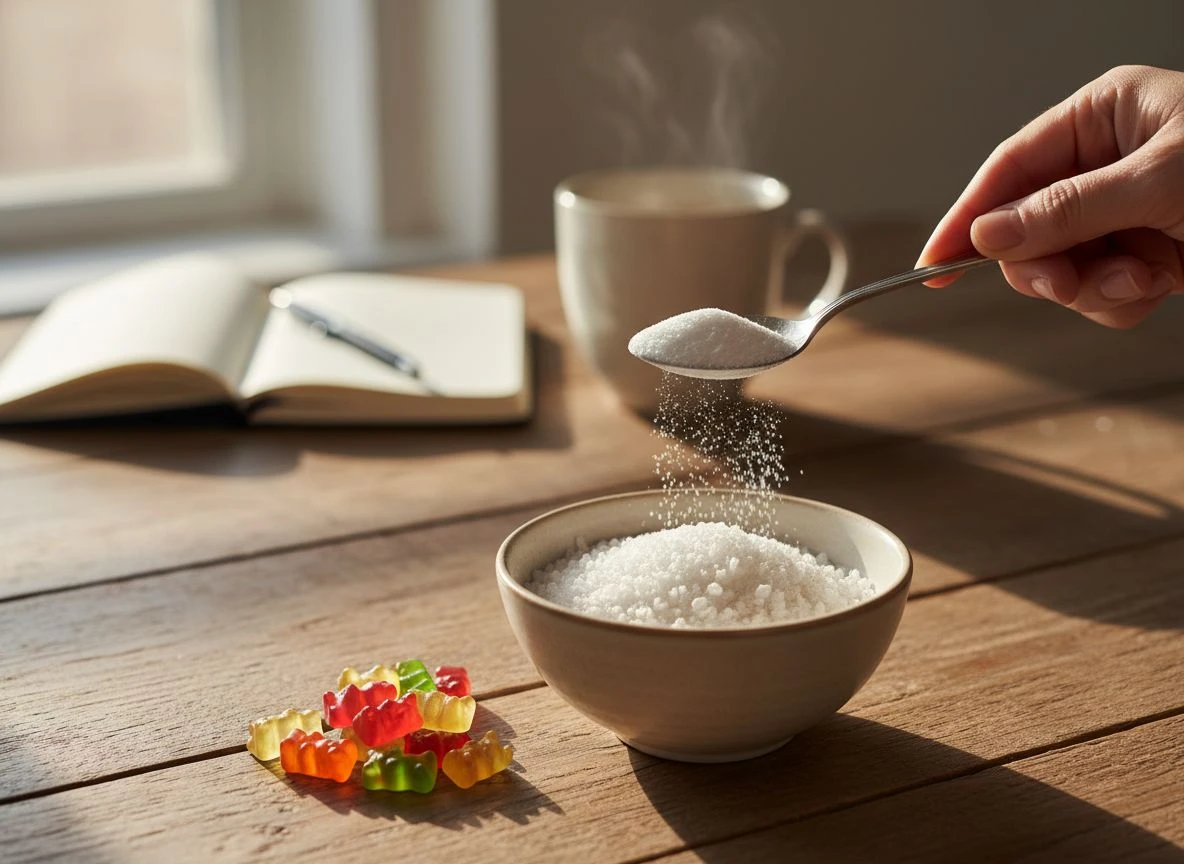
This is the formulator’s secret: synergy. You’ll almost never see a gummy with just stevia. You’ll see “Erythritol and Stevia Extract” or “Allulose and Monk Fruit Extract.”
The bulk sweetener builds the gummy’s body. It provides some baseline sweetness. The high-intensity sweetener is added in a minuscule amount. It dials the total sweetness up to a pleasant, sugar-like level. This combo also helps mask any off-notes from the high-intensity sweeteners themselves. It’s a balancing act. The goal is the right chew, the right sweetness, and no weird aftertaste. When you see that pairing, you know the brand understands this fundamental engineering problem.
Pros and Cons of Each Sugar Alternative
Here’s a quick guide to your “sugar-free” gummy. Stevia and monk fruit provide intense sweetness without calories or blood sugar spikes. Sugar alcohols like erythritol and xylitol build the gummy’s structure but can cause digestive issues. Allulose is the promising newcomer. It mimics sugar’s function almost perfectly.
Let me start with a confession. I once enthusiastically tested a xylitol-sweetened probiotic gummy. I was impressed by its dental benefits. Two servings later, I was… intimately acquainted with its laxative potential. It was a blunt, personal lesson in the “sugar alcohol effect.” It sent me down a research rabbit hole to understand the trade-offs.
This isn’t just academic. The global sugar-free gummy market is projected to hit $1,108.9 million by 2035. It’s fueled entirely by these ingredients. Let’s break them down.
Examining Stevia Sweeteners
- Source: Leaf of the Stevia rebaudiana plant.
- Relative Sweetness: 200-350 times sweeter than sugar.
- Calories & Blood Sugar: Zero calories, zero glycemic impact.
- The Details: The FDA recognizes purified steviol glycosides as GRAS. It’s a powerhouse sweetener. Its potential bitter, licorice-like aftertaste is why you never see it alone. It’s the precision tool, often blended to mask its off-notes.
The Facts About Monk Fruit
- Source: Extract from the Siraitia grosvenorii (monk fruit) plant.
- Relative Sweetness: 100-250 times sweeter than sugar.
- Calories & Blood Sugar: Zero calories, zero glycemic impact.
- The Details: Also FDA GRAS. It’s prized for a cleaner, more sugary taste than stevia. It has less bitterness. Its main drawback is cost. It’s one of the most expensive natural sweeteners. You often see it in premium blends or in smaller amounts alongside erythritol.
Erythritol Deep Dive
- Source: Fermented from corn or wheat starch.
- Relative Sweetness: About 70% as sweet as sugar.
- Calories & Blood Sugar: ~0.24 calories/gram (essentially zero), zero glycemic index.
- The Details: The workhorse of sugar-free gummies. It provides the crucial bulk and texture. It’s less likely to cause digestive distress than other sugar alcohols. Most of it is absorbed in the small intestine and excreted unchanged. However, consuming large amounts can still lead to bloating or nausea for sensitive people.
Xylitol Explained
- Source: Extracted from birch wood or corn cobs.
- Relative Sweetness: Equally as sweet as sugar.
- Calories & Blood Sugar: 2.4 calories/gram (40% less than sugar), low glycemic index (7-13).
- The Details: Famous for fighting cavity-causing bacteria. That makes it a favorite for dental health products. The catch? It’s highly osmotic in the gut. It draws in water—this caused my memorable experience. It has a higher laxative threshold than erythritol. Also, it is extremely toxic to dogs.
Allulose What You Should Know
- Source: Naturally occurs in small amounts in figs and raisins. Typically manufactured from corn.
- Relative Sweetness: About 70% as sweet as sugar.
- Calories & Blood Sugar: 0.4 calories/gram, zero glycemic impact.
- The Details: The most “sugar-like” of the bunch. It behaves like sucrose in manufacturing. It provides excellent texture, browning, and mouthfeel. It doesn’t cause the digestive drama of sugar alcohols. It’s FDA GRAS and popular in newer “clean” formulations. The main downside is it’s still more expensive than erythritol.
One critical gap in the research: We’re still learning about the long-term, daily impact of sugar alcohols on the gut microbiome. They’re considered safe. But we don’t fully understand how consistently feeding certain gut bacteria these compounds affects the overall ecosystem. It’s a space to watch.
So, which is best? There’s no perfect answer. There’s only the best choice for your gut, your taste buds, and your priorities.
Natural Sweetener Marketing Myths Exposed
Here’s the uncomfortable truth. “No added sugar” or “natural sweeteners” on the front label often hides simple sugars in the ingredient list. Clever marketing uses clean-label terms for syrups and concentrates. They still spike your blood glucose. You must decode the actual carbohydrates listed, not just the happy claims.
Look, I get the appeal. A bottle shouting “Sweetened with Organic Tapioca Syrup!” feels inherently better than one listing “Sugar.” But here’s my take after analyzing hundreds of labels: your body’s glycemic response doesn’t care about the marketing poetry. Tapioca syrup, organic cane syrup, and fruit juice concentrate are all concentrated sources of fructose and glucose. They are simple sugars. They will impact your blood sugar.
This is why that statistic is so important. It shows 41% of adults globally prefer sugar-free options. It’s also why brands play this game. They know you’re looking to avoid “sugar,” so they use alternative terms for the same thing.
Grab your gummy bottle right now. Turn it over. Look past the “No Refined Sugar” banner. In the ingredients, do you see any of these?
- Tapioca Syrup
- Organic Cane Syrup/Juice
- Fruit Juice Concentrate (apple, pear, etc.)
- Brown Rice Syrup
If so, you’ve found the hidden sugars. These are the “natural” sweeteners. They let a brand make a “clean label” claim while still delivering a hefty dose of simple carbohydrates per serving. The functional result is nearly identical to table sugar.
Don’t just read the marketing. Decode the ingredients.
How Sweeteners Impact Vitamin Potency
Here’s the point most discussions miss. Your sweetener choice directly impacts your vitamins. It decides if they degrade on the shelf or survive to be absorbed. It’s not just about taste or your gut. It’s about the chemical stability of the active ingredients you’re paying for.
From a formulation perspective, a gummy is a complex, moist matrix. Replacing sugar isn’t a simple swap. Sugar provides structure and acts as a preservative. You need new ingredients to build texture, like soluble corn fiber or sugar alcohols. You need new ingredients to provide sweetness, like stevia or monk fruit. This new matrix changes the gummy’s internal “water activity.” That’s a key predictor of stability.
High water activity can promote microbial growth. But it also accelerates chemical degradation. Many vitamins are vulnerable to breakdown in moist environments. This is especially true for water-soluble ones like B vitamins and vitamin C. This is a core reason behind a staggering ConsumerLab finding. They found 80% of tested gummy vitamins failed label claims or showed significant degradation. The gummy format itself is inherently less stable than a dry tablet.
The bulking agent you choose plays a huge role. Sugar alcohols like sorbitol hold more moisture than soluble corn fiber or allulose. A formulation with high moisture-holding capacity creates a more hospitable environment for nutrient degradation over time. So when you’re comparing sweeteners, you’re comparing different physical environments. Your vitamins must survive there for months. The most elegant, sugar-free system means nothing if it can’t protect the nutrients inside.
Choosing the Best Gummy Sweetener for You
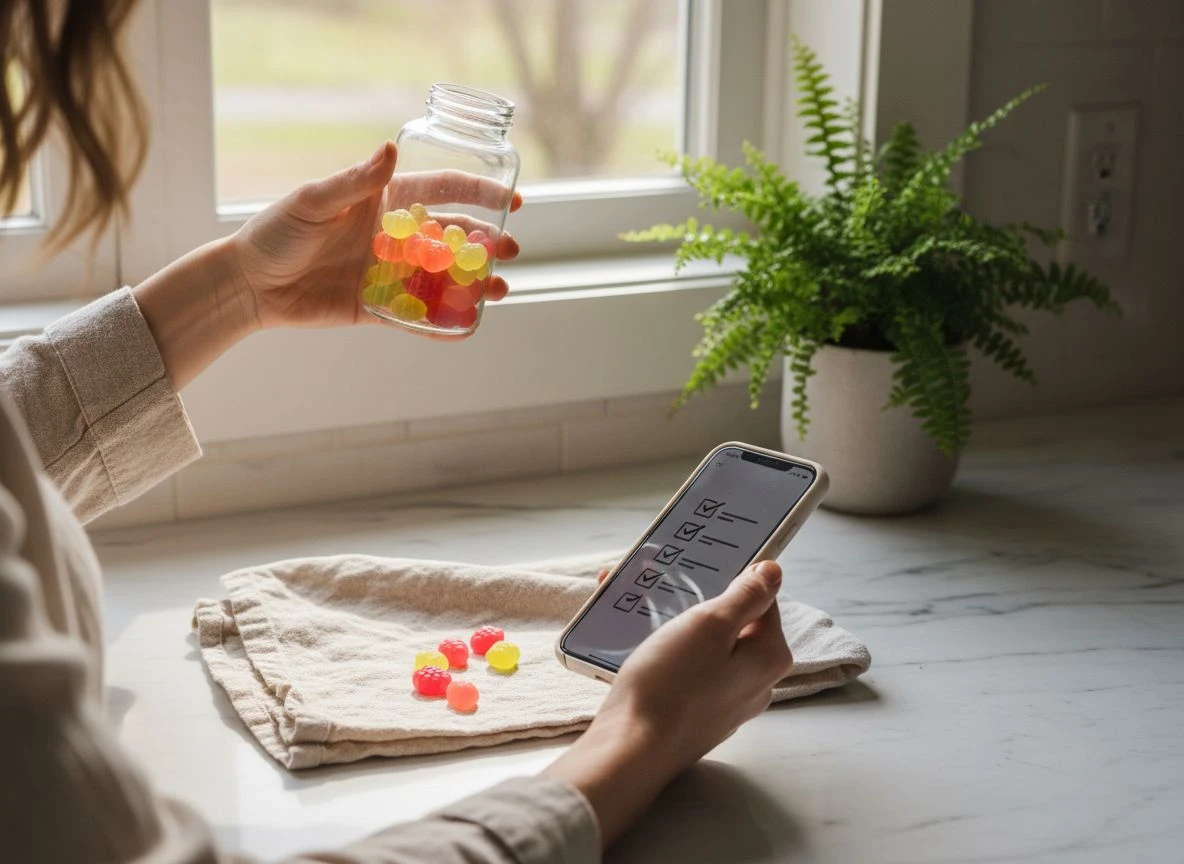
Look, after all this talk, you just want to know what to buy. I get it. Here’s your actionable checklist. Use it to cut through the marketing. Find a gummy that aligns with your health goals, based on the evidence and ingredients.
Your 5-Point Pre-Purchase Checklist:
- Total Sugars & Type: Don’t just look for “no added sugar.” Check the Supplement Facts for Total Carbohydrates and Total Sugars. If it’s over 2-3g per serving, ask yourself if that fits your daily budget. Remember, the American Heart Association recommends maxing out at 25g (women) or 36g (men) of added sugar daily. Then, scan the ingredients. Is the sweetness from tapioca syrup (a simple sugar) or from a blend like erythritol and stevia?
- Acid Content (The Enamel Check): In the ingredient list, find citric acid, malic acid, or ascorbic acid. The closer it is to the start of the list, the higher the concentration. High acid content is the trade-off for many sugar-free formulas. It’s a primary driver of enamel erosion. If it’s in the top 3-5 ingredients, proceed with caution. This is especially true if dental health is a priority.
- Primary Bulking Sweetener: Identify the texture-builder. Is it soluble corn fiber, erythritol, xylitol, or allulose? This tells you about potential digestive impacts. Sugar alcohols like xylitol can cause GI upset in sensitive folks. It also hints at the moisture environment for your vitamins.
- Your Personal Tolerance: Be honest with yourself. Do you have a sensitive gut? Maybe avoid sorbitol and mannitol. Monitoring blood sugar? Prioritize true non-nutritive sweeteners like stevia or monk fruit. Just want the most candy-like experience? You might opt for a small, dose-conscious amount of real sugar. There’s no universally “perfect” choice. There’s only the right one for your body.
- Third-Party Testing for Potency: This is non-negotiable for me. The format is inherently less stable. One analysis found 80% of gummies failed potency tests. Look for seals from USP, NSF, or ConsumerLab on the label. This verifies what’s on the label is in the bottle. It also shows it’s free from contaminants.
With 37% of U.S. consumers now preferring gummies, brands are fighting for your attention. Your best defense is this simple list. Pull it up on your phone next time you’re shopping. A two-minute review beats a month of taking something that doesn’t work for you.
Gummy Sweetener Questions Answered
Here are straightforward answers to the most common questions I get.
- Are sugar-free gummies actually better for your teeth? Not necessarily. They avoid cavity-causing sugar. But many use high levels of citric or malic acid for flavor. This directly erodes tooth enamel. It’s a trade-off: sugar risks decay; acid risks erosion. Check the ingredient list for acids in the top five positions.
- What’s the safest sugar alcohol for sensitive stomachs? Erythritol is generally the best tolerated. It has a higher FDA Acceptable Daily Intake (ADI) than others. It’s absorbed before it reaches the large intestine. That’s where most sugar alcohols like sorbitol cause bloating, gas, and diarrhea. Start with small amounts to test your tolerance.
- Can “natural” sweeteners like stevia spike blood sugar? No. Purified stevia glycosides and monk fruit extract are non-nutritive sweeteners. They provide zero calories. They have no measurable impact on blood glucose levels. This is a key reason they are recognized as safe (GRAS) by the FDA.
- Why do my sugar-free gummies cause bloating? This is almost certainly the sugar alcohols. Ingredients like maltitol, sorbitol, or xylitol pull water into your digestive tract. Your gut bacteria also ferment them, producing gas. If you’re prone to bloating, look for formulas that use soluble corn fiber or allulose as the primary bulking agent instead.
- How do I know if my gummy vitamin is high in acid? Check the ingredient list. Look for Citric acid, Malic acid, or Ascorbic acid (vitamin C). If they’re listed within the first 3-5 ingredients, the concentration is high. The closer an acid is to the start, the more there is. That means greater potential for enamel erosion.
Making Smart Gummy Sweetener Choices
Here’s the bottom line after years of testing. There’s no universally perfect sugar alternative for sugar free gummy vitamins. Each one is a compromise—from stevia to erythritol to allulose. Your job isn’t to find a flawless option. It’s to find the compromise that best fits your body, your health goals, and your taste buds. That’s an informed choice, not a perfect one.
This drive for better options isn’t a niche trend. It’s the market’s engine. The sugar-free gummy vitamin segment is exploding at a CAGR of 8.6%. It’s propelled by over 40% of adults globally preferring sugar-free. The demand is clear. But remember, “sugar-free” is a formulation choice with trade-offs. It means increased acids for flavor, potential digestive effects, and different textures. It’s not an automatic health halo.
For me, the journey was about finding a gummy that delivered nutrients without side effects. I wanted no sugar spikes, minimal enamel risk, and no gut turmoil. It took using that checklist, reading labels, and a few uncomfortable trials. But I found formulas that work.
Let this guide be your tool, not your rulebook. The best sugar free gummy vitamins align their ingredients with your dietary needs, your personal tolerance, and your health priorities. You’ve now got the decoder ring. Go find your match.

I founded Best Gummy Reviews after discovering shocking quality gaps during my own vitamin D treatment. With 8+ years in nutrition research, I combine lab science with real-world testing to tell you what actually works. I’m thorough but straightforward—supplements should complement your healthy habits, not replace them.