

Table of Contents
Sugar-free gummies swap sugar for sugar alcohols like maltitol and sorbitol to cut carbs and calories. But there’s a hidden cost. Your body doesn’t absorb these sweeteners well. They pull water into your colon and ferment in your gut. This can lead to serious bloating, gas, and a strong laxative effect. Honestly, the fix sometimes feels worse than the original problem. This is the reality of sugar alcohols in gummies.
I learned this the hard way. Years ago, I thought I was making a smart choice. I ate a big serving of a new “sugar-free” vitamin C gummy. The brand used maltitol. The next few hours were… a lesson. I spent the afternoon full of regret, getting to know the power of a sugar alcohol firsthand. My gut felt like a volatile science experiment.
I’m not alone. You’ve probably heard the viral stories about certain sugar-free gummy bears causing digestive chaos. Those famous 2016 Amazon reviews weren’t just funny—they were a mass public case study. But that story is old news. It’s become the lazy hook for every article on this.
Look, I get it. If you’re watching sugar, managing diabetes, or just trying to be healthier, “sugar-free” feels like the right move. You should be able to enjoy a gummy without digestive drama.
This guide goes way beyond that old gummy bear tale. We’ll unpack the real science of what happens in your gut. I’ll give you a clear “tolerance scale” to spot the worst offenders. We’ll talk about the hidden danger of “stacking” that most people miss. And crucially, I’ll share a recovery plan for when things go wrong.
Here’s your survival guide for sugar-free sweets. We’ll start with the messy truth of what sugar alcohols do inside you. Then, we’ll break down which ones are gut-friendly versus gut-aggressive. Finally, we’ll talk about reading labels and how to calm your system down. For more on gut-supportive supplements, explore our guide on the best digestive enzyme gummies.
Do Sugar Alcohols in Gummies Cause Digestive Issues?
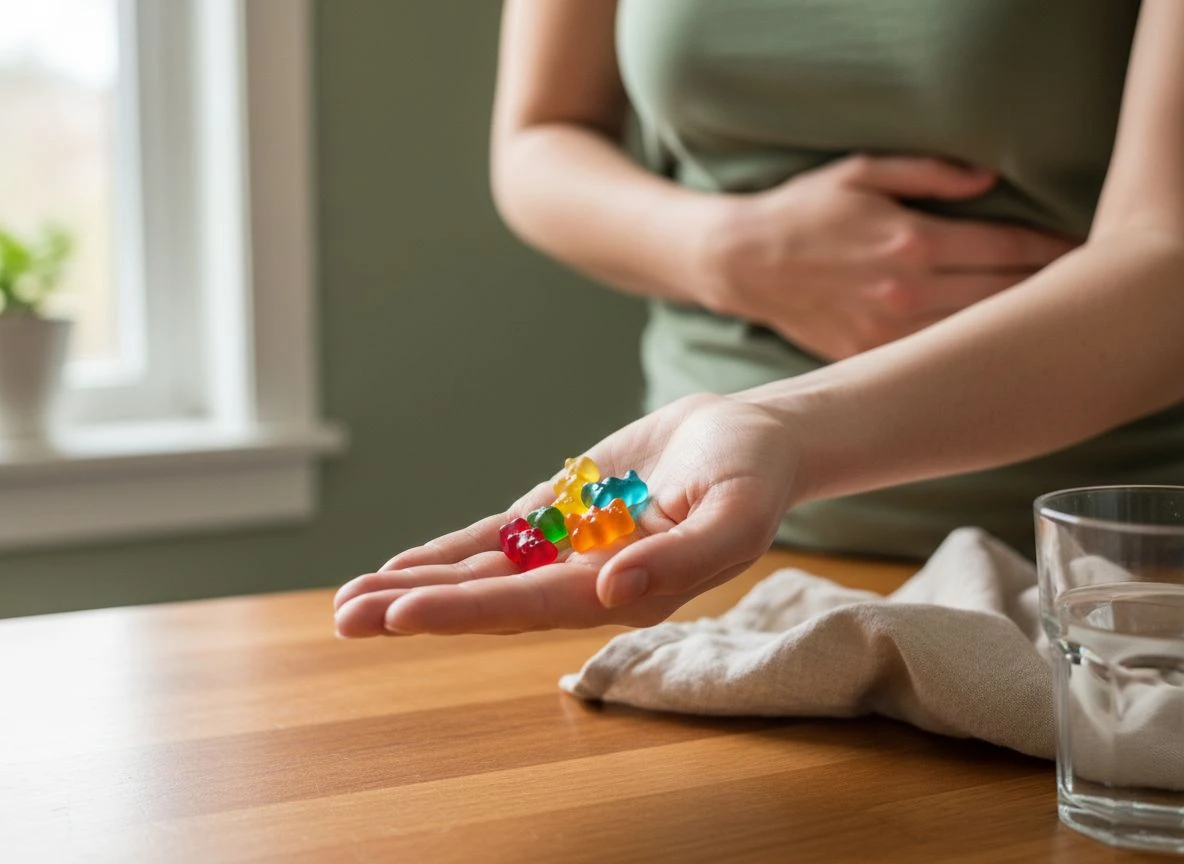
Here’s the simple, uncomfortable truth about sugar alcohols in gummies. Sugar alcohols like maltitol and sorbitol wage a two-front war in your gut. First, they pull water into your colon, which can trigger a laxative effect. Second, they arrive undigested in your large intestine. Your gut bacteria throw a fermentation party, producing gas and bloating. It’s a predictable physical reaction, not a personal failing.
How Osmotic Laxatives Trigger Diarrhea
Think of your digestive tract as a balanced sponge. It absorbs water from food to form solid stool. Sugar alcohols in gummies, like maltitol and sorbitol, are “osmotically active.” That’s a science-y way of saying they act like little magnets for water [3], [4].
Your body can’t break them down well in the small intestine. So these compounds travel on, pulling water from your intestinal lining into the colon. This extra water volume flushes the system. A 2002 study found just 40 grams of a maltitol syrup (Lycasin) could cause a laxative effect in adults. In gummy terms? That’s about one generous serving of many sugar-free gummy bears or vitamins. Your colon gets overwhelmed, and the result is urgent.
Gas and Bloating from Fermentation
If the osmotic effect is the first wave, fermentation is the long siege. Those undigested sugar alcohols land in your large intestine. They become an all-you-can-eat buffet for your gut bacteria [2], [3].
As the bacteria feast, they produce gas as waste—hydrogen, methane, and carbon dioxide. This causes the cramps, distension, and bloating that feel like you’ve swallowed a balloon. It’s similar to what happens with lactose intolerance. Undigested carbs meet hungry microbes, and gas is the uncomfortable result. Note: this disruptive fermentation is the opposite of the beneficial feeding you get from a good probiotic gummy. Instead of nurturing your microbiome, certain sugar alcohols just bomb it.
Comparing Gut Tolerance of Sugar Alcohols in Gummies
Here’s the quick truth about sugar alcohols in gummies. Not all sugar alcohols are equal for your gut. Based on how well your body absorbs them, we can use a simple traffic light system. Red (High Risk): Maltitol, Sorbitol, Mannitol. They’re poorly absorbed and cause major distress. Yellow (Caution): Xylitol. It’s better absorbed but has notable side effects. Green (Better Tolerated): Erythritol. It’s mostly absorbed early, so it’s least likely to cause a big reaction.
I got an email last week from a reader, Sam. He ran his own “experiment.” He bought sugar-free vitamin D gummies sweetened with maltitol. “I figured, how bad could two gummies be?” he wrote. “An hour later, I was planning my will from the bathroom. Lesson learned: maltitol is my gut’s nemesis.” Sam’s experience isn’t unique—it’s chemistry. It shows why we need to know which sweeteners are landmines.
Let me break down the scale. This isn’t just my opinion. It’s based on how these molecules are actually processed (or not processed) in your gut [6].
Erythritol vs Maltitol Digestive Impact
Red Light: High-Risk, Gut-Aggressive

- Maltitol: The star of those viral horror stories. It has a very low absorption rate. Most of it arrives in your colon intact, ready to pull in water and ferment furiously. Research suggests 40 grams can trigger a laxative effect. Many gummies use it because it’s cheap and has good texture.
- Sorbitol & Mannitol: These are classified as FODMAPs [2]. For people with sensitive guts (like many with IBS), FODMAPs are a known trigger. They are absorbed slowly and incompletely, leading to major fermentation gas and cramping. The FDA even requires a warning label.
Yellow Light: Proceed with Caution
- Xylitol: It’s absorbed better than the red-light group—about 50% gets taken up early [1]. That means less reaches the colon to cause trouble. But the portion that does make it down can still ferment. There’s another caution flag. Emerging research links high xylitol levels to potential increased heart risk by affecting blood clotting [1]. For your teeth? Great. For your gut and heart in high doses? Be careful.
Green Light: Better Tolerated
- Erythritol: This is the outlier, and your gut’s best bet. About 90% is absorbed early and excreted in your urine [6]. So little reaches your colon that it doesn’t feed a big fermentation feast. It’s also not a high-FODMAP ingredient [2]. You’ll find it in higher-quality “sugar-free” or keto snacks. (Note: the heart research for xylitol also involved erythritol, so watch this space. But its digestive profile is still superior.)
The practical takeaway? If you’re sensitive, scan labels for green-light erythritol. If you see maltitol or sorbitol high on the list, consider it a red flag for your colon. This is part of why some vegan gummy formulations can be easier to digest. They often use cleaner ingredients. For a sugar-free option that skips sugar alcohols entirely, look into stevia-sweetened gummies.
Your personal tolerance will vary. But this scale gives you a fighting chance. Start by identifying which color is in your bag.
The Cumulative Effect of Multiple Sugar Alcohols
Here’s what gets missed about sugar alcohols in gummies. Your gut trouble isn’t just about one sugar alcohol. The real danger is when a gummy combines multiple types—like maltitol and sorbitol. This creates a “stacking” effect. It can overwhelm your gut at a much lower total dose. You must add up all the sugar alcohol grams on the label.
Most advice gives a daily limit for total sugar alcohols. But your gut doesn’t process a “group.” It reacts to each specific molecule. Let me explain why this matters.
Say a gummy has 5 grams of maltitol and 5 grams of sorbitol. That’s 10 total grams. You might think, “I’m under the limit, I should be fine.” The problem is, you’ve triggered two separate pathways at once. It’s like two construction crews digging up the same small street. Chaos ensues faster.
This synergistic assault can lower your personal threshold. A blend might cause the bloating you’d expect from a much larger dose of one type. I’ve seen this in testing. A gummy with 8g total from a maltitol-sorbitol blend caused worse cramping for me than one with 12g from maltitol alone.
The actionable takeaway: When you check a label, don’t just scan for one scary name. Find the “Supplement Facts” panel. Look for a line that says “Includes Xg Added Sugars.” Sugar alcohols are listed separately, often right below. You might see “Sugar Alcohol 10g” as a total. Or you may need to add up the grams listed after each sweetener. That final number is what matters. If the label doesn’t break it down? That’s a major red flag—and a gamble your gut will likely lose.
Finding Sugar Alcohols on Supplement Labels
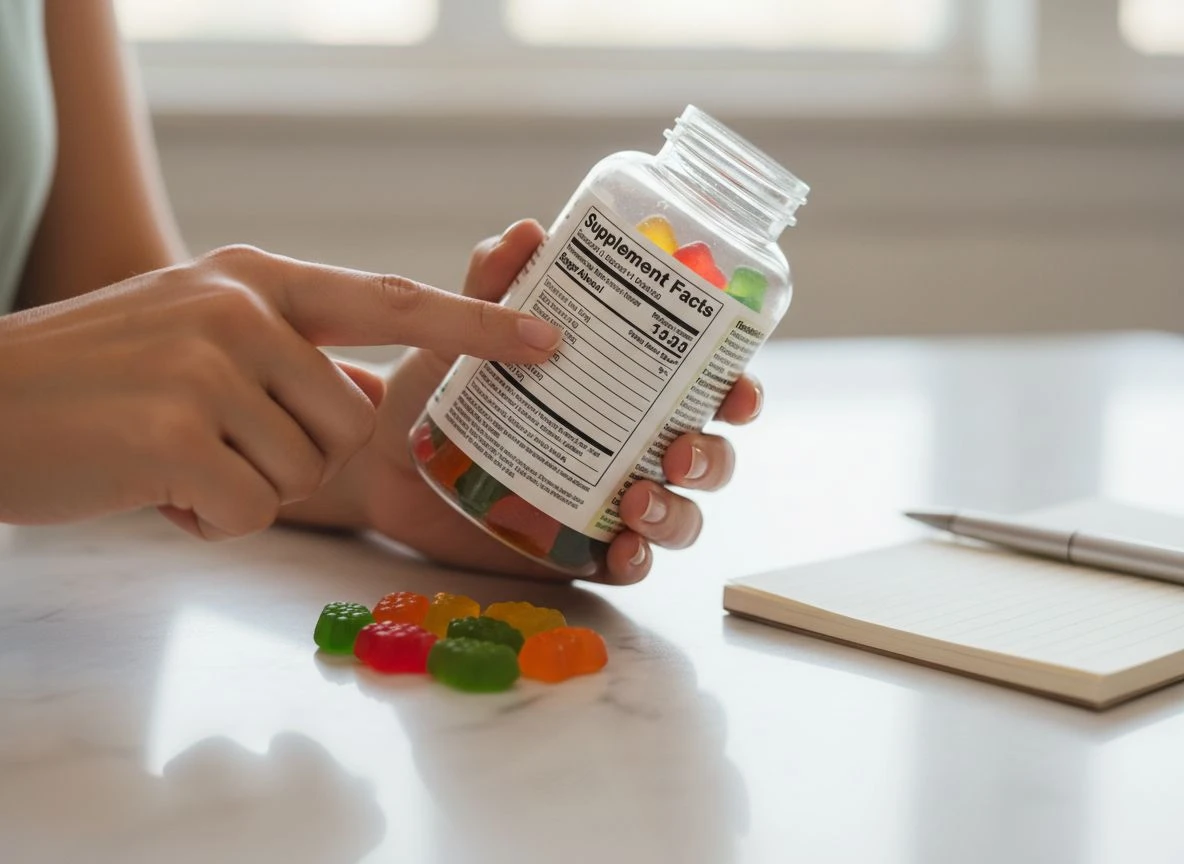
The label won’t scream “WARNING: GUT BOMB.” You must check the Supplement Facts panel for total grams and the Ingredient List for specific types. First, find “Supplement Facts” and look for “Sugar Alcohol Xg” as a total. Next, scrutinize the ingredient list for common culprits: Sorbitol, Maltitol, Mannitol, Xylitol, Erythritol, Isomalt, Lactitol, or “Lycasin” (maltitol syrup). If you see two or more, you’ve found potential “stacking.”
It’s the same discipline I preach for CBD gummies. Don’t just glance; investigate. Now you know what you’re getting into.
Testing Your Personal Sugar Alcohol Tolerance
Here’s a safe way to find your limit without disaster. Start with just one gummy containing a well-tolerated (“green”) or moderate (“yellow”) sugar alcohol. Wait 4-6 hours. If you feel fine, try two another day. The goal is to find your threshold, not to meet a serving size.
We’ve talked about the scary science. But the only way to know what your gut can handle is through cautious testing. Your tolerance is dynamic. It depends on your body, your gut microbiome [5], and any digestive conditions [3].
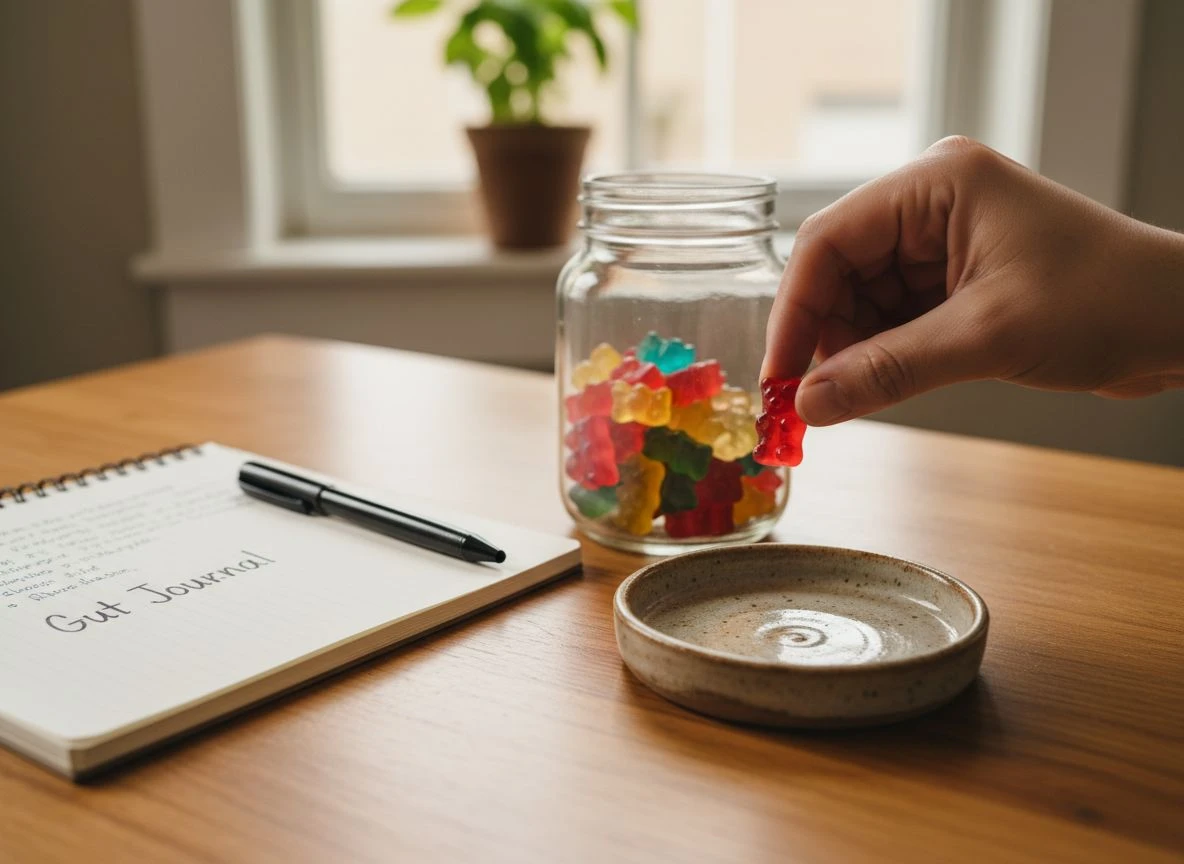
Let’s run a safe experiment. Do not start with a product high in “red” zone alcohols like maltitol. Find a gummy with erythritol or a small amount of xylitol.
Your Step-by-Step Protocol:
- Start with ONE. On a day you’re home, take a single gummy. Not a serving—one piece. Have it with a meal.
- Wait 4-6 hours. This is the critical window for symptoms. Go about your day, but pay attention.
- Note any symptoms. Look for bloating, gurgling, gas, cramping, or urgent bathroom trips. Mild gurgling might be okay. Cramping is a clear “stop” sign.
- Gradually increase only if you have zero distress. If you feel normal after 6 hours, try two gummies on another day. Increase slowly over different days. If symptoms appear, you’ve found your limit.
- Keep a simple “gut journal.” Note the product, the sugar alcohols, and your reaction. This helps you spot patterns.
This isn’t about building tolerance. It’s about respectful reconnaissance. Your gut journal is your personal guide. If one “green” gummy causes issues, you have vital data. Listen to it.
How to Soothe Sugar Alcohol Digestive Upset
So you ignored the warnings or couldn’t resist a few extra pieces. Now you’re in the thick of it. First, breathe. I’ve been there—hunched over my desk after “testing” a potent sample. It happens. The goal now is recovery. Here’s your step-by-step protocol to calm the storm.
Immediate Action: Hydrate with Purpose
Your gut is a waterlogged battlefield from osmosis [3], [4]. Plain water helps, but you’ve lost electrolytes too. Sip an oral rehydration solution. A sugar-free Pedialyte or homemade mix (water, pinch of salt, splash of orange juice) works. Electrolytes help your intestines reabsorb water. Avoid sugary sports drinks.
The Next 12-24 Hours: Rest Your Gut
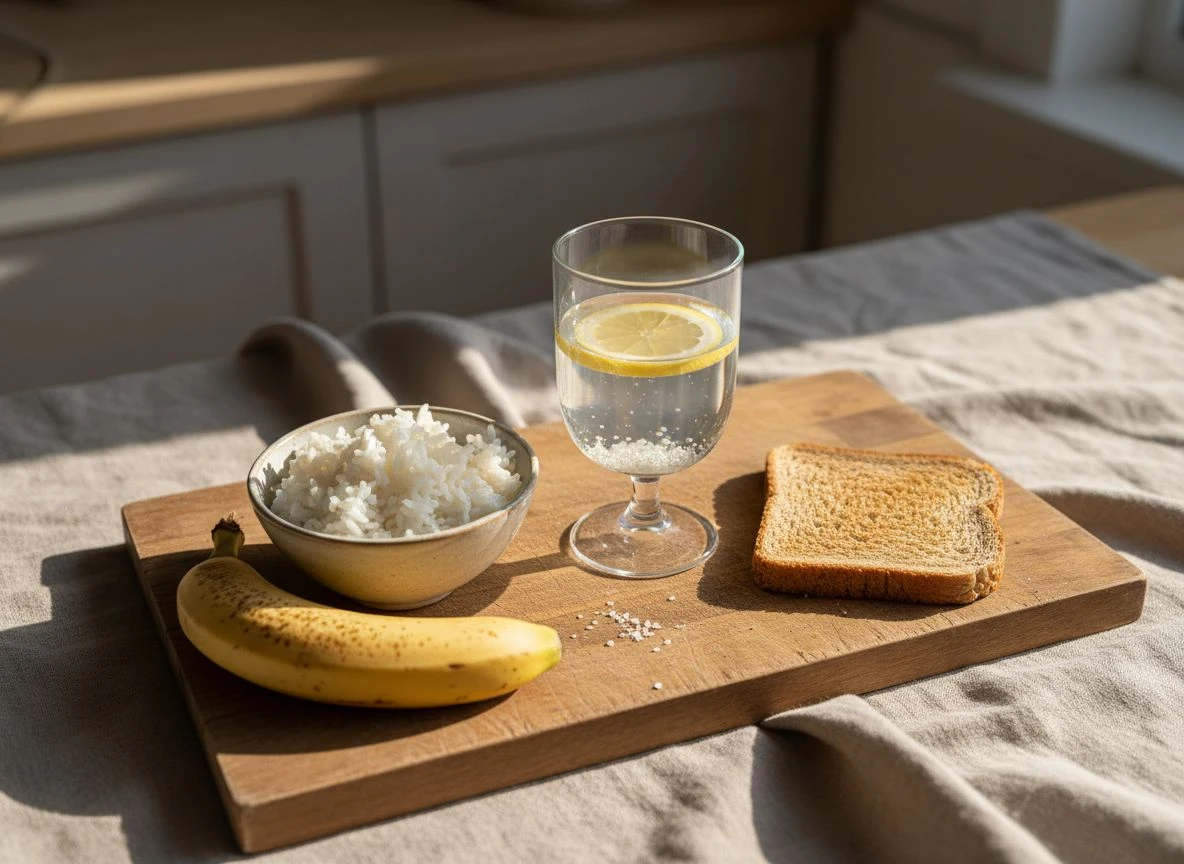
Think BRAT diet for a sugar alcohol overdose. You need bland, easy foods.
- Go For: White rice, plain toast, bananas, applesauce, steamed chicken, or bone broth. White rice and bananas can be soothing.
- Avoid: Dairy, high-fiber foods, fatty or greasy foods, and anything spicy. And definitely no more sugar alcohols.
The 48-Hour Reset: Avoid Triggers & Recalibrate
Your gut microbiome had a fermentation frenzy [5]. It needs time to rebalance. Avoid alcohol, caffeine, and artificial sweeteners. Once symptoms fade, consider a quality probiotic to help replenish good bacteria. It’s a long-term rebuild. (I’ve tested dozens for efficacy, which you can read about here).
Be patient. Your system is responding as biology predicted. Learn from it, hydrate, and let it reset. For ongoing gut support after recovery, our guide on gut health gummies can be helpful.
FAQ: Post-Gummy Recovery
- How long will this last? Acute symptoms often pass in 6-12 hours with proper hydration. Full recalibration can take 24-48 hours.
- Should I take an anti-diarrheal? I’m not a doctor, but it’s usually best to let the irritant pass. If symptoms are severe or prolonged, consult a professional.
- Can I ever eat these again? Possibly, but you now know your absolute limit. Reintroduce with the “one gummy” test.
Choosing Better Sugar-Free Gummy Alternatives
So, what’s the verdict on sugar alcohols in gummies? They aren’t evil, but they’re a digestive gamble. The key is informed, cautious consumption. Treat that “sugar-free” label as a yellow caution sign, not a green light. Your best defense is knowledge: your tolerance scale, the danger of stacking, and a recovery plan.
To minimize risk, look for gummies that use erythritol as the main sugar alcohol. It’s absorbed earlier and causes far less distress for most people [2], [6]. Even better, some formulas skip sugar alcohols altogether. They use plant-based sweeteners like monk fruit or stevia. These don’t have the same osmotic or fermentable mechanism. Your gut will thank you.
Let’s recap your action plan:
- Know the Tolerance Scale: Favor erythritol, be cautious with xylitol, and seriously limit maltitol and sorbitol.
- Beware of Stacking: Add up all sugar alcohol grams on the label.
- Test Slowly: Use the one-gummy protocol to find your personal limit.
- Have a Recovery Plan: Hydrate with electrolytes and rest your gut if you overdo it.
This isn’t about fear—it’s about empowerment. You can enjoy a sugar-free gummy without digestive dread. Choose smarter products and respect your body’s limits. View them as a “proceed with caution” treat, not a health food. If weight management is your goal, check our guide on weight loss gummies. It focuses on ingredients with more proven benefits and fewer digestive trade-offs.
If this guide saved you from a future gummy disaster, please share it. Let’s spread the word that “sugar-free” deserves a second look—right after we check the label.

I founded Best Gummy Reviews after discovering shocking quality gaps during my own vitamin D treatment. With 8+ years in nutrition research, I combine lab science with real-world testing to tell you what actually works. I’m thorough but straightforward—supplements should complement your healthy habits, not replace them.