
Table of Contents
That innocent gummy vitamin in your morning routine could be undermining your prescription medication. It can turn a health boost into a hidden hazard. The risks of mixing vitamin gummies and medications are real. I’ve seen too many people get lulled into a false sense of security. We think, “it’s just a vitamin.” But the data is clear. Over half of adults use dietary supplements, often without knowing the risks of mixing them with prescriptions [1]. The FDA warns these interactions can make medications ineffective. They can even cause life-threatening overdoses [2].
Look, I get it. I switched to gummies years ago because of pill fatigue. They’re convenient, and let’s be honest, they taste better. But that’s the trap. Their fun appeal masks a serious biochemical conversation we can’t ignore anymore.
Generic warnings to “talk to your doctor” aren’t enough. You need a practical, gummy-specific framework to understand the risks. That’s what this guide gives you. We’ll move past the basics. We’ll see why the gummy format itself is uniquely tricky. We’ll highlight the most common and dangerous pairings. We’ll end with an actionable checklist to keep you safe. Let’s start by looking at why that delicious texture is the first red flag.
Are Your Vitamin Gummies and Medications Compatible?
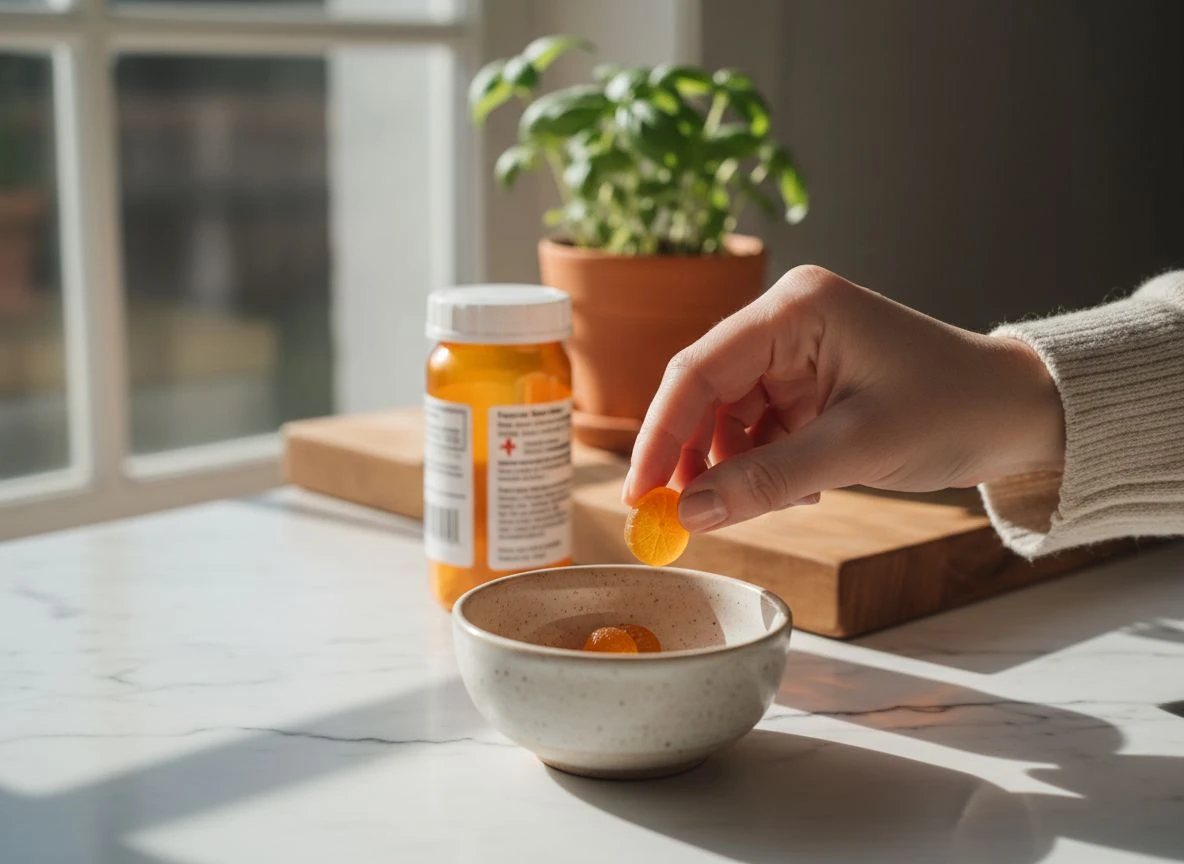
Gummies create unique interaction risks. It’s not just about their ingredients. The candy-like format encourages accidental overuse. The high sugar content can disrupt health conditions. Their physical instability leads to unpredictable dosing. You’re not just managing supplement chemistry. You’re navigating a delivery system designed for pleasure, not precision.
I made the switch a few years ago, like so many do. I was tired of staring down chalky pills with my morning coffee. I caved and bought cheerful, fruity multivitamin gummies. The consistency was miraculous. But that win had a silent cost I didn’t see. Because they tasted like a treat, I’d sometimes pop an extra one in the afternoon without thinking. That’s the behavioral trap. The very feature that solves “pill fatigue” introduces a new risk profile. Capsules simply don’t have this problem.
Risk of Overconsuming Gummy Vitamins
Let’s be real: no one accidentally takes an extra fish oil capsule. But a gummy? It happens all the time. The Iowa Poison Control Center explicitly warns that the candy-like appeal increases overdose risk. This is especially true for children who can’t tell them from candy. For adults, it’s subtler. That “just one more” thought can quietly double your intake of nutrients like vitamin D, iron, or zinc. It can push you into toxicity ranges that clash with medications. Blood thinners paired with a surprise extra dose of vitamin K? That’s a real danger.
Hidden Sugars in Gummy Supplements
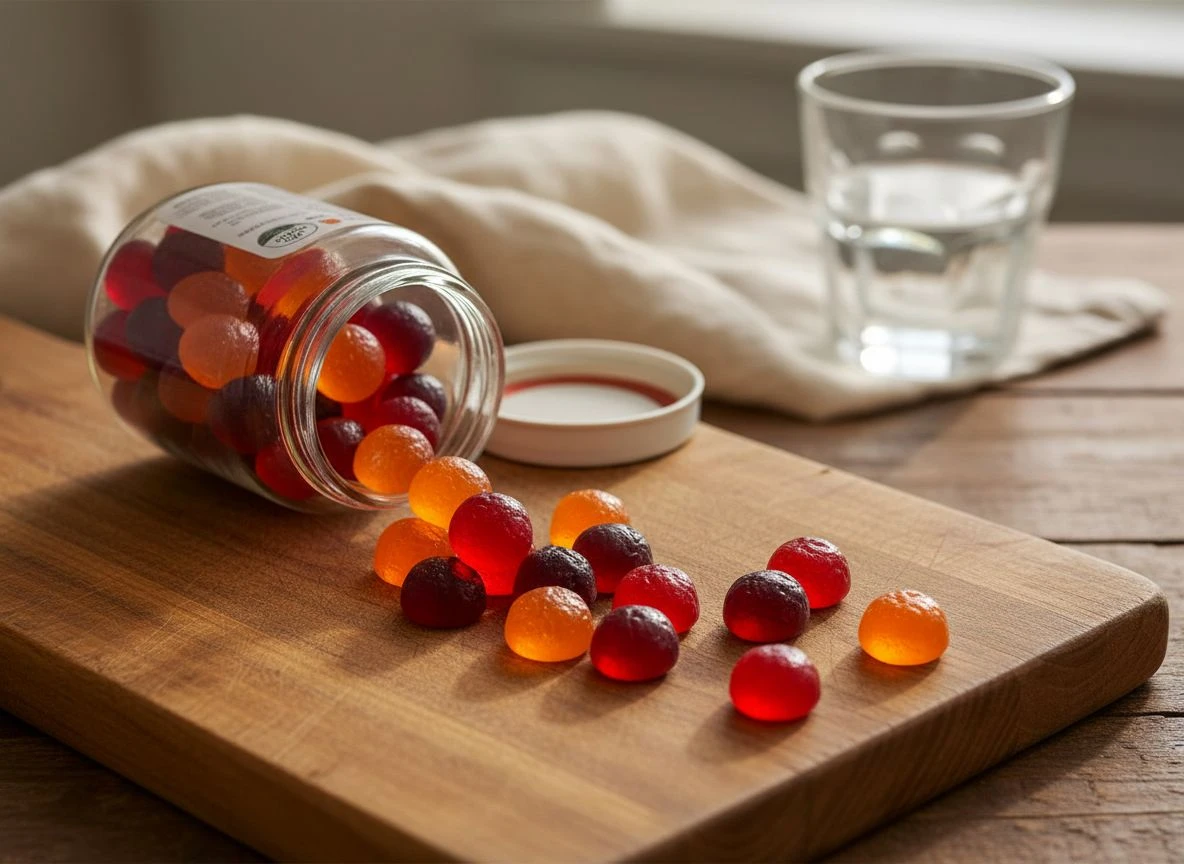
We can’t talk about gummies without talking about what they’re built on. UCLA Health points out that a single serving can have 2 to 8 grams of added sugar. If you’re managing diabetes, that’s a direct dietary conflict. But there’s more than just sugar. The gelatin, pectin, artificial colors, and flavorings create a complex chemical load in your gut. This environment can influence how your body processes certain medications. It also affects how quickly they work. It’s an extra variable that plain pills don’t add.
Potency Concerns with Gummy Delivery
Here’s a fact that makes pharmacists nervous: gummies are inherently less stable. As University Hospitals notes, they degrade faster than tablets when exposed to heat and humidity. I’ve tested this myself. A gummy left in a warm car can melt and recrystallize. Its potency plummets. You might think you’re taking 50 mg of a mineral. But you could be getting 30 mg or 70 mg. This depends on that bottle’s storage life. When timing and dose are critical for medication efficacy, this uncertainty is a direct threat. This is especially true for drugs like thyroid medications.
How Gummies Affect Medication Absorption
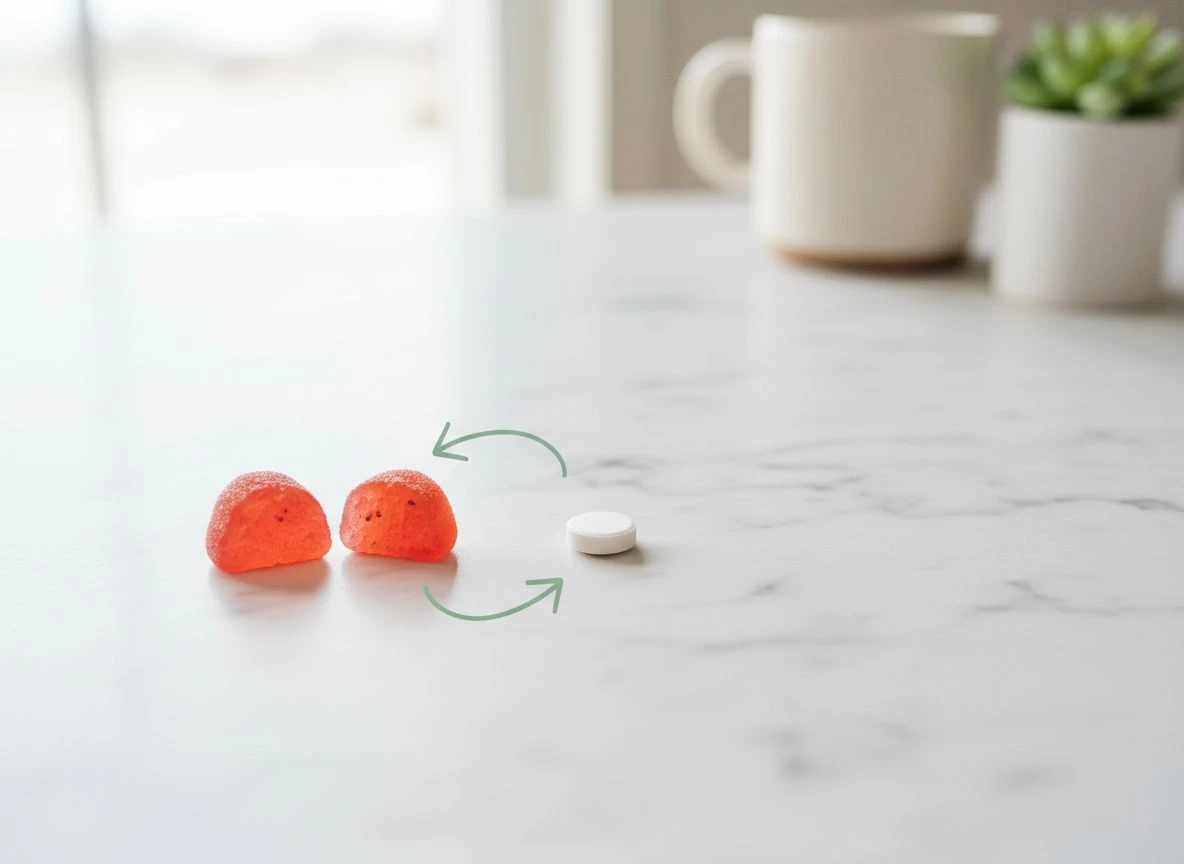
The gummy in your stomach isn’t just delivering vitamins. It can actively block your prescription medication from being absorbed. This happens because minerals and drugs often compete for the same limited absorption channels in your gut. Taking them together means your medicine might lose that fight. It could pass through you without any effect.
We talked about the gummy’s physical form. That gelatin or pectin matrix with sugar and additives becomes a direct pharmacological problem. When you eat a gummy, it doesn’t magically dissolve into individual parts. It creates a sticky, viscous environment in your stomach. Imagine your thyroid medication trying to navigate that crowded space. It needs to reach specific transporters on your gut wall. It’s not a fair fight.
The core issue is competition for absorption pathways. As Dr. Jacob Wolf, a naturopathic doctor with University Hospitals, explains, minerals like calcium, magnesium, zinc, and iron all compete for the same channels. These are exactly the minerals packed into most multivitamin gummies. They are often at high doses. If you take a gummy with these at the same time as a medication, the minerals can literally block the drug.
The classic example is thyroid medication (levothyroxine). Its absorption is notoriously finicky. It’s severely impaired by calcium and iron. A single multivitamin gummy can contain 100-200mg of calcium and 10-18mg of iron. That’s more than enough to make your morning dose partially ineffective. The result? You might still have hypothyroidism symptoms despite being “consistent” with your medication. Your doctor might then unnecessarily increase your dose.
The solution is strict timing. Take thyroid and certain other medications on a completely empty stomach. This includes some antibiotics and osteoporosis drugs. Use only water. Then, wait a full 3 to 4 hours before having any gummy supplement. This gives the drug a clear, unimpeded path into your system. It’s annoying, I know. But it’s the only way to ensure you’re getting what you paid for. This applies to both your prescription and your supplement.
This isn’t just about thyroid meds. The principle applies to many drugs. Your gummy’s mineral content isn’t passive. In your stomach, it’s an active competitor. You have to manage the schedule. Your medication must always get the first slot.
Common Vitamin Gummies and Medications Interactions
Here’s the hard truth. The most dangerous interactions aren’t weird chemical rarities. They’re between the most popular gummy ingredients and the most common prescriptions. The obvious pairings create invisible risks.
Let me frame it with a story. Mark, 58, is on a statin for high cholesterol. He sees a “heart health” gummy with CoQ10 at the store. He thinks “more support is better,” and adds it to his routine. He doesn’t know that CoQ10 can potentially interfere with how his body processes that statin. It could undermine the drug’s effectiveness. This isn’t hypothetical. It’s a daily reality in pharmacies.
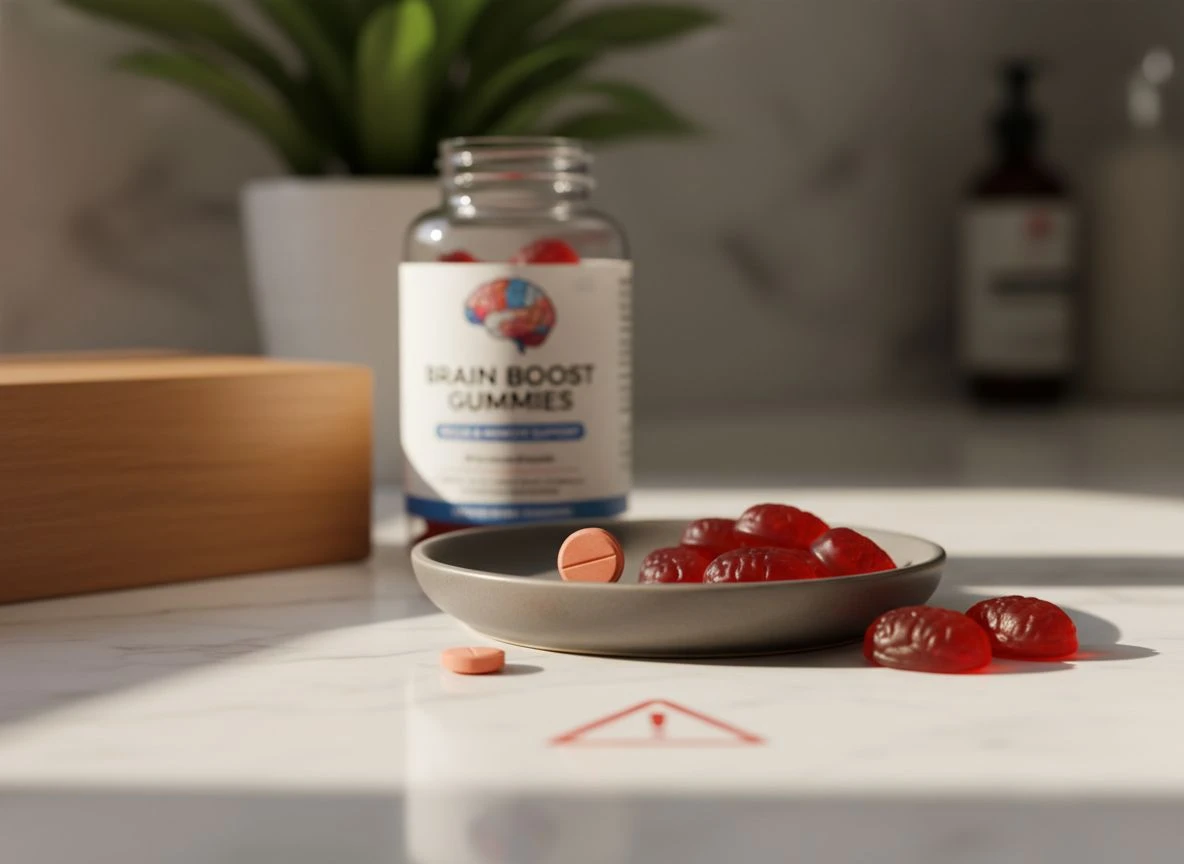
The risk escalates from there. Based on the latest advisories, here are the pairings that deserve your immediate attention. I’ve organized them by medication category for a quick scan. Managing vitamin gummies and medications requires knowing these.
- Heart & Blood Pressure Medications
- Blood Thinners (Warfarin, Eliquis, Xarelto) & Vitamin E/Ginkgo Biloba: This is a major red flag. The FDA explicitly warns that supplements like vitamin E and ginkgo are common in “brain health” gummies. They have blood-thinning effects. Combined with prescription anticoagulants, the risk jumps significantly. This includes dangerous internal bleeding or stroke.
- Statins (Atorvastatin, etc.) & St. John’s Wort: Found in some mood-support gummies, St. John’s wort can accelerate the breakdown of statins in your liver. This reduces their cholesterol-lowering power. The same goes for the COVID-19 antiviral Paxlovid. St. John’s wort can render it ineffective.
-
Mental Health Medications
- SSRIs/Anxiety Meds (Xanax, etc.) & St. John’s Wort/Melatonin: St. John’s wort acts similarly to an SSRI. Combining it with prescription antidepressants is risky. It can cause a dangerous overdose effect called serotonin syndrome. High-dose melatonin gummies (3mg+) can also amplify drowsiness from sedatives.
- Birth Control Pills & St. John’s Wort: This one’s critical. St. John’s wort can increase the metabolism of estrogen. This could potentially make oral contraceptives fail.
-
Diabetes Medications
- Metformin/Insulin & Cinnamon/Chromium: Many “blood sugar support” gummies contain cinnamon or chromium. While sometimes beneficial, they can unpredictably enhance the effect of diabetes medication. This leads to a dangerous drop in blood sugar (hypoglycemia). The added sugar in the gummy base itself is also a direct conflict.
-
Thyroid Medications
- Levothyroxine & Iron/Calcium: As we touched on earlier, this is a classic absorption blockade. The iron and calcium in multivitamin or prenatal gummies bind to thyroid hormone in the gut. Dr. Jacob Wolf notes this requires a strict 4-hour separation.
-
Common Pain Relievers
- NSAIDs (Ibuprofen, Naproxen) & High-Dose Vitamin D/Omega-3s: Long-term, high-dose vitamin D can increase calcium levels. When mixed regularly with NSAIDs, it may subtly increase kidney strain. Omega-3s have a mild blood-thinning effect. This can potentially increase bruising.
The sheer scope is daunting. The Drugs.com interaction checker lists 111 known drug interactions for adult multivitamin gummies alone. It categorizes 7 as major. This isn’t about fear-mongering. It’s about recognizing that “supplementing” is a pharmacological act. It demands the same respect as your prescriptions.
Sugar Alcohols Mimicking Medication Side Effects
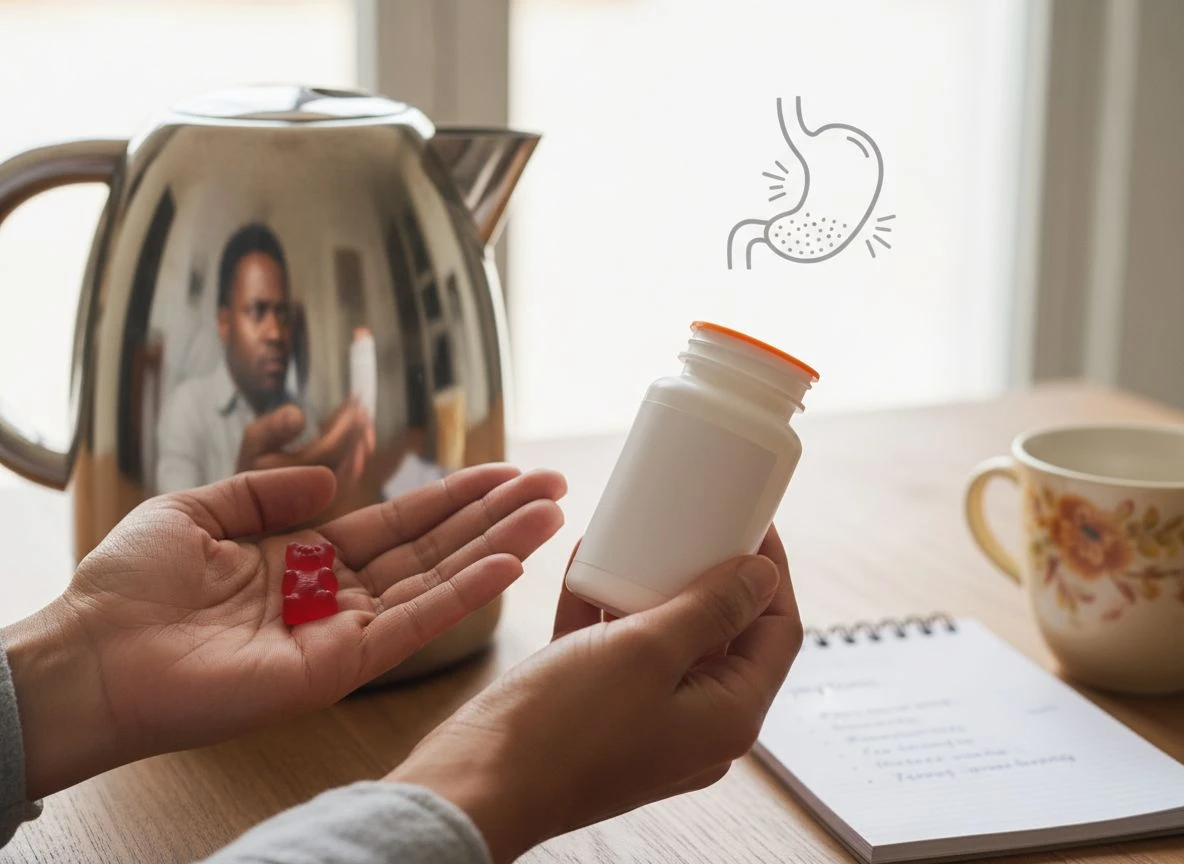
Here’s a common scenario. You start a new medication and experience bloating, gas, or diarrhea. These are classic GI side effects. You report it to your doctor. They might adjust your dosage or switch your prescription. But what if the culprit wasn’t the drug at all? What if it was the “healthy” gummy vitamin you take with breakfast? This mix-up is a real risk. Sugar alcohols are usually to blame.
To hit “low-sugar” or “sugar-free” claims, many gummy brands use sugar alcohols. These include sorbitol, mannitol, or xylitol. The problem? These compounds are notorious for causing digestive distress. This is especially true for sensitive people. It also happens when you have more than a tiny serving. We’re talking about the exact same bloating, gas, and urgent diarrhea. These are side effects of common drugs like metformin, certain antibiotics, or some antidepressants.
I’ve tested gummies with high sorbitol content. The gastric consequences are… memorable. The danger here isn’t just discomfort; it’s misdiagnosis. You develop new GI issues after starting a medication. You’re also taking a gummy packed with sorbitol. Your doctor has no way to know which substance is the trigger. This can start a dangerous cycle. Your medication dose gets incorrectly altered. You might switch to a less effective drug. All the while, the real agitator remains. Your gummy stays in your daily routine.
The solution is simple but non-negotiable: become a label detective. Before you blame your prescription, check your gummy’s ingredient list. If you see sorbitol, mannitol, xylitol, isomalt, or maltitol near the top, you’ve likely found your culprit. Consider pausing the gummy for a week. Do this with your doctor’s knowledge. See if symptoms clear. Your medication might be just fine. It could be the “healthy” additive causing the problem.
Pre-Gummy Safety Checklist for Medication Users
Before you buy your next bottle, complete these 5 steps. This checklist turns scary “what-ifs” into a simple safety protocol. It ensures your gummy supports your health. It must not sabotage your medications.
- Create a Master List (Scripts + Gummies). Grab a notepad or your phone. Write down every prescription, OTC drug, and supplement you take. Include dosage and frequency. Don’t forget occasional items like sleep aids or pain relievers. This master list is non-negotiable. As the FDA advises, maintaining this updated list is your first line of defense. Keep it in your wallet and on your phone.
- Research Your Gummy’s Full Ingredient List. Go beyond the “Vitamin D3 + K2” front label. Find the “Supplement Facts” panel online or on the bottle. You’re looking for three things. First, the exact dose of active ingredients. Second, the full list of “Other Ingredients” like gelatin or sorbitol. Third, any proprietary blends that hide dosages. This is how you spot hidden sugar alcohols or high-risk botanicals.
- Schedule a “Brown Bag Review” with Your Pharmacist. This is the most impactful step. Call your pharmacy and ask for a “medication review.” Bring your master list and the actual gummy bottle. Pharmacists are drug interaction experts. They can spot risks your doctor might miss in a rushed appointment. They have access to detailed interaction databases. These go beyond basic searches.
- Ask These 3 Specific Questions. During your review, don’t just ask “Is this okay?” Be precise:
- “Does anything in this gummy interact with my [name of specific medication]?”
- “Could the calcium/magnesium in this block the absorption of my thyroid or antibiotic medication?”
- “Should I stop taking this before any upcoming medical procedure?” (Remember, as AARP notes, surgeons often request stopping supplements 2-3 weeks pre-surgery).
- Establish a Safe Timing Protocol. Based on the advice you get, set a rule. If no interaction exists, taking them together might be fine. But if there’s an absorption competition, a clear rule is essential. This is common with thyroid meds. Example: “Take levothyroxine at 6 AM with water only. Take the multivitamin gummy with lunch, at least 4 hours later.” Consistency is safety.
Between you and me, this feels like homework. But after seeing the data, it’s the 20 minutes of work that separates savvy supplement users from those gambling with their health. It’s key for safe use of vitamin gummies and medications.
FAQs on Gummy Supplements and Medications
Here are direct answers to the most common worries I hear. This isn’t about fear. It’s about smart, informed habits.
How many hours should I space my medication and my gummy? This is critical for absorption. Follow the “4-hour rule” for medications that must be taken on an empty stomach. This includes thyroid hormone (levothyroxine) or certain antibiotics. Take your medication first with water. Then wait at least 4 hours before having your gummy. This is especially important if the gummy contains minerals like calcium, magnesium, or iron. They can block drug uptake. For other medications, a 1-2 hour separation is a good safety buffer.
My gummy melted – is it still safe to take? Honestly, I’d skip it. Heat degradation isn’t just about a sticky mess. Active ingredients like vitamins can break down. You’re left with a sugary dose of uncertainty. More critically, a melted gummy’s potency is uneven. You might get a tiny bit of vitamin in one bite and a concentrated dose in another. That’s a real problem for consistent dosing. When in doubt, throw it out.
Are ‘drug-free’ sleep gummies safe with my antidepressants? This is a major red flag. “Drug-free” or “all-natural” labels often hide ingredients like melatonin, valerian root, or L-theanine. These directly affect your nervous system. Combining them with antidepressants (especially SSRIs/SNRIs) can amplify sedation. They can also cause unpredictable side effects. You must consult your doctor or pharmacist before mixing any sleep aid with a psychiatric medication.
What should I do if my child eats my gummy vitamins? Stay calm, but act quickly. Remove any leftover pieces from their mouth. Then, immediately call the Poison Help Line at 1-800-222-1222. Do not wait for symptoms. Have the bottle ready so you can tell them exactly what and how much was ingested. This is the protocol from the Iowa Poison Control Center. It’s the fastest way to get expert, lifesaving advice.
Smart Tips for Gummy Supplement Use with Meds
The safest path forward isn’t to avoid gummies entirely. It’s to respect them. Remember the FDA’s core principle: “Don’t Assume ‘Natural’ Means Safe.” This tasty format adds unique risks. These include accidental overdose and stability issues. Its active ingredients can directly interfere with your medications. Your proactive communication with a pharmacist or doctor is the non-negotiable key to safety. This is crucial for managing vitamin gummies and medications.
Think of your gummy not as candy, but as a vehicle delivering active compounds. They must navigate the same traffic laws as your prescriptions. You are in control of ensuring they don’t collide. Navigating vitamin gummies and medications requires this mindset.
Now, take that control. Go back to Your Action Plan: A Pre-Gummy Checklist for Medication Users and use it. It transforms complexity into a simple, safe protocol. You can absolutely enjoy the convenience of a gummy. Just make sure it’s working with your health plan, not against it.

I founded Best Gummy Reviews after discovering shocking quality gaps during my own vitamin D treatment. With 8+ years in nutrition research, I combine lab science with real-world testing to tell you what actually works. I’m thorough but straightforward—supplements should complement your healthy habits, not replace them.