
Table of Contents
That soft, nostalgic chew or that firm, clean snap isn’t just about enjoyment. It’s a direct message about your gummy vitamin’s stability. It tells you what it can handle, and potentially, how well it delivers its nutrients. The gelling agent is the architectural foundation of the entire product. Understanding what gummy vitamins are made of starts with this key component.
I learned this the hard way. A few summers back, I left a bag of gelatin-based multivitamins in my car for an afternoon. What I retrieved was a sticky, fused-together mass. That frustrating meltdown taught me more about formulation than any textbook. It sent me down a rabbit hole. What I found flips the script on how we judge these supplements.
Most of us choose gummies based on taste and texture alone. I get it—the experience matters. But I promise you, the choice between gelatin and pectin is a foundational manufacturing decision. It dictates everything from shelf life in a warm mailbox to which active ingredients can even be included. As a Sourcify manufacturing overview points out, this isn’t a minor detail. It’s the core of the product’s performance.
This plant vs. animal derived decision has real, tactile consequences. Pectin sets in about 30 minutes. Gelatin can take a full day. That’s a massive difference in production efficiency. It’s not just a factory problem. It hints at the fundamental chemical personality of your gummy.
So, let’s move past just chewiness. In this deep dive, I’ll show you how the gelling agent dictates heat stability and ingredient compatibility. It even influences how your body accesses the vitamins. The architecture of your gummy matters just as much as what’s inside it. You’ll understand exactly what are gummy vitamins made of and why it matters.
How Gelling Agents Shape Gummy Texture

In simple terms, a gelling agent is the architectural blueprint for your gummy vitamin. It’s the ingredient that transforms a liquid syrup of flavors, sweeteners, and nutrients into a stable, solid piece you can chew. Its core job is to build a three-dimensional gel network. Think of it as a microscopic scaffold that traps everything else in place.
Imagine building a house. You can frame it with traditional wood (gelatin) or modern steel (pectin). Both create a house, but the material properties dictate how it handles heat, stress, and time.
This gets to the first major fork in the formulation road. It’s about how these “blueprints” react to temperature. Gelatin creates what’s called a thermoreversible gel[1]. This means the structure is heat-labile. It melts when warmed and resets when cooled. It’s a dynamic, flexible build. Pectin, in contrast, forms a heat-stable set[1]. Once its chemical bonds form during manufacturing, they lock in. The structure won’t melt easily. This is why pectin gummies can better survive a summer mailbox.
It’s fascinating to me that these foundational ingredients come from such different origins. Gelatin is derived from animal collagen. Pectin is a plant-based fiber, often extracted from citrus peels or apple pulp. It’s essentially an upcycled ingredient from fruit byproducts[2], which adds a nice sustainability angle. But regardless of source, their ultimate purpose is identical: to architect the delivery system for your vitamins. The choice of blueprint just changes everything about the final product’s personality. This is a key part of understanding what gummy vitamins are made of.
Understanding What Gummy Vitamins Are Made Of: The Gelatin Choice
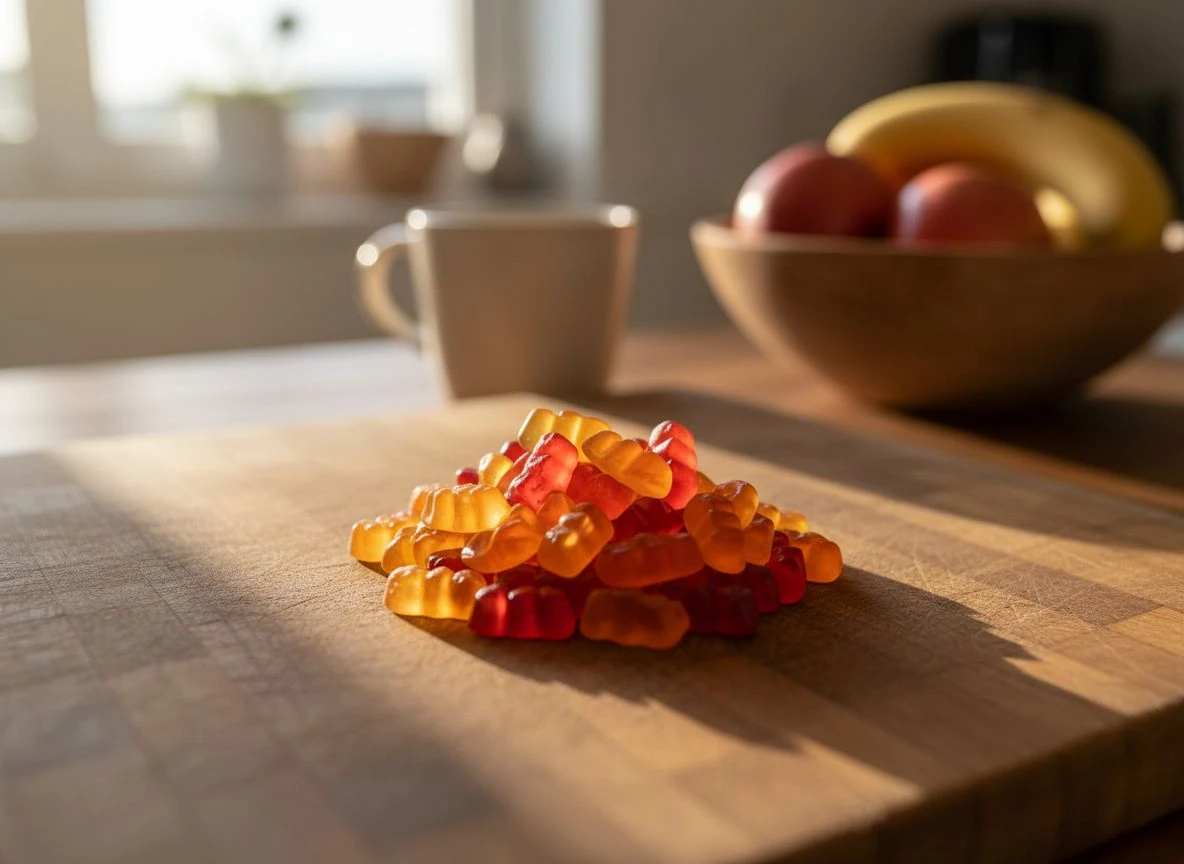
When you bite into a gelatin-based gummy vitamin, that soft, elastic chew isn’t just texture. It’s taste memory. For me, it instantly recalls the gummy bears from my childhood lunchbox. That familiarity is powerful. Manufacturers leverage that “candy nostalgia” factor deliberately. But behind that comforting bounce is a complex animal-based protein with serious manufacturing clout.
Gelatin Sources and Allergy Concerns
Let’s be clear about what gelatin is: hydrolyzed collagen. It’s almost always sourced from pork skin or bovine hides. This animal origin is the primary deal-breaker for vegans, vegetarians, and those following religious dietary laws. It’s also a potential allergen for some. If you’re avoiding animal products, this is your first and most crucial check of the ingredient list. For everyone else, this collagen derivative is a remarkably effective building material.
Production Benefits of Gelatin Gummies
From a production standpoint, gelatin is famously forgiving. Unlike pectin, which requires precise control to set, gelatin gels over a broad pH range, as noted in the Sourcify manufacturing overview. This flexibility makes the process less finicky. Its versatility extends beyond gelling. As highlighted in a SupplySide report, gelatin also acts as an aerating agent. This creates a lighter mouthfeel. It also works as an emulsifier, helping to bind fats and water-based ingredients together.
The key variable here is “bloom strength”—a measure of gel firmness. A higher bloom strength (like 250 vs. 150) will yield a firmer, snappier gummy. This explains why textures can vary so much between brands even when they all use “gelatin.”
Why Gelatin Creates a Classic Chew
This brings us to the signature experience. Gelatin’s protein network creates that stretchy, cohesive chew. But the magic trick for flavor is its thermal reversibility. As Lara Niemann of Gelita USA explained, gelatin melts at body temperature. This means it begins to dissolve the moment it hits your tongue. It leads to a rapid, upfront release of flavor and sweetness. Other gelling agents struggle to match this. It’s a burst of taste that feels immediate and satisfying.
The downside, as my melted-car-bag experience proved, is that this same property makes gelatin gummies more vulnerable to heat. This is a risk in your pantry or mailbox. So, when you choose a gelatin gummy, you’re choosing a classic. You’re getting a forgiving manufacturing process that often translates to lower cost. You get a texture designed for sensory pleasure. You get a flavor delivery system that’s hard to beat. You just need to be mindful of keeping them cool.
Pectin and Plant-Based Gummy Supplements
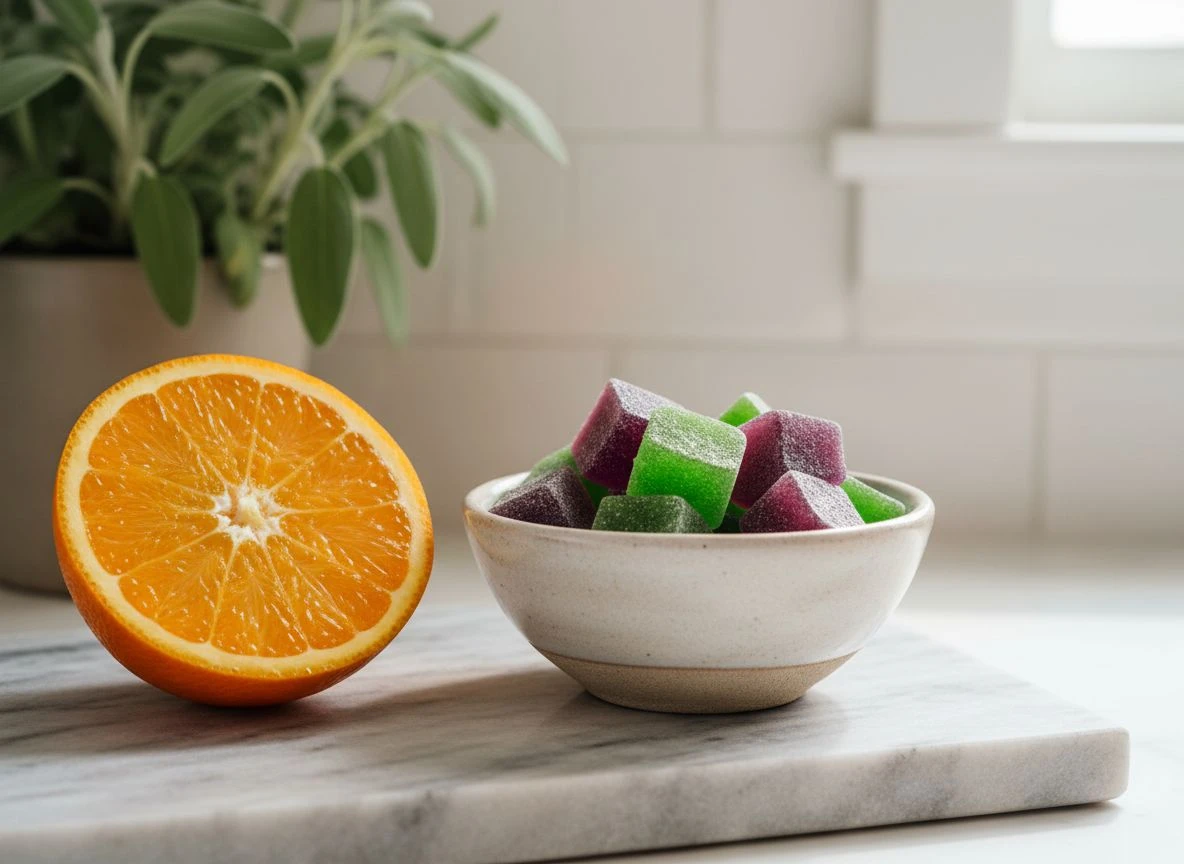
If gelatin is the forgiving, nostalgic builder, then pectin is the meticulous plant-based engineer. Sourced from citrus peels and apple pulp, it’s the gelling agent of choice for vegan, halal, and stability-focused formulas. But its clean-label appeal comes with a catch. It demands exacting precision during manufacturing to build its solid, heat-resistant structure.
Vegan and Halal Gummy Certifications
First, the obvious win: pectin is plant-derived. This makes it the default foundation for any gummy marketed as vegan, vegetarian, or halal. But for me, the more interesting angle is its sustainability story. As noted in a SupplySide industry report, it’s often an upcycled ingredient. It’s extracted from the byproducts (like apple pomace) of the juice industry. You’re essentially getting a structural ingredient from what would otherwise be waste. For the modern, ethically-conscious supplement shopper, that’s a meaningful point beyond just the dietary label.
The Science of Pectin Gel Formation
Here’s where pectin gets finicky—and where many manufacturers stumble. While gelatin gels over a broad pH range, pectin requires precise control of acidity and sugar content to form its network. This is outlined in the Sourcify manufacturing overview. Get the pH or Brix (sugar concentration) wrong, and the batch simply won’t set properly. This isn’t a forgiving process.
This precision pays off in the final texture. Pectin forms what’s called a “heat-stable set.” Once its bonds form during cooling, they’re locked. This creates a texture that KorNutra describes as a “cleaner break” and faster snap. Think a firm, short bite versus gelatin’s long, elastic chew. It also sets remarkably fast. NuLeaf Naturals notes demolding can happen in 30 minutes versus a day for some gelatin recipes. That’s a huge efficiency win on a factory line.
How Pectin Improves Gummy Shelf Life
For gummy vitamins, pectin’s most practical advantage is its resilience. Its heat-stable bonds mean it won’t melt or deform easily in warm environments. We’ve all seen (or sadly, tasted) a bag of gelatin gummies fused into a single blob after a day in a hot car. Pectin-based gummies resist that. This superior heat tolerance, highlighted by multiple sources, directly translates to better shelf stability. It lowers the risk of getting a melted mess delivered to your doorstep.
This stability is precisely why, as Nutracelle points out, pectin is framed as the choice for modern “wellness/functional” supplements. When you’re dealing with sensitive active ingredients like certain vitamins or botanicals, you want a delivery system that holds its structural integrity from factory to stomach. Pectin delivers that engineered reliability. It’s a crucial answer to what gummy vitamins are made of for long-term stability.
Manufacturing Challenges for Gummy Texture
Capsule Answer: Gelatin is easier to manufacture but far less stable. Its simple, thermoreversible process is forgiving, yet it softens with heat. Pectin is a manufacturing headache—requiring exact pH and sugar control. But once set, its heat-stable bonds create a gummy that survives shipping and summer heat far better.
Let’s break down the showdown.
On the Production Line: Simplicity vs. Precision
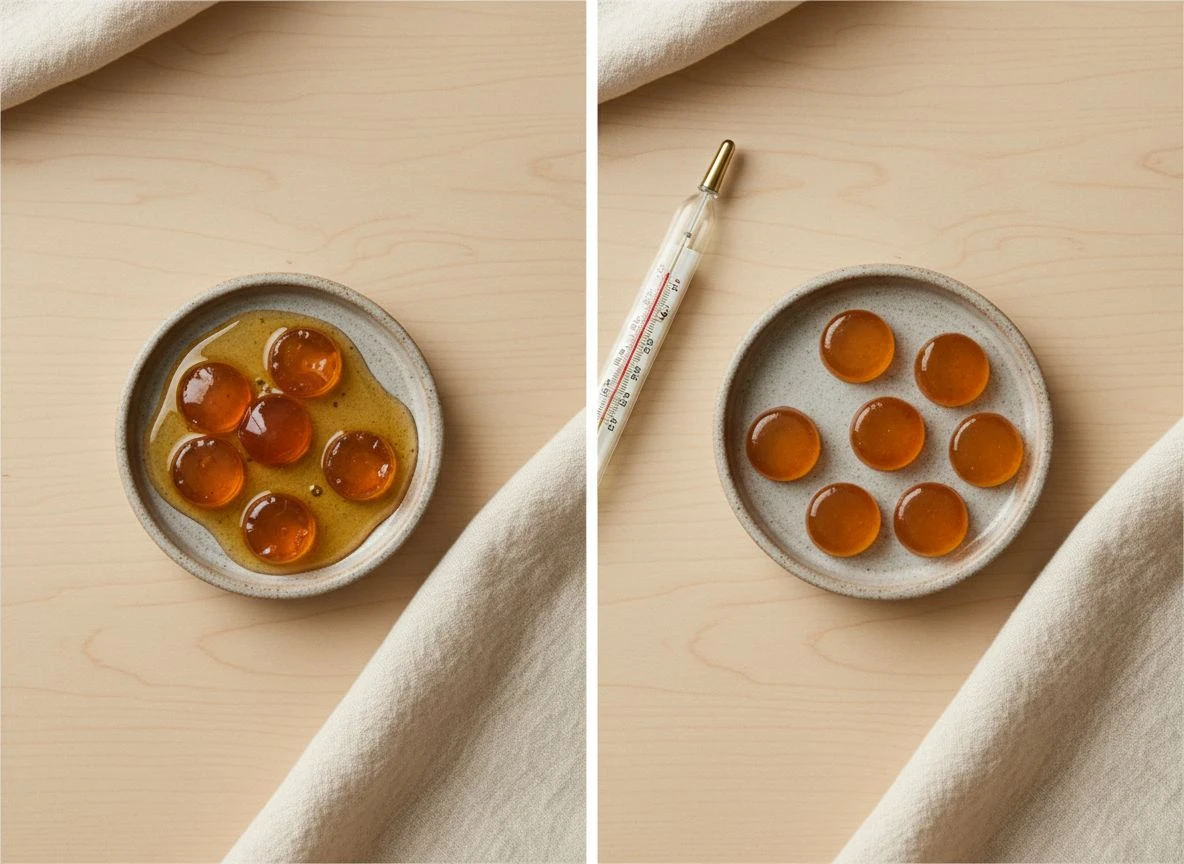
Gelatin’s process is famously straightforward. As the Sourcify manufacturing overview notes, it gels over a broad pH range. Heat it, mix it, cool it. Its thermoreversible nature means you can re-melt a batch if needed. That’s a formulator’s safety net.
Pectin is the opposite. It demands laboratory-like precision. It requires specific acidity and sugar concentration to form its network. Get the pH wrong by a hair and the batch won’t set. The payoff, as NuLeaf Naturals points out, is speed. It can set in 30 minutes versus a day for gelatin. This allows faster demolding and higher throughput on a line. But that speed requires perfect conditions.
The Stability Test: Heat is the Judge
This is where the choice hits your doorstep. Gelatin’s protein network softens and melts with heat. Ever left gummies in a hot car? If they turned into a puddle, they were gelatin-based. KorNutra confirms pectin provides superior heat tolerance. This fact is echoed by Yumma Candy’s consumer guide on its shape-holding ability. For manufacturers, this means pectin gummies are far less likely to arrive fused together in summer shipping.
The Visual & Practical Edge
There’s a clarity benefit, too. Pectin gels can achieve a brilliantly clear, glossy finish. This allows for more vibrant colors using less artificial dye. It’s a clean-label bonus NuLeaf highlights.
So, who wins? It depends on the goal. If your priority is a resilient gummy that ships reliably year-round and offers a crisp bite, pectin’s manufacturing hurdles are worth the climb. If you’re after that classic, elastic chew and have controlled climate logistics, gelatin’s simplicity reigns. For the consumer, the choice is now clearer. That firmer, glossier vegan gummy likely endured a more complex birth to survive its journey to you. This is a key part of the answer to what are gummy vitamins made of for quality.
How Active Ingredients Affect Gummy Consistency
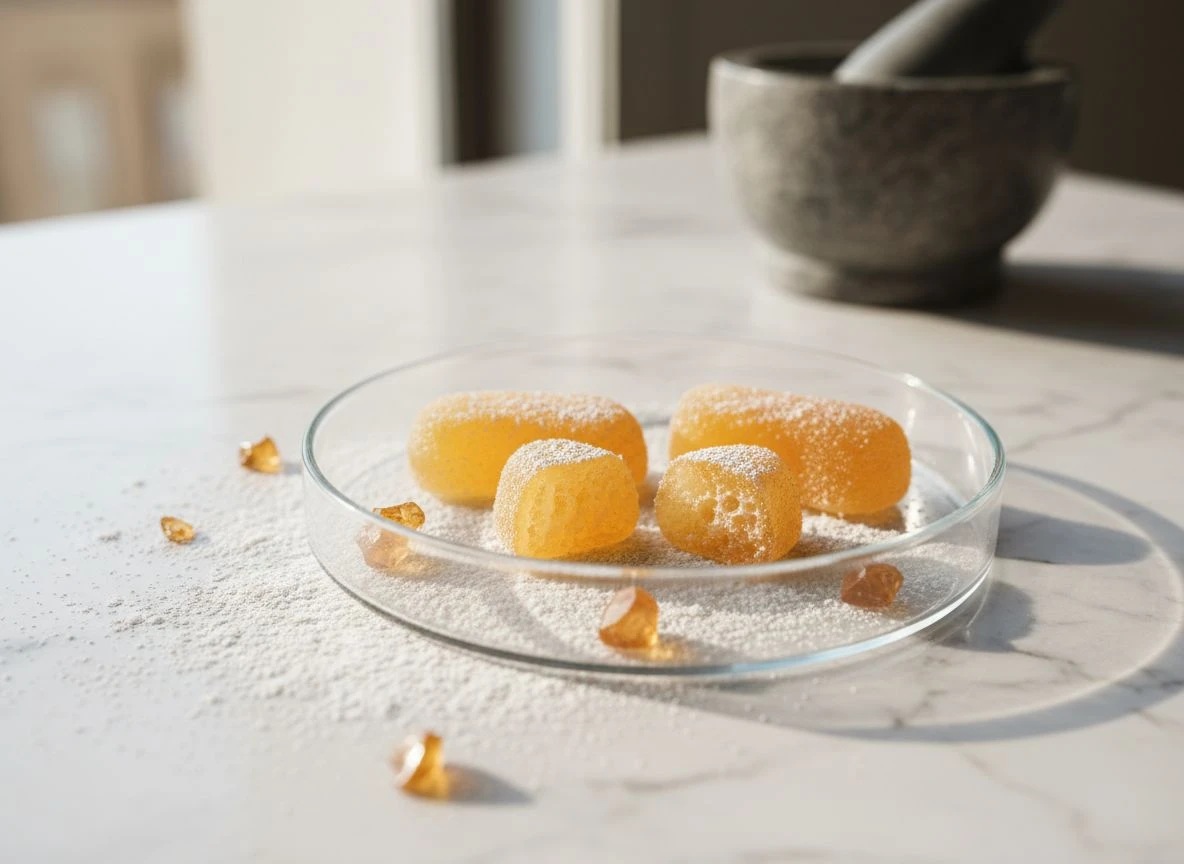
Capsule Answer: The vitamins and minerals inside your gummy aren’t just passengers. They’re active participants that can make or break the gel network. This is the formulator’s secret. Minerals like calcium can sabotage pectin’s structure, while highly acidic actives thrive in it. The gelling agent must be chosen to protect and deliver the actives, not just create a chewy texture.
Most discussions stop at texture and diet. Here’s the insider perspective that truly separates generic from expertly formulated gummies. The active ingredients themselves dictate which gelling agent will work.
Take minerals—calcium, magnesium, iron. These are cations, or positively charged ions. Pectin’s gelling mechanism relies on a precise interaction with calcium ions to form its firm network. It sounds like a perfect match, but it’s a double-edged sword. As noted in industry literature, excess minerals from your active ingredients can hijack this process. They bind to the pectin chaotically and create a weak, gritty, or inconsistent gel.
A skilled formulator must meticulously balance this. They often use encapsulated minerals or specific pectin types to manage the interference. With gelatin, which sets via a different, protein-based mechanism, this mineral interaction isn’t a factor.
Then there’s pH. Pectin requires a low-pH (acidic) environment to set. Now, look at a high-dose Vitamin C gummy. Ascorbic acid is, well, an acid. It naturally creates the perfect low-pH environment for pectin to thrive. This synergy is why you’ll often see robust, well-set vitamin C gummies using pectin. Gelatin is more pH-forgiving, but that acidic environment can, over time, challenge its protein structure.
Finally, consider heat-sensitive actives like some probiotics or delicate botanicals. Remember, pectin sets fast at lower temperatures (often within 30 minutes). Gelatin processes typically require longer heating and cooling cycles. That shorter, cooler pectin process can be a major advantage. It helps protect the viability of heat-sensitive ingredients from the cooker to the mold.
So before you choose a gummy, consider what’s inside it. A quality product starts with a formulator who matches the gel architecture to the payload it needs to carry. This is the advanced science of what gummy vitamins are made of.
How to Choose Gummies Based on Texture?
Capsule Answer: The ingredient list is your ultimate truth-teller. “Pectin-based” doesn’t automatically mean vegan or allergen-free. You must check for beeswax glaze, shellac, or animal-derived vitamin D3. To make a truly informed choice, find the gelling agent first. Then scan for hidden animal products. Finally, look for a trusted certification label.
Let me share a quick story that made me a label fanatic. A reader once emailed me, frustrated. Their new “plant-based pectin” gummies contained beeswax. They’d assumed “pectin-based” meant fully vegan, missing that single glaze ingredient. It’s the perfect example of how the gelling agent is just one piece of the puzzle.
As Yumma Candy’s guide stresses, the ingredient list is definitive. Here’s your practical, three-step checklist to decode any bottle:
Step 1: Find the Gelling Agent. It’s usually in the first few ingredients. “Gelatin” means animal-derived (porcine or bovine). “Pectin” means plant-based. This is your primary filter for dietary preference.
Step 2: Scan for Stealth Ingredients. This is where most assumptions fail. If you need vegan, kosher, or halal, look beyond the gelling agent. Check for:
- Beeswax or Carnauba Wax (with beeswax): A common glazing agent.
- Confectioner’s Glaze/Shellac: A resin secreted by lac bugs.
- Vitamin D3 (Cholecalciferol): Often derived from lanolin (sheep’s wool). Vegan D3 from lichen will be explicitly stated.
Step 3: Look for the Certification, Not Just the Claim. The words “plant-based” are not regulated. If your diet is strict, look for a Certified Vegan, Kosher, or Halal symbol on the package. A reputable certification does the vetting for you.
This knowledge turns you from a passive consumer into an informed one. You’re not just choosing a texture or a base. You’re verifying the entire formulation aligns with your needs. Trust the label, not the marketing headline. This approach helps you truly know what are gummy vitamins made of in your bottle.
Gummy Gelling Agents FAQ
Capsule Answer: Here’s the quick truth on gelling agents. Pectin is plant-based and heat-stable; gelatin is animal-derived and melts-in-your-mouth. Sugar-free sweeteners can mess with texture. Neither gel has strong evidence for being better for vitamin absorption. “Natural” is a fuzzy label—both are processed. Your dietary needs and texture preference are the real guides.
Q: Do sugar-free sweeteners affect the gel?
Absolutely. Sugar isn’t just for taste; it’s a key part of the gelling structure, especially for pectin. When manufacturers use sugar alcohols like maltitol or sorbitol, they often have to reformulate the entire gelling system. These alternatives can hold more moisture. This may lead to a softer, sometimes tackier texture. They can require different ratios of gelling agents to achieve the right chew. It’s a big reason why sugar-free gummies often have a different mouthfeel.
Q: Which is better for digestion or bioavailability?
Here’s the reality: there’s no strong clinical evidence showing that either pectin or gelatin significantly alters vitamin absorption. Gelatin’s property of melting around body temperature might theoretically lead to a slightly faster breakdown in the stomach. But that doesn’t translate to proven higher bioavailability. For digestion, gelatin is a protein, and pectin is a soluble fiber. Your personal gut may react differently to each.
Q: Can pectin and gelatin be combined?
Yes, and some sophisticated manufacturers do exactly this. Blending them is a way to engineer a specific texture. They aim for the elastic chew of gelatin with the firmer, heat-resistant snap of pectin. As noted by producers like NuLeaf Naturals, this hybrid approach can balance processing advantages and final product performance. If you see both on a label, that’s the formulator trying to get the best of both worlds.
Q: Is one more “natural” than the other?
This is where label reading gets philosophical. Both are processed ingredients derived from natural sources. Pectin comes from fruit cell walls. Gelatin comes from animal collagen. The term “natural” is largely a marketing term in this context, not a regulated standard. A pectin gummy can be full of artificial colors. A gelatin gummy can be made with simple ingredients. Judge by the full ingredient list, not just the gelling agent.
The bottom line? Don’t overthink the gel for health outcomes. Choose based on your dietary rules (vegan, halal, etc.) and which texture you’ll actually enjoy consuming daily.
Choosing Between Pectin and Gelatin Gummies
Capsule Answer: The real choice isn’t a simple binary. It’s a triangle connecting your dietary needs, your texture preferences, and—most critically—the active ingredients inside. The best gummy is formulated so its gelling agent intentionally supports and protects its nutritional promise, not just meets a marketing claim.
Look, after testing hundreds of formulas, I can tell you the vegan-versus-gelatin debate misses the forest for the trees. The truly smart choice sits at the intersection of three factors:
- Your dietary restrictions (vegan, halal, etc.).
- Your desired texture and stability (soft/elastic vs. firm/snappy).
- The compatibility of the gel with the actives inside.
A gummy is a delivery system. Choosing one where the gelling agent works against the vitamins defeats the entire purpose. For example, a pectin that struggles to bind high mineral doses. Or a gelatin that melts and compromises a heat-sensitive probiotic. The formulation science (the gel) must support the nutritional promise (the actives).
Now that you know the secret life of gelling agents, check the label of your current gummies. Does the gel match your dietary needs and the active ingredients inside? That’s how you move from picking a treat to choosing effective nutrition. You’ll understand exactly what are gummy vitamins made of and why it matters.

I founded Best Gummy Reviews after discovering shocking quality gaps during my own vitamin D treatment. With 8+ years in nutrition research, I combine lab science with real-world testing to tell you what actually works. I’m thorough but straightforward—supplements should complement your healthy habits, not replace them.