
Table of Contents
We don’t fail at consistency because we’re lazy. We fail because we misunderstand the sticky, flexible nature of habit formation itself. If we apply principles from behavioral science, we can build routines that are as resilient and adaptable as a well-made gummy. This is especially true for learning how to remember to take vitamins consistently.
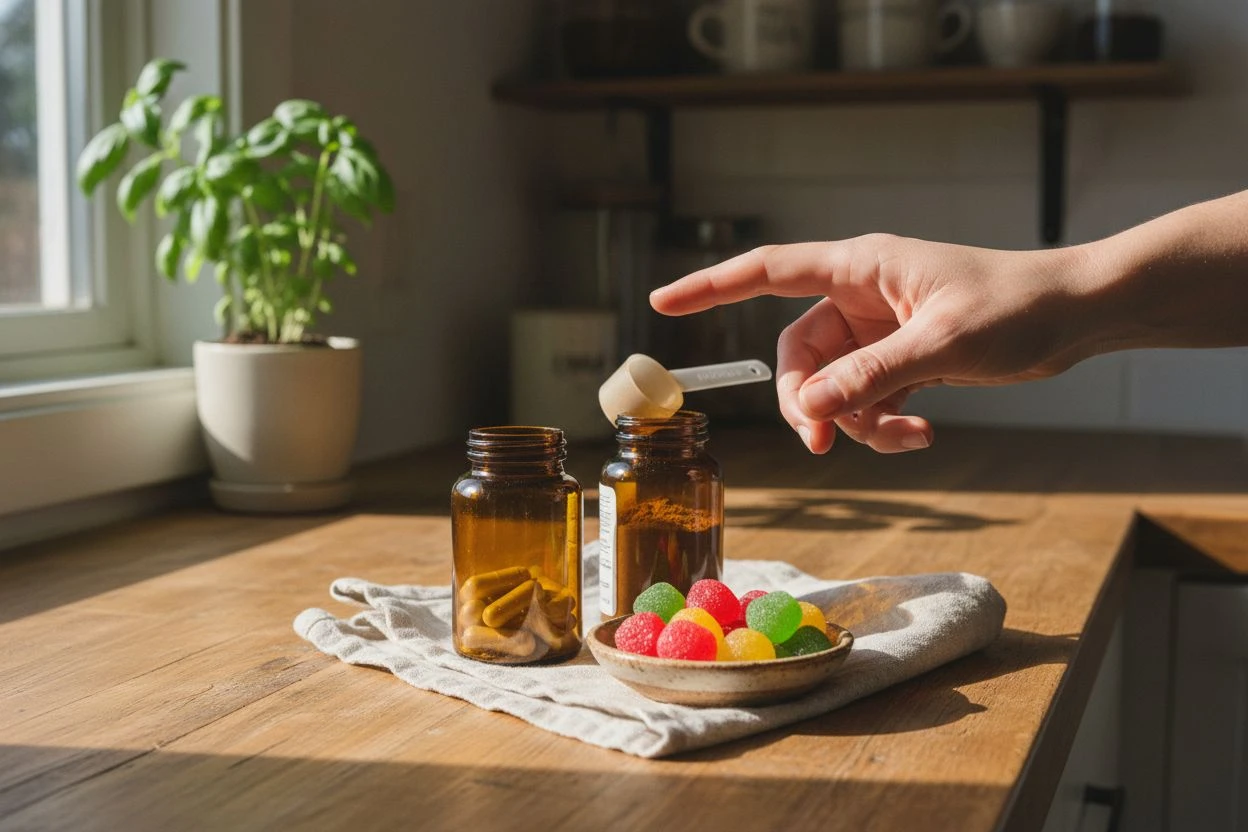
I once spent a small fortune on a sleek bottle of high-potency Vitamin D capsules. My plan was flawless. My motivation was sky-high. Six months later, I found that expensive bottle tucked behind the coffee. It was half-full and three months past its expiration date. Sound familiar? We’ve all been there. Perfect intentions somehow dissolve in the busy, messy reality of daily life.
Here’s the frustrating truth: nearly half of all New Year’s resolutions fail because we simply don’t understand how habits are built. We treat them like pills—rigid, clinical, something to be swallowed with disciplined grimace. No wonder we choke.
But what if we approached habit formation like crafting a gummy? The goal isn’t rigid perfection. It’s creating something with the right kind of stickiness. A good gummy isn’t brittle—it’s pliable. It has a structure that holds, but with a give that makes it enjoyable. That’s the secret we’re missing.
In this article, I’m breaking down the behavioral science to help you build habits that are genuinely “gummy.” We’ll look at the neuroscience of why your brain resists new routines (it’s called viscosity). We’ll debunk the mythical 21-day timeline. Then we’ll map out the precise “habit loop” that makes actions automatic. Finally, we’ll get practical with strategies to lower friction and anchor new behaviors so they actually stick. Mastering this is key for anyone trying to learn how to remember to take vitamins daily.
Why Your Brain Fights New Habits (And How to Remember to Take Vitamins)

Here’s the core problem in one sentence: your brain is wired to save energy. Any new habit feels like wading through mental molasses. This happens until you’ve repeated it enough times to pave a neural shortcut. That initial resistance isn’t a personal failing. It’s basic neurobiology.
I call this Habit Viscosity. Think of a high-viscosity habit as thick honey. It takes significant mental effort to get moving. Deciding to go for a run after work feels “thick.” So does preparing a new supplement or starting to meditate. Your brain has to consciously process every single step. In contrast, a low-viscosity habit—like brushing your teeth—flows automatically, like water. It’s barely a conscious thought.
This isn’t your brain being difficult on purpose. It’s a brilliant, ancient energy-saving system. Habits are survival mechanisms that allow the brain’s basal ganglia to automate tasks and conserve precious cognitive fuel. When a behavior is new, your prefrontal cortex (the CEO of decision-making) has to micromanage it. This is mentally expensive. Your brain’s main goal is to offload tasks from this resource-heavy CEO to the efficient, automated department of the basal ganglia.
The shift from high to low viscosity is the physical process of the brain reorganizing itself through neuroplasticity with repeated behavior. Each repetition is like applying heat to that mental molasses. You slowly lower its resistance. You’re literally carving a new, more efficient neural pathway. The action eventually needs minimal conscious effort.
So when you struggle to start a new vitamin routine, you’re not lazy. You’re just feeling the innate, high-viscosity state of any unpracticed behavior. The solution isn’t more willpower. It’s understanding this viscosity. You must apply strategic heat—through repetition and smart design—to thin it out until it flows on its own.
Is the 21-Day Habit Myth True?
Let’s get this straight: it takes an average of 66 days for a new behavior to become automatic. Not 21. And that’s just an average. The real range is anywhere from 18 days for a simple habit to a staggering 254 days for a complex one. The classic “21-day rule” is a motivational myth. It sets most of us up for failure.
Where the 21-Day Myth Started
We can probably thank a misinterpretation of plastic surgeon Dr. Maxwell Maltz for this. In the 1960s, he noticed it took his patients about 21 days to get used to their new faces. This personal observation somehow became a universal law of habit formation. It’s a nice, tidy number that sells books and apps. But it’s got about as much scientific backing as saying gummy vitamins work because they’re cheerful.
Actual Timeline for Habit Formation
The real data comes from a far less glamorous source: a 2009 study by Dr. Phillippa Lally at University College London. Her team tracked 96 people trying to form a new daily habit, like drinking a glass of water with lunch or running for 15 minutes.
The results? On average, automaticity—that feeling of the behavior being effortless and mindless—plateaued around 66 days. The key word is plateaued. Improvement kept happening well past three weeks. The habit kept getting stronger and more automatic for over two months. This matches my own experience testing supplement routines. The first three weeks are the grind, but the real, sticky integration happens in the month that follows.
Why Habit Timelines Vary So Much
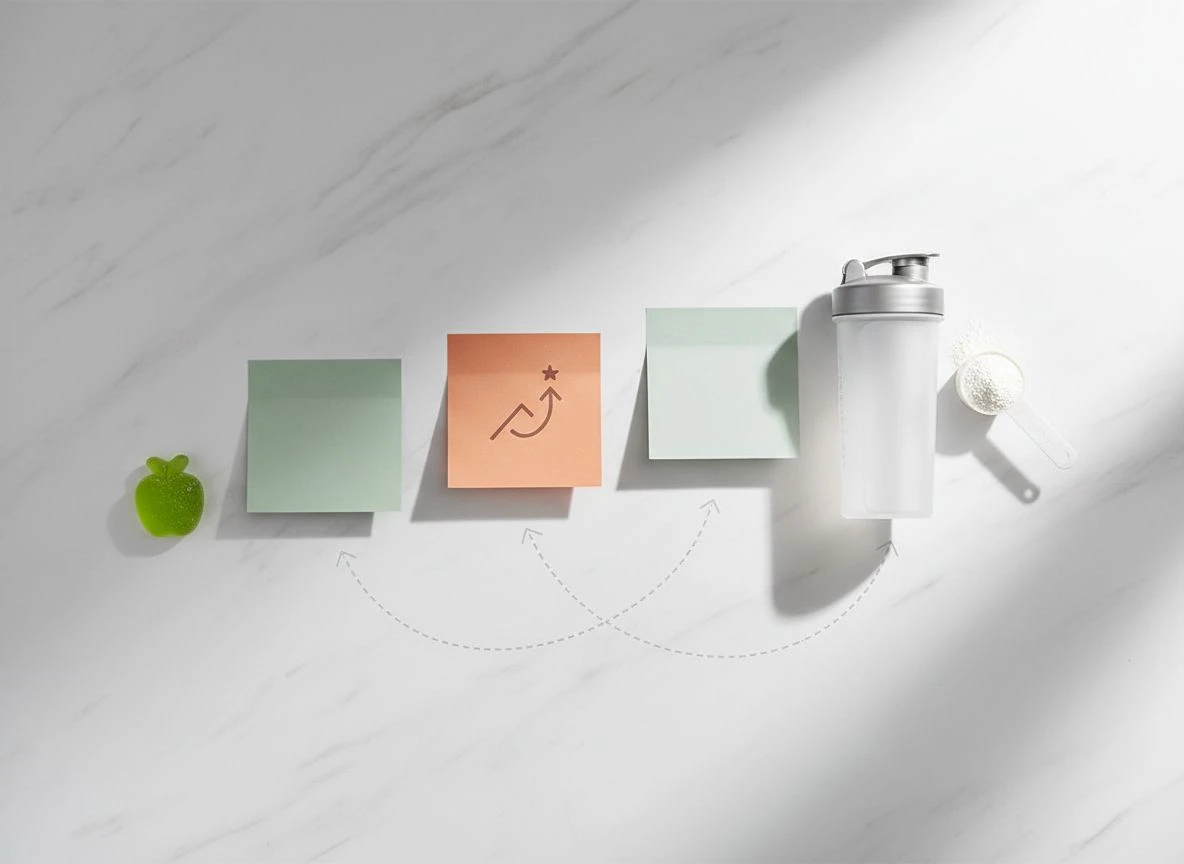
This is the part I find most liberating. Lally’s research showed a huge variation. Someone building the simple habit of drinking a glass of water might hit automaticity in 18 days. Another person working on a complex behavior like doing 50 sit-ups before breakfast might need 254 days.
The timeline depends entirely on you and the behavior’s complexity. How much mental effort does it require? How big is it disrupting your existing routine? Swallowing a gummy vitamin next to your coffee maker is on the “18-day” end of the spectrum. Preparing a full greens powder smoothie every morning? That’s drifting toward the “254-day” territory.
So if you’re on day 22 and your new routine still feels like a chore, you’re not failing. You’re probably just working with a more complex habit. The pressure’s off. The goal is consistency, not a calendar deadline.
How Gummy Habits Create Automatic Routines
Here’s the core psychological engine that makes a habit sticky: a four-part neurological loop. It’s not about willpower. It’s about designing a cycle your brain wants to repeat. A well-built loop is “gummy.” Its cue can be flexible, but the reward is so satisfying it pulls you back, creating a shape that holds.
Let me use my morning coffee ritual as a working example. It’s a habit so entrenched I could do it in my sleep. The cue is my alarm clock blaring. That trigger creates a craving: a brain-and-body desire for alertness and the warm, bitter taste I associate with it. The response is the action: shuffling to the kitchen and brewing a pot. Finally, the reward: that first sip delivering caffeine and comfort. Every single completion of this loop releases a “microdose of dopamine,” the learning chemical that reinforces the pathway. My brain literally learns, “That sequence? Worth repeating.”
Now, let’s apply this to building a supplement routine.
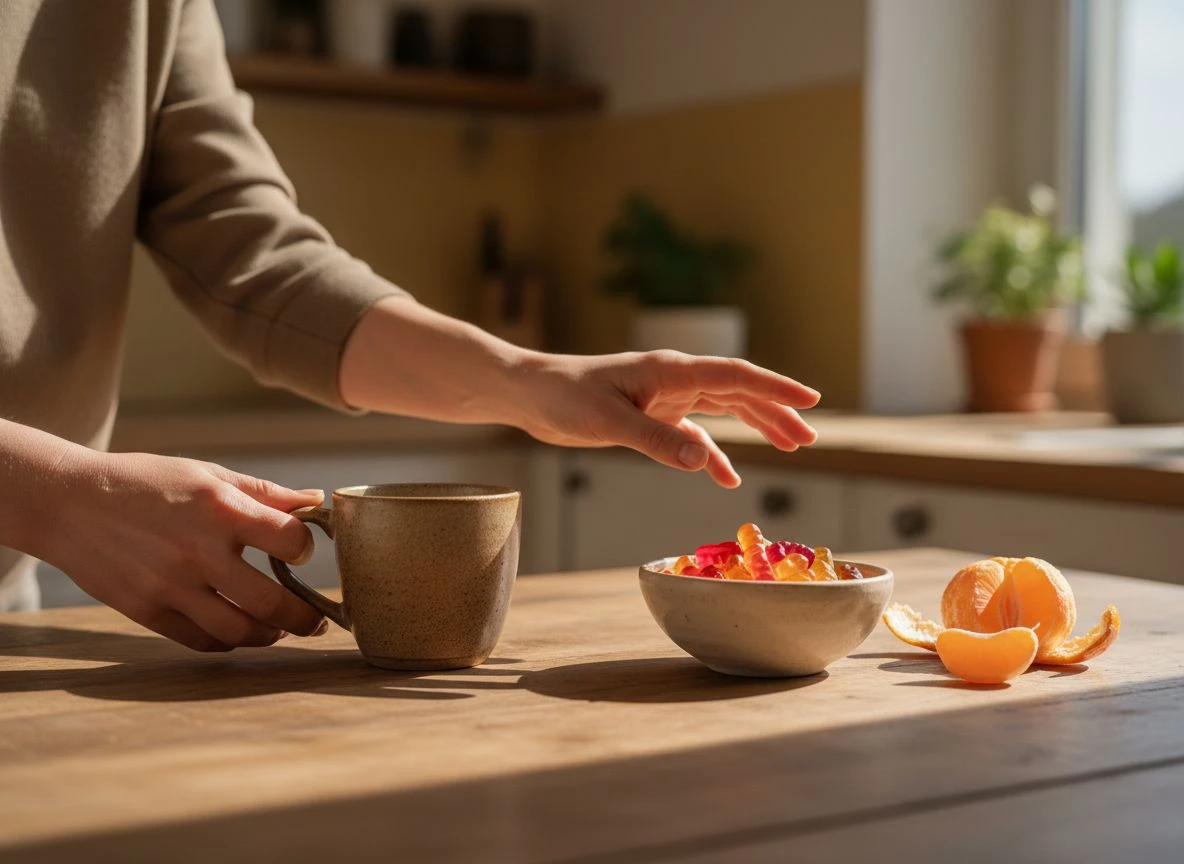
The genius of the loop is in its parts. The cue can be surprisingly malleable—the “gummy” part. It doesn’t have to be 7:00 AM at your kitchen counter. It could be finishing your last bite of breakfast, putting your lunchbox in your bag, or brushing your teeth at night. The more potential cues you have, the more flexible and resilient your habit becomes. It stretches to fit your day.
The craving is the motivational force. This is where many of us fail. We try to build a habit around something we think we should want, not something we actually do. For a gummy vitamin, the craving might be the anticipation of a sweet treat. It could be the mental satisfaction of self-care, or the tangible reminder you’ve started your day right.
The response is the behavior itself. Its success depends entirely on how easy you’ve made it. This is the viscosity factor from earlier. Is the bottle visible? Is the lid easy to open? Low friction here is non-negotiable.
Finally, the reward is the sticky glue. It must be immediate and satisfying. With a gummy, the reward is built-in: the flavor and chewing experience. That instant gratification is a powerful teacher for your brain. It closes the loop and delivers the dopamine hit that etches the pathway a little deeper.
The goal is to engineer this cycle until it runs automatically. A “gummy” habit loop works because it’s not rigid—you can bend the cue—but the reward ensures it always snaps back to shape.
Sticky Habits Using Sensory Anchors
Forget willpower. The secret to a sticky habit is designing a routine your brain can execute on autopilot. You use sensory pleasure to anchor the behavior. You must systematically remove every ounce of starting friction. Consistency comes from design, not discipline.
Using Senses to Trigger Habits
This is where gummy vitamins have a hidden behavioral superpower. A pill is inert—a chore to swallow. But a gummy engages multiple senses. The sweet-tart taste, the chewy texture, the fruity smell… these aren’t just marketing fluff. They’re powerful sensory anchors. They create a more robust and pleasurable cue for your habit loop.
In my own testing, the simple act of enjoying the taste transformed the ritual. It went from a “should-do” into a “get-to-do.” That tiny hit of pleasure is part of the reward. It strengthens the neurological pathway. It’s a built-in advantage that makes the craving—the motivational force in the habit loop—much easier to generate. You’re not just craving the health benefit. You’re subtly craving the pleasant experience itself.
Linking Habits to Existing Routines
Here’s the most effective tactic I’ve used: habit stacking. The concept is brilliantly simple. You “stack” your new habit (taking your vitamin) directly onto an existing, ironclad habit you already do without thought.
The formula is: “After/Before [CURRENT HABIT], I will [NEW HABIT].”
Don’t try to remember to take your gummy at 10 AM. Instead, anchor it to something automatic:
- “After I pour my morning coffee, I will take my gummy.”
- “After I brush my teeth at night, I will take my gummy.”
You’re leveraging an already-established neural circuit. The existing habit becomes the infallible cue. This eliminates the mental energy of remembering. The friction of “when” and “where” evaporates.
Setting Up Your Space for Habits
Relying on motivation is a losing strategy. It fluctuates daily with your energy and stress levels. The solution is to make the right action the easiest one. This is all about environmental design.
For a gummy habit, that means:
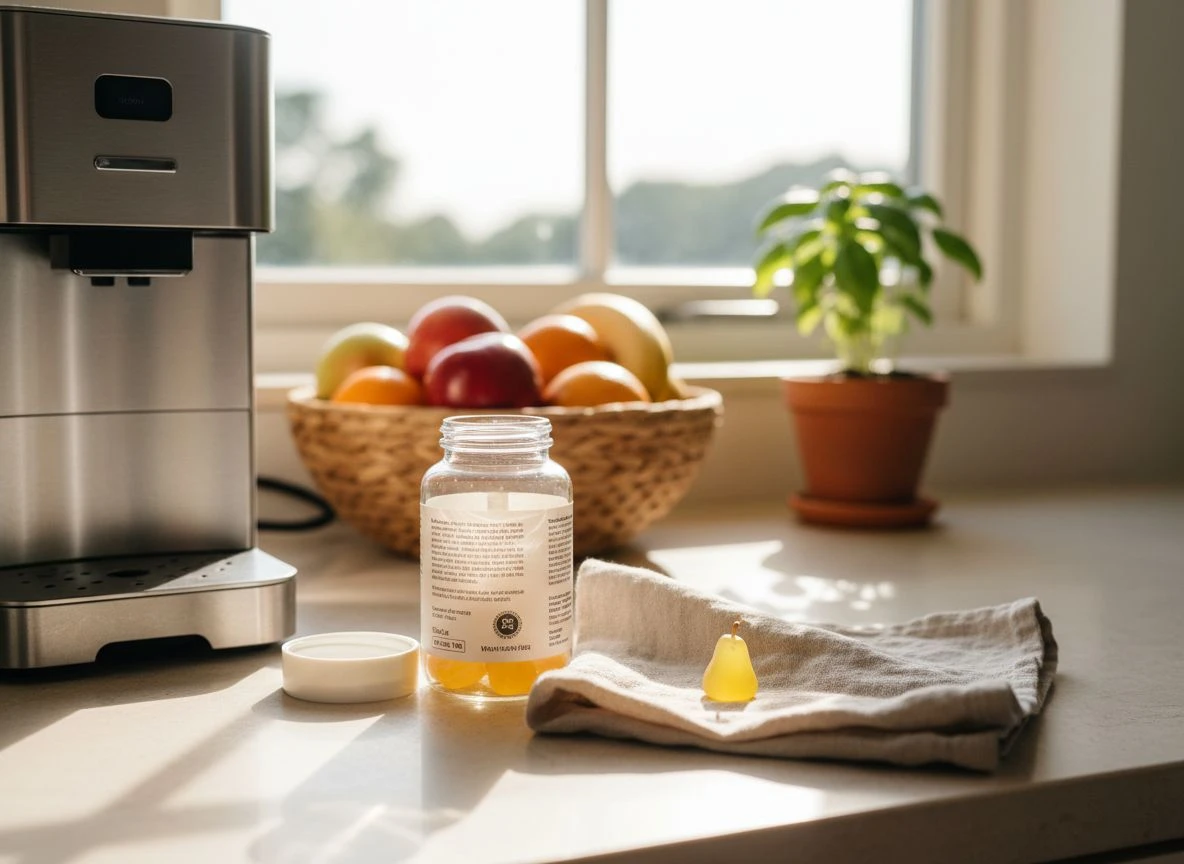
- Visibility: Don’t hide the bottle in a cupboard. Place it directly in the path of your anchor habit. Put it next to the coffee machine, on your nightstand, or beside your toothbrush.
- Accessibility: Take the lid off the bottle in the morning. Remove the physical barrier of unscrewing a cap. Better yet, put one gummy in a small dish on your counter the night before.
- Pairing: Physically pair the new habit with the old. I literally put my vitamin bottle on top of my coffee tin for a week. I couldn’t make coffee without seeing and handling the vitamins.
When you do this, you’re not using conscious effort to build the habit. You’re using your environment to trigger the behavior effortlessly. The action starts to feel automatic because you’ve removed the cognitive and physical speed bumps. The habit becomes “gummy” because it molds seamlessly into the shape of your existing day.
Start Small to Build Habit Momentum
What if taking your vitamins felt as easy as brushing your teeth? Let me show you how to engineer that. The secret weapon is the “Tiny Habits” method. You anchor an incredibly small new behavior to an existing routine with this formula: “After I [CURRENT HABIT], I will [NEW TINY HABIT].”
Here’s why it’s brilliant for supplements. Your brain resists big, scary changes. “Take a multivitamin, fish oil, probiotic, and adaptogen with breakfast” is a high-viscosity ask. It often fails by Wednesday. But “after I pour my coffee, I will take one gummy”? That’s almost laughably easy. It doesn’t trigger your brain’s threat response. This is the perfect use of a gummy’s built-in low friction. No water needed, no swallowing struggle. Just a pleasant, 3-second chew.
You use the existing, ironclad habit (pouring coffee) as the infallible cue. The tiny behavior (one gummy) is the response. It’s so simple you can’t say no. The sweet taste? That’s your instant, sensory reward. You complete the loop and get that microdose of learning dopamine.
Here’s the beautiful part: this isn’t just about the gummy. It’s about the win. Every single time you do it, you build “Behavior Momentum.” Just like a rolling stone, small, consistent habits naturally gain the energy to grow larger. That one-gummy win creates a ripple of “I did it” confidence. Maybe next week, “after my gummy, I’ll drink a full glass of water.” The momentum from your tiny, unbreakable gummy habit makes scaling up other healthy behaviors feel almost effortless. You’re not just building a supplement routine. You’re building a foundation of consistency.
How to Restart After Breaking a Habit
Missing a day doesn’t ruin your habit. The real danger is the story of total failure that follows. Your recovery protocol is simple. Forgive the miss immediately, diagnose the broken cue, and restart the next day with a laughably small version of the habit. Prove to your brain the chain is elastic, not brittle.
Okay, confession time. Last month, I was traveling and my perfectly stacked “after coffee, take gummy” habit shattered. My hotel room had a pod brewer, not my pour-over setup. The cue vanished. I missed a day, then two. My brain immediately whispered the toxic lie: “Well, you blew it. Might as well stop.”
This is the infamous “what the hell” effect. One slip-up triggers an all-or-nothing abandonment of the entire resolution. It’s why a missed gym session turns into a missed month. We treat habits as brittle glass chains that shatter forever. We should treat them like elastic bands that can snap back.
The antidote is a growth mindset. View the setback as diagnostic data, not a character flaw. Your habit didn’t fail; your system had a single-point failure. Here’s your 3-step Gummy Recovery Protocol:
- Forgive Immediately (No Drama). Literally say “Oops, okay” and move on. The 10-second rule. Dwelling on the miss amplifies shame, which makes restarting feel heavier.
- Analyze the Broken Link. Was the cue inaccessible (no coffee maker)? Was the reward absent (did you even like that gummy’s taste)? My failure was a cue problem. Diagnosis complete.
- Restart with a Micro-Habit. The very next day, do a comically small version. Just take the gummy out of the bottle. Or chew one while literally thinking, “This is me rebooting the loop.” You’re not rebuilding the full habit. You’re re-establishing the pathway’s elasticity.
The goal is to prove to your brain that the chain can withstand a break. A truly formed habit is resilient. It has stretch. You miss a day, you analyze, you gently stretch it back into place. The chain isn’t broken. It’s just getting stronger.
Can Gummy Supplements Improve Consistency?
How long until my supplement routine feels automatic? Don’t trust the 21-day myth. Research shows it takes an average of 66 days for a behavior to plateau in automaticity. But the range is huge—anywhere from 18 to 254 days. You’ll go through phases: a clunky Initiation phase (3-7 days), a Learning phase (2-8 weeks) where you’re building the pattern, and finally, the Stability phase where it just clicks. Your timeline depends on the habit’s complexity and your consistency. Be patient.
Is it “cheating” to use a tasty gummy as a reward? It’s not cheating. It’s strategically using the neurology of the habit loop. The sweet taste or pleasant texture provides the immediate, sensory reward your brain craves. This triggers a release of dopamine—the “learning chemical.” It directly reinforces the neural pathway, making you more likely to repeat the action tomorrow. You’re using neuroscience to wire in consistency.
What if my habit is more complex, like a full workout routine? You “gummy-ify” it. A complex habit has high “viscosity”—it feels thick and hard to start. The strategy is to break it into a chain of tiny, gummy steps. Anchor the very first step (e.g., “put on my workout shoes”) to a solid cue. Completing that one step builds behavioral momentum. The next day, maybe you do the first step and then one stretch. You scale up from your unbreakable gummy habit. Use it as the foundation for something bigger.
Turning Goals into Lasting Gummy Routines
Here’s the honest truth: building a lasting habit has very little to do with grit. It has everything to do with designing a system. Make it so low-friction and rewarding that your brain wants to run it. You’re making the action predictable. As the research shows, consistency is the primary driver of that predictability. It slashes the mental energy needed to choose the “right” thing every single day.
You’re not trying to forge an unbreakable chain of perfect discipline. You’re building something more resilient: a gummy routine. One that’s flexible enough to bend when life happens (a missed cue, a travel day). But it’s also sticky enough to snap back into place. It’s the difference between a brittle glass resolution that shatters at the first miss and a malleable, reliable system you can actually live with.
So, what’s your one gummy habit? The small, sensory-anchored action you can wire in? If your goal is supplement consistency, start there. Choose a product that makes the “reward” part of the loop genuinely pleasant. In my testing, Nature Made Wellblends Immune Support Gummies have nailed this formula. They have a balanced taste, a clear efficacy goal, and a texture that doesn’t feel like a chore. It’s a worthy candidate to build your first, unbreakable loop around.
Your turn. Pick your gummy. Stack it. Make it stick.

I founded Best Gummy Reviews after discovering shocking quality gaps during my own vitamin D treatment. With 8+ years in nutrition research, I combine lab science with real-world testing to tell you what actually works. I’m thorough but straightforward—supplements should complement your healthy habits, not replace them.