

Table of Contents
Let’s be real. The search for a pet “gummy” is often solving the wrong problem. This guide ditches the simple hide-and-seek playbook on how to give dog supplements. Instead, it’s a masterclass in behavioral psychology and sensory science. I’ll teach you to decode your pet’s unique rejection triggers. You’ll learn to create positive, effective supplement routines that actually work.
We’ll start by helping you identify your pet’s sensory profile. Are they a sniffer or a texture critic? Then, we’ll lay down critical safety foundations. This includes the non-negotiable warning about xylitol. A master class section will break down the best techniques for powders, pills, and liquids. We’ll move beyond basic food mixing. Finally, we’ll explore advanced behavioral hacks. These transform dose time from a chore into engaging enrichment. This is the framework I wish I had when my own dog became a master pill-spitter.
Finding the Best Pet Supplements Beyond Gummies
What if the search for a pet “gummy” is solving the wrong problem? Here’s my take. We’re often so focused on finding a tasty chew that our pets will willingly eat. We miss the bigger picture. The real goal is creating a sustainable, stress-free routine that actually delivers the supplement.
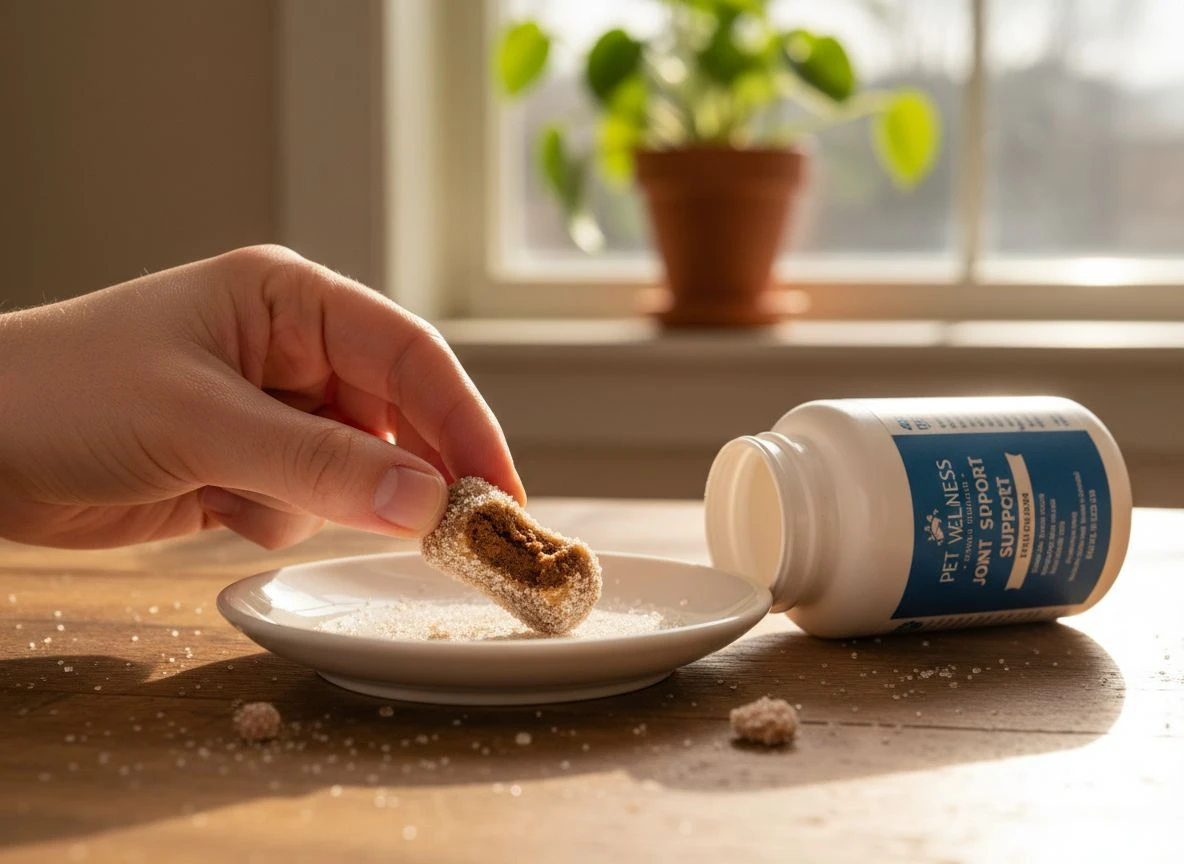
I learned this the hard way with my own dog. I was thrilled when he happily scarfed down a popular, sugar-coated joint chew. Problem solved, right? Wrong. A month later, his pickiness kicked in. He’d lick off the sweet coating and leave the chewy center in his bowl. The supplement was inconsistent, and so were the results. I was chasing a “perfect” pre-made treat. I should have been building a better system.
This struggle is incredibly common. As noted by Pet Wellness Direct, consistency is the absolute key to a supplement’s effectiveness [1]. Skipping doses because your pet turns up their nose defeats the whole purpose. Let’s be honest. Many of those irresistible chews and “gummies” pack in sugars or artificial flavors. In the worst cases, they contain toxic sweeteners like xylitol. That’s a straight-up poison for dogs [2].
So let’s agree. We’ve all spent too much time hunting for that magical, easy-button supplement form. I promise you, there’s a smarter way. This guide isn’t another list of hiding spots. It’s a framework based on your pet’s unique senses and behaviors. We’ll start by decoding your pet’s profile. Are they a “Sniffer” or a “Texture Critic”? We’ll lay down non-negotiable safety rules, like that xylitol red alert. Then, we’ll master techniques for powders, pills, and liquids. Finally, we’ll explore behavioral hacks that turn dose time into engaging enrichment. This is the manual I wish I’d had.
Understand Your Pet’s Taste and Texture Preferences
Here’s the core idea. Your pet isn’t just being “picky.” They’re rejecting a supplement for a specific sensory reason. Identifying their profile is the master key. It unlocks every successful technique later on. I learned this after watching two pets fail in completely different ways.
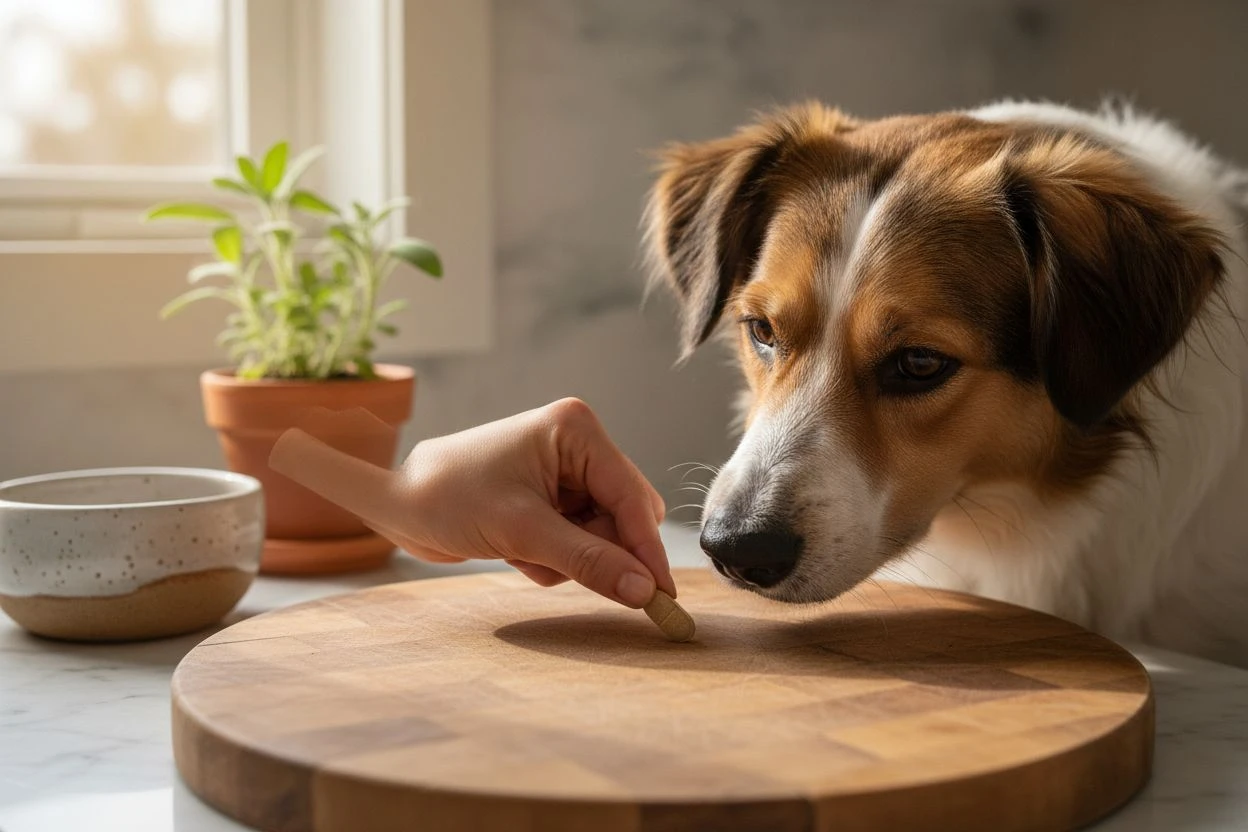
My friend’s dog would meticulously lick the peanut butter off a pill. Then, he’d spit the naked, chalky tablet onto the floor. He’s a classic Texture Critic. Meanwhile, my cat would walk away from a full bowl of food. She’d leave if she even suspected I’d stirred in a tasteless powder. She’s a premier Sniffer.
Understanding this distinction changes everything. You stop wasting time on failed methods. You start choosing tactics that work with your pet’s wiring, not against it.
Let’s break down the two profiles.
Profile 1: The Sniffer. This pet’s world is dominated by scent. They can detect a new molecule in their dinner from three feet away. For cats, this is especially critical. As VetriScience points out, a cat’s rejection is often about an unfamiliar or “off” scent, not taste [3]. A Sniffer will often approach their food bowl, take one cautious sniff, and walk away if something is amiss. They’re the reason the “just mix it in their kibble” strategy fails spectacularly.
For Sniffers, scent-masking is your primary weapon. A tip from Camelus shines here: try the “shaking” technique [4]. Put the pill or powder in a bag with a bit of a super-smelly, crumbly treat. Freeze-dried liver is perfect. Give it a good shake. You’re coating the supplement in a familiar, high-value scent cloud.
Profile 2: The Texture Critic. This pet is all about mouthfeel. They’ll happily lick a paste or gravy. But they will detect and reject any gritty powder, slimy liquid, or hard pill fragment. The peanut butter pill-spitter is the poster child. Texture Critics are why thorough, seamless integration is non-negotiable.
You can’t just sprinkle a powder on top. You need to dissolve or blend it into a wet food pâté until it’s completely indistinguishable. For pills, crushing and mixing must be flawless. Or, you need to hide the intact pill inside a texture they’ll swallow whole without chewing. A soft, moldable pill pocket works well.
So, which is your pet? Here’s a quick checklist:
- Your pet is likely a SNIFFER if they: Reject food with a new powder stirred in; are obsessed with sniffing everything; can find a treat you hid in a room; eat around a hidden pill in their bowl.
- Your pet is likely a TEXTURE CRITIC if they: Spit out pills after licking off the coating; reject foods with “bits” or grains; are sensitive to different kibble shapes; lick wet food gravy but leave behind any gritty residue.
Get this right first. The rest of this guide will flow from this fundamental piece of intel. Every technique and every hack depends on it.
Safety First When Giving Pets Supplements
Before we get clever with techniques, we have to get serious about safety. Every trick in this guide hinges on one rule. Never compromise your pet’s wellbeing for the sake of convenience. This means toxin vigilance. It means a slow introduction to avoid rejection or stomach upset. And it means knowing when a vet must guide you.
Avoid Toxic Ingredients Like Xylitol for Pets
Let’s be brutally honest. The most convenient hiding spots can be dangerous. My number one rule is to scrutinize every ingredient in your “hiding” vehicle. The VetriScience guide nails the critical point [3]. Always check that peanut butter does NOT contain xylitol. This artificial sweetener is a straight-up poison for dogs. It causes rapid insulin release and potential liver failure.
But your vigilance can’t stop there. Avoid chocolate, raisins, grapes, and excessive salt. When in doubt, stick to plain, pet-safe options. Unsweetened pumpkin puree, plain yogurt, or a bit of plain boiled chicken are great choices.
How to Slowly Introduce New Supplements
Even with safe foods, dumping a full dose into a bowl is a classic rookie mistake. I’ve done it! It’s a surefire way to turn a Sniffer or Texture Critic against that supplement for good.
The experts at InClover and VIN agree [5, 6]. Start with a literal sprinkle or a quarter dose. This lets your pet’s senses and digestive system adjust without alarm. Over 5-7 days, slowly increase to the full dose. This patience pays off in long-term acceptance.
When to Ask Your Vet About Pet Supplements
This is non-negotiable. Healthspan’s advice is crucial [7]. Always consult your veterinarian before crushing, opening, or altering a supplement’s form. Some capsules are enteric-coated to survive stomach acid. Crushing them ruins their efficacy.
More critically, if your pet is on any medication, a vet must clear any new supplement. Interactions can be serious. For example, mixing certain joint supplements with blood thinners is risky. Don’t guess.
Here’s my advice. Print these three safety pillars and stick them on the fridge. They’re the foundation every clever trick is built upon.
How to Give Pets Powder and Liquid Supplements
Here’s your playbook for each supplement type. We’ll match techniques to the sensory profiles we just decoded. The right technique turns a daily struggle into a seamless routine. For powders, think gravy. For pills, think decoys. For liquids, think precision.
Sneak Powder Supplements into Pet Food
If you’re just sprinkling a chalky powder on top of kibble, you’re practically ringing a dinner bell for your Sniffer to walk away. The goal is total integration. My most successful tactic comes straight from the Camelus guide: the “Strong-Scented Wet Food Mix-in.” [4]
Don’t use just any wet food. You need a potent, sticky base. Pâté-style food is ideal. Even better? Mash in a super-smelly topper. Try sardines (packed in water, no salt), tripe, or salmon. The powerful, oily scent and smooth texture create a unified gravy. The powder disappears completely. Mix thoroughly—no dry clumps allowed.
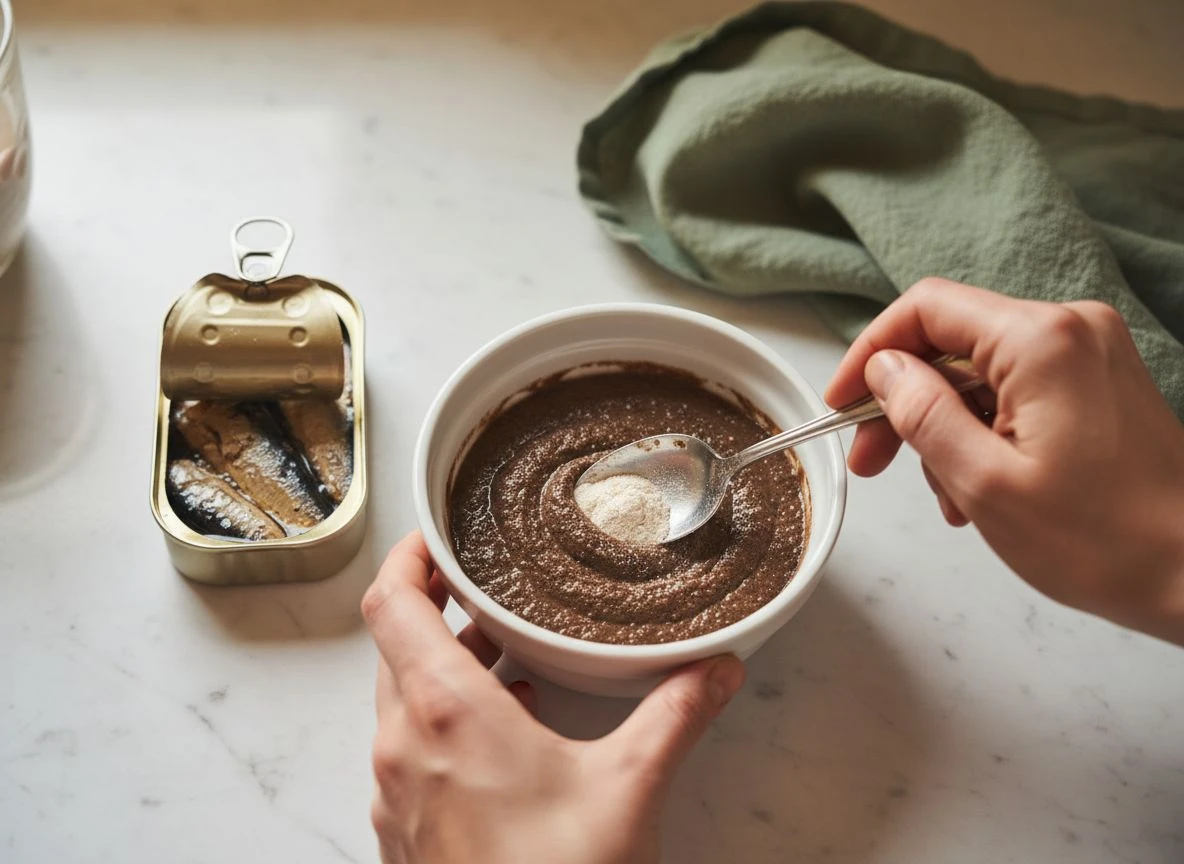
Best for: Primarily Sniffers. The overwhelming familiar scent masks the supplement’s aroma. It can also work for mild Texture Critics. You must achieve a perfectly smooth consistency with no grit.
Easy Ways to Give Your Pet Pills
Pills are the ultimate test for a Texture Critic. That satisfying crunch of a treat followed by a weird, hard pill? They’ll detect it every time. You need to outsmart their mouthfeel radar.
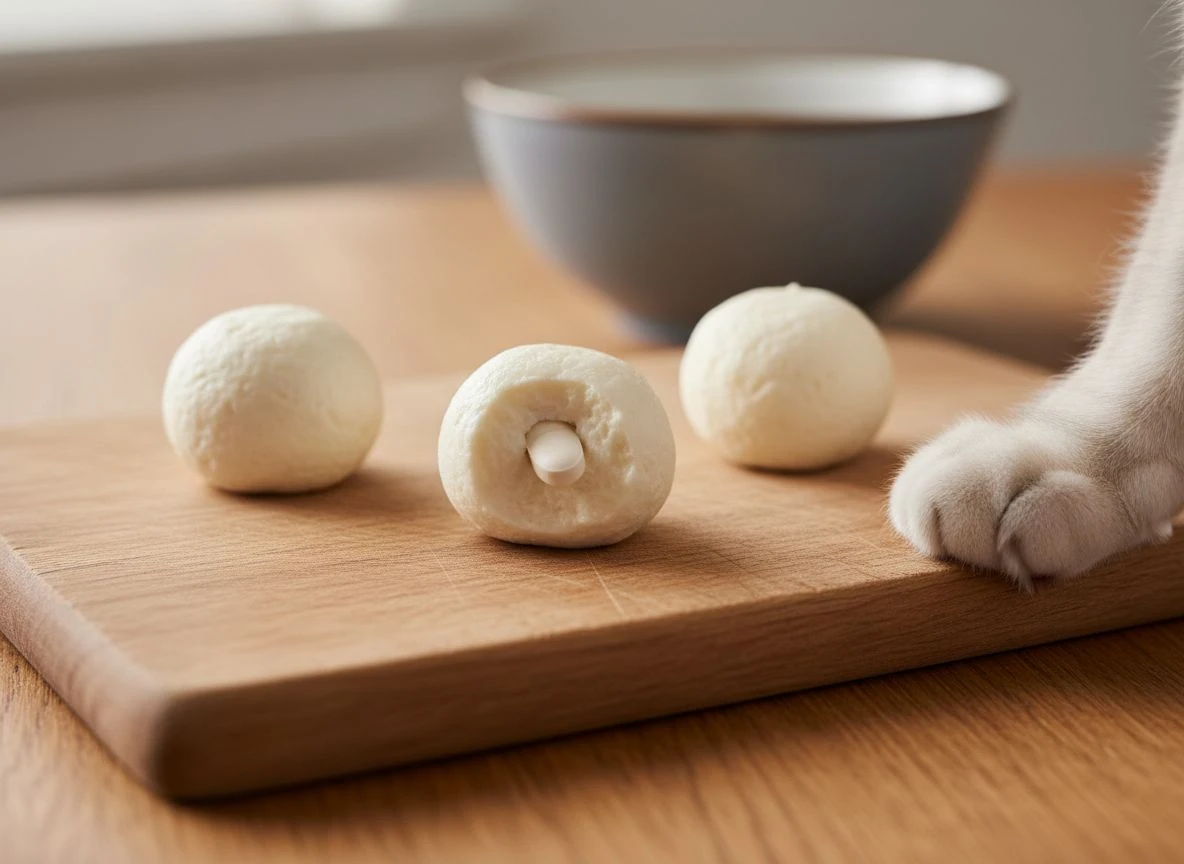
Enter the “Meatball Trick” detailed by professionals on VIN [6]. The rhythm is everything. Give a plain, high-value meatball first. Use soft cheese or liverwurst. Then, immediately offer the identical meatball with the pill tucked inside. Follow instantly with a third plain one. The rapid succession of rewards makes them swallow without scrutinizing the middle bite.
For the ultra-suspicious pet, combine this with the “Decoy Method” mentioned by VetriScience [3]. Use two empty pill pockets or cheese cubes as decoys alongside the loaded one. The focus shifts to the game of “get all the treats” rather than inspecting each one.
Best for: Texture Critics. The uniform texture and rapid-fire delivery bypass their tactile scrutiny. The strong smell of the hiding vehicle also helps with Sniffers.
Using a Syringe for Liquid Pet Supplements
Liquids can be deceptively tricky. Drizzling over food often leads to the supplement pooling at the bottom of the bowl. This results in a final, potent gulp your pet will learn to avoid.
The most reliable method is direct oral administration. But forget aiming for the back of the throat. That’s a great way to get gagged out or cause aspiration. The professional workaround is the cheek pouch technique.
Draw the correct dose into a syringe. Remove the needle, of course! Gently hold your pet’s muzzle. Insert the syringe tip into the side of their mouth, behind the canine teeth. Depress the plunger slowly into the cheek pouch. This allows them to swallow naturally at their own pace. It minimizes the chance they’ll taste it on their tongue. Follow immediately with a treat or a favorite lick.
Best for: Sniffers who would detect a liquid mixed into food. It’s also good for pets who need precise dosing. It bypasses the nose and taste buds entirely if done smoothly. It’s less about texture and more about avoiding the initial taste perception.
Behavioral Tricks for Giving Pet Supplements
In short: The most effective way to give a supplement isn’t to hide it. It’s to make it part of a game or a rewarding, mentally stimulating activity. Shift your goal from “sneak” to “engage.” You turn a chore into bonding and enrichment that benefits their mind and body.
I learned this the hard way with my friend’s Border Collie, Finn. Trying to pill him was a wrestling match he always won. Our breakthrough came when I stopped trying to out-muscle him. I started trying to out-think him.
I began tossing three identical cheese cubes in quick succession. I’d throw one plain, one with his pill hidden inside, then another plain cube across the kitchen floor for him to “find.” He was so focused on the hunt and the reward sequence. He gulped the pill cube without a second thought. That frustrating 5-minute standoff became a 30-second game that actually tired him out.
This isn’t just a trick. It’s leveraging a dog’s natural drives. The VIN experts suggest turning medication into a game, and this is exactly that [6].
Distract Your Pet with a Lick Mat
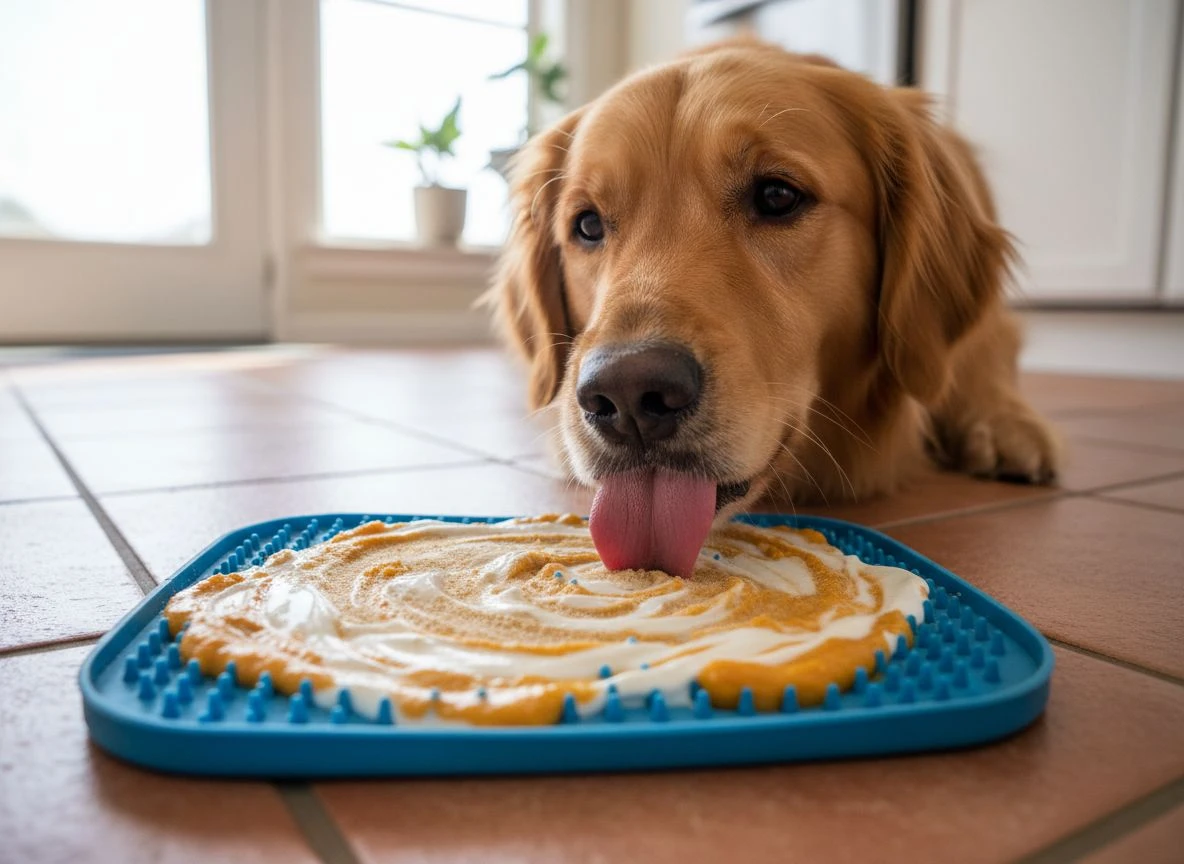
This is my go-to for powders and pastes. Smear a mixture of supplement and plain yogurt, pure pumpkin, or xylitol-free peanut butter onto a silicone lick mat. Freeze it. The prolonged, calming licking action is inherently rewarding. The cold texture slows them down, ensuring they get every last bit. It’s a fantastic distraction. It turns dose time into a decompression session.
Use Puzzle Feeders for Pet Medications
For kibble-coated powders or small pills, use a puzzle feeder. The mental effort to extract the food becomes the main event. They’re so engaged with solving the puzzle that they don’t scrutinize individual kibble pieces. This works brilliantly for “Sniffers.” The primary scent is their familiar food.
Apply Liquid Supplements to Your Pet’s Paw
For the absolute refusal of bitter liquids or pastes, this method is a last-resort lifesaver. Healthspan’s guide mentions it [7]. Place the dose mixed with an irresistible paste on the top of their front paw. Use a lickable treat. Most pets will instinctively lick it clean. It’s a bit messy, but it guarantees ingestion when all else fails.
Train Your Pet to Take Pills Willingly
This is the long-game win. Start by teaching your pet that a plain, empty pill pocket is the highest-value treat. Or use a piece of cheese. Show it, say “Take your pill!”, let them eat it, and throw a party. Do this for weeks until their tail wags at the cue. Then, very occasionally, swap in the real thing. You’re not sneaking. You’re fulfilling a highly anticipated promise. This builds incredible trust.
The goal isn’t to trick your pet. It’s to creatively meet their needs. Make their supplement a neutral or even positive part of their day. It’s management with a side of mental enrichment.
Make Homemade Treats to Hide Pet Supplements
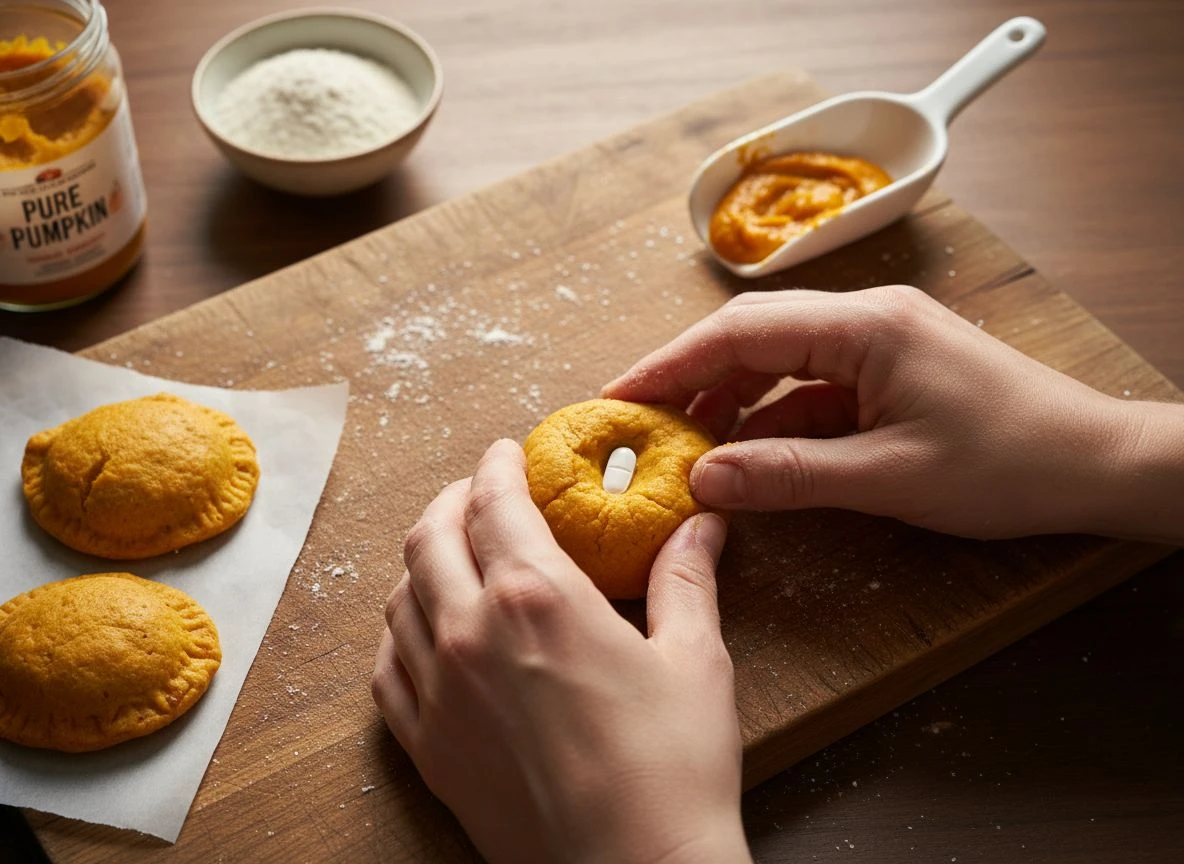
If you buy commercial pill pockets, you’re often paying for processed fillers and preservatives. You get a lot of air. The DIY approach lets you control the ingredients. You can tailor the flavor to your pet’s preferences. Use those natural flavorings Pet Wellness Direct recommends [1]. You can create the perfect texture for hiding pills or mixing in powders. It’s simpler than you think.
My go-to is a Basic Pumpkin Pocket. Pureed pumpkin is a miracle worker. Make sure it’s not pie filling! It’s palatable, binds well, and is gentle on tummies. Mix about a quarter cup of pure pumpkin with just enough oat flour to form a moldable dough. You can use finely ground old‑fashioned rolled oats. Pinch off a small bit. Wrap it around a pill or a dose of powder, and roll into a ball. The mild scent and soft, uniform texture are perfect for Texture Critics.
For hot days or an anxious pet, I love the Frozen “Supsicle.” It’s inspired by InClover’s clever idea [5]. Blend a pet‑safe liquid like unsalted bone broth or plain yogurt with your supplement powder. Pour the mixture into an ice cube tray, lick mat, or a small dish. Freeze it. The prolonged licking activity is calming. The cold numbs the taste buds slightly, making it ideal for bitter powders. For a Sniffer, use a stinky broth as your base.
The beauty is skipping the gums and artificial junk. You’re just using real, whole foods as your delivery system. Give one simple recipe a try this week. You might just find your new favorite routine.
Fix Refusal to Take Pet Supplements
In short: Even the best-laid plans fail with a determined pet. Don’t get frustrated. Systematically troubleshoot. This matrix matches common rejection behaviors with proven solutions. They come from behavioral experts and my own messy trial-and-error.
When your clever hack fails, it’s usually for one of two reasons. The pet detected the supplement by texture or scent. The fix is to escalate your masking strategy. Here’s your go-to guide.
| The Problem & Likely Cause | The Solutions (Start at the top, work down) |
|---|---|
| “Spits out the pill.” Cause: Texture Critic feels the hard pill in soft food. |
1. Encase it. Use an empty gelatin capsule (size #3 or #4) from a health store to hide the pill. Then hide that in a treat. This adds a smooth, melty barrier. 2. Overpower the scent. Use an ultra-strong scent mask. Try liver paste, mashed sardines, or cream cheese in a hollowed-out hot dog piece. The stronger smell overrides their suspicion. 3. Use the “Paw Lick.” Spread a pill-paste mixture on the top of their front paw. Use a crushed pill mixed with xylitol-free peanut butter. They’ll lick it off instinctively. |
| “Leaves powder at the bottom of the bowl.” Cause: Sniffer detects a foreign scent, or Texture Critic hates the grittiness. |
1. Change the food vehicle. Only mix powders into pâté-style wet food, not gravy or chunks. Mash it in thoroughly until completely uniform. 2. Make a gravy. Mix the powder with a small amount of warm water or low-sodium broth first. Create a paste, then stir that into their food. It distributes better. 3. Bypass the bowl. Smear the powder-paste onto a lick mat or into a puzzle toy. The engaging activity distracts from the minor texture change. |
Look, my dog taught me that persistence pays off. When she started finding pills wrapped in cheese, I moved to the gel capsule inside the hot dog. When she licked around powder in her kibble, I switched to a pâté-and-lick-mat combo. The goal isn’t to win a single battle. It’s to have a backup plan—and a backup for your backup.
Why Better Pet Health Goes Beyond Gummies
Forget the endless hunt for a palatable pet gummy. The real solution isn’t a better treat. It’s a smarter strategy. Understand your pet’s senses. Use precise, engaging methods. You ensure they actually get the full, consistent dose they need to thrive.
Chasing a commercial “gummy” or chew often means compromising. You deal with sugar, questionable fillers, and inconsistent dosing. What we’ve outlined here is the opposite. It’s a precise, safe, and oddly bonding approach. You’re not just hiding a pill in peanut butter. You’re using sensory science and behavioral tricks. You’re integrating wellness seamlessly into your pet’s life.
This is the heart of the message from sources like Pet Wellness Direct [1]. Consistency is key to efficacy. That consistency comes from a method your pet accepts daily. It doesn’t come from a palatable but nutritionally questionable vehicle.
You’re no longer just a pet parent trying to sneak a supplement. You’re a savvy caregiver equipped with a framework. You can troubleshoot rejection. You can tailor solutions to your dog’s or cat’s unique profile. You can ultimately support their health journey effectively. That’s a way better outcome than a half-eaten, sugar-coated chew left in the bowl.
If you know another pet parent locked in a daily struggle with a picky eater, please share this guide with them. It’s time we all moved beyond the gummy.

I founded Best Gummy Reviews after discovering shocking quality gaps during my own vitamin D treatment. With 8+ years in nutrition research, I combine lab science with real-world testing to tell you what actually works. I’m thorough but straightforward—supplements should complement your healthy habits, not replace them.