

Table of Contents
Picture yourself in the vitamin aisle. You’re facing a wall of cartoon-shaped, rainbow-colored gummies. Your hand hovers. You’re not reaching for fun—you’re paralyzed by the quiet fear of hidden allergens. I get it. That ingredient list can feel like a minefield in cheerful packaging. Let’s turn that anxiety into action. This checklist will help you become a confident, label-savvy detective. Understanding gummy vitamins allergens is crucial for your child’s safety.
I’ve tested dozens of kids’ gummies. Vetting them for allergens is totally different from checking a pill. It’s more complex and more frustrating. The cute format comes with hidden challenges. This includes binders, fillers, and “natural flavors.” There is also a real risk of cross-contact in factories that also make candy.
My goal is to give you a clear, step-by-step toolkit. You’ll break down why gummies are a unique allergy challenge. You’ll learn how to decode a label now that sesame is the 9th major allergen requiring disclosure. We’ll cover where hidden names lurk. We’ll also cover what questions to actually ask manufacturers. Safety isn’t about luck. It’s about a systematic process you can master.
Are Gummy Vitamins Riskier for Allergies?

Here’s the thing: a gummy’s chewy, appealing texture needs a complex web of ingredients. The manufacturing process introduces far more allergen risks than a simple pill. The very things that make gummies kid-friendly are also what make them tricky for parents managing allergies. This includes their texture, taste, and look.
I learned this the hard way. After my own bout with “pill fatigue,” I tried gummy vitamins. I thought they were just fun-shaped nutrients. I discovered a dizzying list of binders, fillers, and “natural flavors.” It was far more complex than a simple capsule. This complexity is the root of the allergy challenge.
A standard tablet or capsule needs few inactive ingredients to hold it together. A gummy, however, is a food product. It requires a gelling agent for that chewy texture.
The most common are:
- Gelatin: Animal-derived (usually beef or pork). This is an issue for certain diets. It can be a potential allergen vector.
- Pectin: A plant-based alternative from fruit. As I explored in my article on vegan gummies, pectin is a great option for many. But its production can sometimes involve allergens. It also often needs more additives like sugars and acids to set properly.
Then there’s the manufacturing reality. Many supplement companies don’t have their own gummy lines. They contract with candy makers. That means the same equipment that pumps out gummy bears one day might make your children’s multivitamin the next. The risk of cross-contact with allergens like milk, soy, tree nuts, or sesame is inherently higher. This is more likely than in a facility that only produces powdered pills.
So, a pill label might list the active nutrient and one or two other agents. A gummy label tells a longer story. It includes texturizers, sweeteners, colors, and flavors. Each one is a potential hiding place for an allergen. Each is also a point of cross-contact. The appealing format has a much more complex ingredient footprint. That’s why you need extra vigilance. Identifying gummy vitamins allergens requires careful scrutiny.
Understanding Gummy Vitamin Labeling Laws for Allergens
U.S. law requires clear disclosure of the “Top 9” allergens in dietary supplements. This includes kids’ gummies. The list is: milk, eggs, fish, shellfish, tree nuts, peanuts, wheat, soy, and sesame (added in 2023). If any are intentionally added, they must be declared on the label.
Manufacturers have two clear options for this disclosure. First, they can use a note in the ingredient list. You’ll see this as “lecithin (soy)” or “natural flavors (milk).” Second, they can use a standalone “Contains:” statement after the ingredient list.
It’s crucial to understand what this law doesn’t cover. This requirement is only for intentional inclusion. It does not address the risk of cross-contact from shared equipment. Statements like “may contain traces of peanuts” are voluntary and unregulated. A product with no “Contains:” statement could still be made on shared machinery. The law gives you a baseline for intentional ingredients. But it’s only your first layer of defense. Always look for gummy vitamins allergens in these disclosures.
Source Referenced:
[1] Trustwell. “How to Accurately Label Allergens on Dietary Supplement Fact Panels.” Trustwell Blog, https://blog.trustwell.com/how-to-accurately-label-allergens-on-dietary-supplement-fact-panels.
How to Read Gummy Vitamin Labels for Allergens
Let’s cut through the confusion. Here’s how you can confidently read any gummy label in under two minutes. Don’t worry about memorizing every chemical name. It’s about knowing where to look and what questions to ask. Grab a bottle and follow along with me.
Step 1: Find the “Contains” Statement Immediately
This is your fastest red or green light. By law, if the gummy contains any Top 9 allergens as intentional ingredients, they must be declared here or in the ingredient list [3]. The “Contains” statement is usually in bold text right after the ingredient list. What you see here is non-negotiable. If it says “Contains: Soy,” believe it.
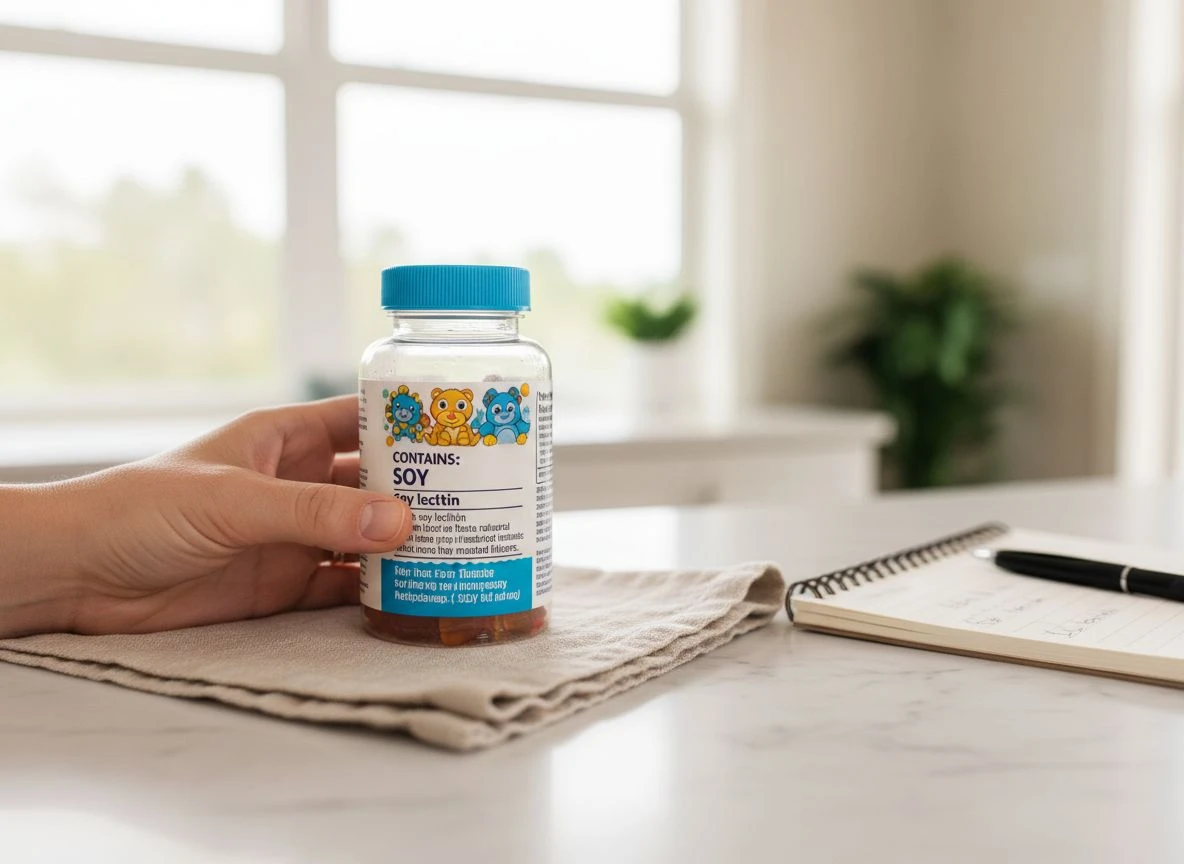
But—this is critical—an absence of a “Contains” statement doesn’t mean “allergen-free.” It only means none of the Top 9 are intentionally added. Cross-contact won’t be listed here.
Step 2: Read EVERY. SINGLE. LINE. Of the Ingredient List
This is the non-negotiable work. You must read the full ingredient list every single time you buy, because formulas change [2]. Look beyond the obvious. “Natural flavors” is a major red flag. It can legally hide allergens like dairy (casein) or soy. A green flag is specific sourcing, like “natural strawberry flavor.”
Watch for binders: “soy lecithin” is soy, “whey” is milk. Gelatin could be bovine (beef) or porcine (pork). I once spent twenty minutes decoding “mixed tocopherols” (often from soy) on a “natural” kids’ vitamin. It matters.
Step 3: Look for Clues Beyond the Ingredients
Scan the whole label for other claims. A red flag is a vague “may contain” statement that seems like an afterthought. A strong green flag is a specific, certified claim like “Gluten-Free Certified (GFCO)” or “Certified Free From: milk, eggs, peanuts.” These require rigorous third-party testing [4].
Also, check the Supplement Facts panel. If you see “Other Ingredients: corn syrup, sucrose, gelatin…” you know it’s a sugary base with potential allergen vectors. The manufacturer’s contact info is a clue too. A company with a phone number is often more transparent than one with just a generic web form.
Follow these three steps. You’ll move from anxious guesswork to methodical investigation. You won’t catch every potential risk, but you’ll build a foundational layer of confidence. This process is key for spotting gummy vitamins allergens.
Hidden Allergens in Gummy Vitamin Ingredients

Here’s where your detective work gets real. The law mandates disclosure of the Top 9 allergens. But manufacturers don’t always use the common names you’re looking for. They use technical names. Knowing these aliases is your power move.
Let’s run through the most common culprits in gummies. Think of this as your quick mental cheat sheet.
Soy is the stealth champion. Look for soy lecithin. It’s a very common emulsifier that gives gummies a smooth texture. It’s in everything. Also watch for “soy protein isolate” or just “lecithin.” Unless it says sunflower, it’s almost always soy-based. Mixed tocopherols (a form of vitamin E) are also frequently from soy.
Wheat can hide as modified food starch. In the U.S., if a label says “modified food starch,” the source must be declared if it’s wheat. However, I’ve seen it listed without that note, which is a red flag. “Glucose syrup” can also sometimes be wheat-derived, though this is less common in gummies.
Milk might appear as casein or caseinate (a protein) or whey. These can be in “natural flavors” or as standalone ingredients. If you see “natural flavors (milk)” in parentheses, the law is working. If you just see “natural flavors” and your child has a severe dairy allergy, you need to call the company.
Now, two non-top-9 items that cause frequent confusion. Shellac (confectioner’s glaze) gives some gummies a shiny finish. It’s from lac bugs. It’s not a regulated allergen, but it’s not vegan or vegetarian. Artificial colors like Red 40 and Yellow 5 are not allergens. But many kids have sensitivity reactions to them. They serve no nutritional purpose. In my opinion, they’re an easy ingredient to avoid.
The bottom line? If you see an unfamiliar ingredient, assume it could be a derivative of a common allergen until you prove otherwise. A quick web search in the aisle can save worry. When in doubt, call the manufacturer’s customer service. This vigilance helps uncover gummy vitamins allergens.
What May Contain Means on Gummy Vitamins
Here’s the unsettling truth. Phrases like “may contain” or “made in a facility with” are voluntary advisory statements. They are not FDA-mandated warnings. A manufacturer can choose to include them—or not. For a child with a severe allergy, the absence of this warning does not guarantee safety. Treat these advisories as strict “do not consume” notices for high-risk allergies.
Let me share a story. A parent in our reader community called a brand famous for “clean” kids’ gummies. She was checking for her son’s severe dairy allergy. The customer service rep revealed a critical detail. While the gummies had no milk, they were made on the same production line as milk-based yogurt bites. The line was “cleaned” between runs. The gummies were made after the yogurt products. The label? Completely silent. No “may contain milk” statement.
This is the reality of precautionary allergen labeling (PAL). The FDA does not regulate when or how these warnings are used [1, 3]. One company might use “may contain peanuts” for a tiny risk. Another, with bigger cross-contact potential, might say nothing. You can’t compare warnings across brands.
In gummy making, cross-contact is a real risk. It happens via shared equipment like cooking kettles and molds. It can also happen through airborne dust from powdered ingredients like milk powder used in other products. A gummy labeled “soy-free” could have soy residue from a batch made the day before. This happens if cleaning isn’t perfect.
For a life-threatening allergy, the only safe path is to choose certified free-from brands. Look for those certified by NSF or Allergy Certified. Another option is brands made in a dedicated allergen-free facility. Don’t gamble on a silent label. That voluntary “may contain” isn’t a suggestion. It’s maybe the only clue you’ll get. Managing gummy vitamins allergens means taking these warnings seriously.
How to Research Gummy Vitamin Manufacturers
Let’s be clear. Reading the label gets you most of the way. For the final part—especially for severe allergies—you need to pick up the phone. You must become the auditor. Since “may contain” statements are voluntary, no warning tells you nothing. The only way to know the real cross-contact risk is to ask directly. You need to ask the right questions.
Here is your script. Bookmark this for when you need to make that call.
Call or email their customer service or quality department. Say this:
“Hi, my child has a severe [X] allergy. I’m considering your [Product Name] gummies. For their safety, I need to ask:
1) Is this product made on dedicated equipment or in a dedicated facility for this allergen?
2) Do you perform final batch testing for allergen cross-contact using PCR or ELISA methods?
3) What is your quantitative threshold (in parts per million) for a ‘free from’ claim on the label?”
Now, listen for their answers. For question one, “dedicated facility” is the gold standard. “Dedicated line” with validated cleaning is more common and often okay. “Shared equipment” is a major red flag for high-risk allergies.
The second question is key. Serious manufacturers test final products, not just raw materials. Methods like PCR or ELISA are scientific standards to detect trace proteins. If they don’t test final batches, that’s a data gap you can’t risk.
The third question gets to their quality system. A vague “we test to ensure it’s free from” isn’t enough. You want a specific ppm number (e.g., <10 ppm gluten). This shows they have a defined, science-based standard. It’s part of good GMPs (Good Manufacturing Practices).
If you get hesitation or a generic “we follow FDA guidelines,” be very careful. Trustworthy brands are transparent. We’ve seen this in our looks at companies like Llama Naturals and First Day. Their open discussion of protocols builds real confidence.
This call isn’t overprotective. It’s necessary. It turns a label claim into a verified fact. It’s a critical step for assessing gummy vitamins allergens.
Allergy-Safe Gummy Vitamin Checklist for Parents
After all that talk, here’s your practical tool. Print this, screenshot it, or copy it to your notes. This is the step-by-step filter I use. I wish I’d had it when I started.
Your Actionable Checklist:
[ ] 1. Verified the “Contains” Statement.
I check the bold statement against the “Top 9” allergens (milk, eggs, fish, shellfish, tree nuts, peanuts, wheat, soy, sesame). No matches? I proceed. But I know this only covers intentional ingredients.
[ ] 2. Scanned Every Line of the Full Ingredient List.
I look for hidden names: “lecithin” (often soy), “natural flavors,” “gelatin,” and binders like “modified food starch.” If I don’t recognize it, I look it up.
[ ] 3. Checked for a Reputable Third-Party Certification Seal.
I look for seals like NSF Certified or USP Verified. These mean an independent lab checked for label accuracy and contaminants. It’s a huge credibility boost.
[ ] 4. Evaluated Any “May Contain” Statement.
I see this as a strict “do not consume” notice for that allergen. I remember these warnings are voluntary. Their absence does not guarantee safety.
[ ] 5. Researched or Contacted the Manufacturer.
For severe allergies, I go beyond the label. I use the script to ask about dedicated equipment, batch testing (like PCR/ELISA), and their “free-from” thresholds.
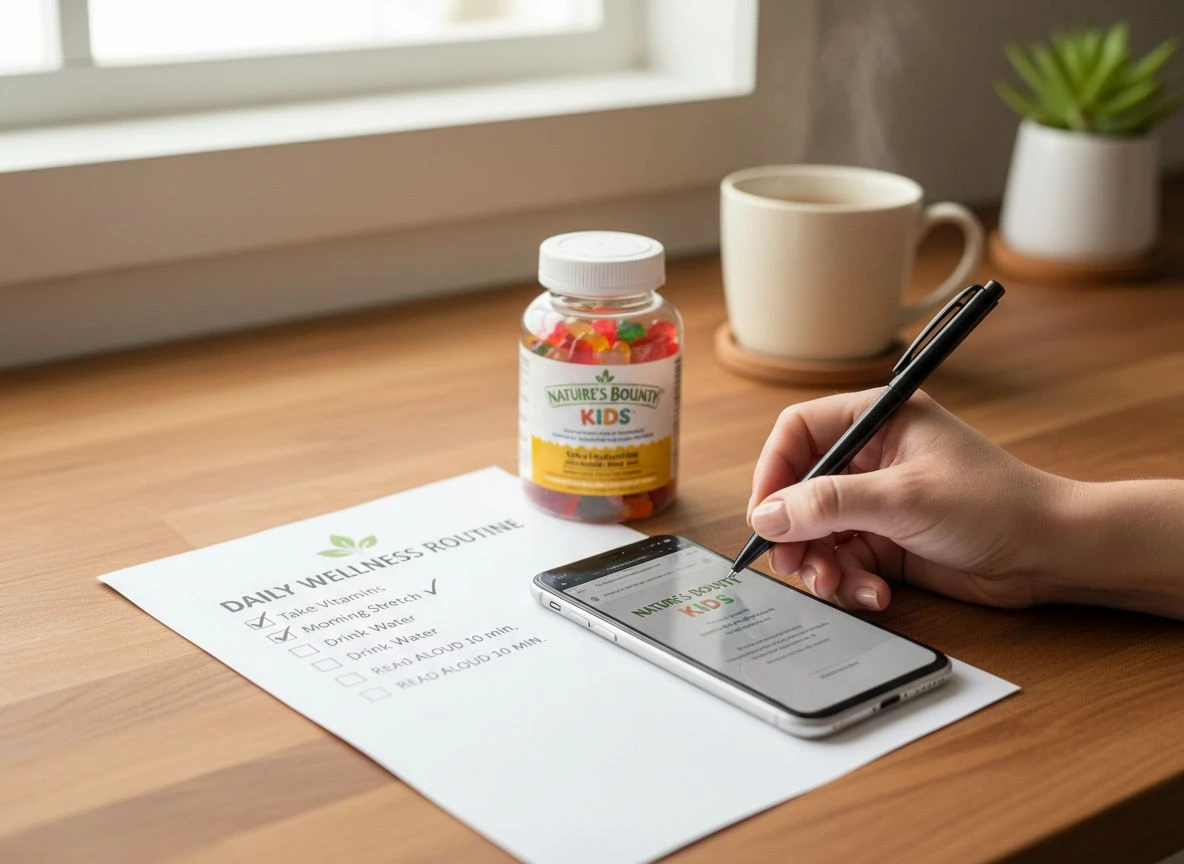
Don’t just read this—use it. Copy this checklist to your phone’s notes. Pull it out every time you look at a new bottle. It turns anxiety into a manageable, 5-step process. Your child’s safety is worth those extra minutes. This checklist is designed to help you navigate gummy vitamins allergens.
Talking to Your Pediatrician About Gummy Vitamin Allergies
This is the most critical step. All your detective work ends here. Bring your findings to your child’s pediatrician or allergist. They are your ultimate authority. They combine medical knowledge of your child with your investigative legwork.
Book an appointment to discuss any new supplement. Bring your completed checklist and the actual product bottle (or a clear photo of the label). Show the Supplement Facts, ingredient list, and any certifications. This lets your doctor see exactly what you’re considering. An allergist can also help you make a formal Anaphylaxis Action Plan. This is essential for managing severe allergies.
Remember, their guidance puts everything in context. A vitamin can be allergen-free but still unnecessary for your child’s diet. This partnership ensures the supplement safely complements their nutrition. It doesn’t replace a balanced diet or medical advice. Your diligence gives them better data. Their expertise gives you final peace of mind. Discussing gummy vitamins allergens with a professional is essential.
Choosing Safe Gummy Vitamins with Confidence
You didn’t start this feeling confident. You started feeling the weight of responsibility. You were staring at bright bottles, paralyzed by fear. But here’s the shift: you’re no longer just a worried parent. You’re an investigator with a reliable toolkit.
The checklist isn’t a burden; it’s your liberator. It transforms vague anxiety into actionable, yes-or-no questions. Does it pass the label scan? Did the manufacturer give clear answers? Has the pediatrician signed off? When you check those boxes, you replace fear with data-backed confidence.
Your new mantra is simple and powerful: Read every label, every time. It applies to the first bottle and the fiftieth. This habit, powered by your skills, turns a daunting aisle into a curated selection of safe options. The process gets quicker. Your eye gets sharper. Your confidence grows.
So, take a deep breath. Walk into that store or click on that site with your checklist in hand. You are equipped. Use your skills, trust your diligence, and choose with certainty. For a starting point, I’ve put together a roundup of transparent brands in my article on the Best Hypoallergenic Kids’ Vitamins. Now, go find that safe, healthy smile for your child. You’ve got this. Understanding gummy vitamins allergens is your key to safety.

I founded Best Gummy Reviews after discovering shocking quality gaps during my own vitamin D treatment. With 8+ years in nutrition research, I combine lab science with real-world testing to tell you what actually works. I’m thorough but straightforward—supplements should complement your healthy habits, not replace them.