
Table of Contents
Here’s the short answer: Yes, matcha gummies can deliver key bioactive compounds like EGCG and L-theanine, making them “work” in a biochemical sense. But the real question is whether they work meaningfully for your specific goals. That depends entirely on dosage, formulation quality, and realistic expectations. They are a trade-off of convenience for control.
This article will cut through the marketing. We’ll start by defining what’s actually inside these gummies. Then, we’ll break down the evidence for each claimed benefit—like antioxidant protection and calm focus. The core of our investigation will tackle the absorption puzzle: how a gummy’s matrix affects bioavailability compared to traditional tea. We’ll also dissect the major quality pitfalls, from misleading labels to sugar overload. You’ll get a practical checklist for vetting products. Finally, we’ll consolidate everything into clear, scenario-based recommendations. You can decide if this format fits your lifestyle or if you’re better off sticking with the whisk and bowl.
The Truth About Matcha Gummies
Here’s the short answer: Yes, a well-formulated matcha gummy can deliver key compounds like EGCG and L-theanine, so it technically “works.” But whether it works meaningfully for you depends entirely on the dosage inside that chewy candy and your expectations. Many are paying a premium for a sugar delivery system with a dusting of green tea extract.
I get the appeal. I’ve stood in the supplement aisle, tired of another bottle of horse-pills, seduced by a package promising ceremonial-grade calm and focus in a tasty, chewy square. Matcha gummies are everywhere now. They market a paradox: all the revered, ancient benefits of whisked tea in a form that’s basically candy.
We agree on the premise—getting more antioxidants and calm focus into our day is a good thing. Even the AARP notes that simply introducing matcha into your routine is what counts most, with the form being secondary. But here’s where I need to apply some evidence-based skepticism: is “secondary” the same as “irrelevant”?
I promise you, this isn’t another rant about how gummies are worthless. It’s a practical investigation. We’re going to cut through the zen marketing. We’ll answer if you’re actually paying for bioactive compounds or just very expensive, green-tinted candy.
In this article, we’ll explore the complex science of nutrient absorption from a gummy matrix versus a traditional cup. We’ll decode ingredient labels so you can spot “green tea extract” masquerading as real matcha. We’ll manage the wild expectations around weight loss with hard data. And I’ll give you a straightforward checklist for finding a quality product that might actually be worth your money. Let’s start by defining what we’re even talking about.
What Exactly Are Matcha Gummies?
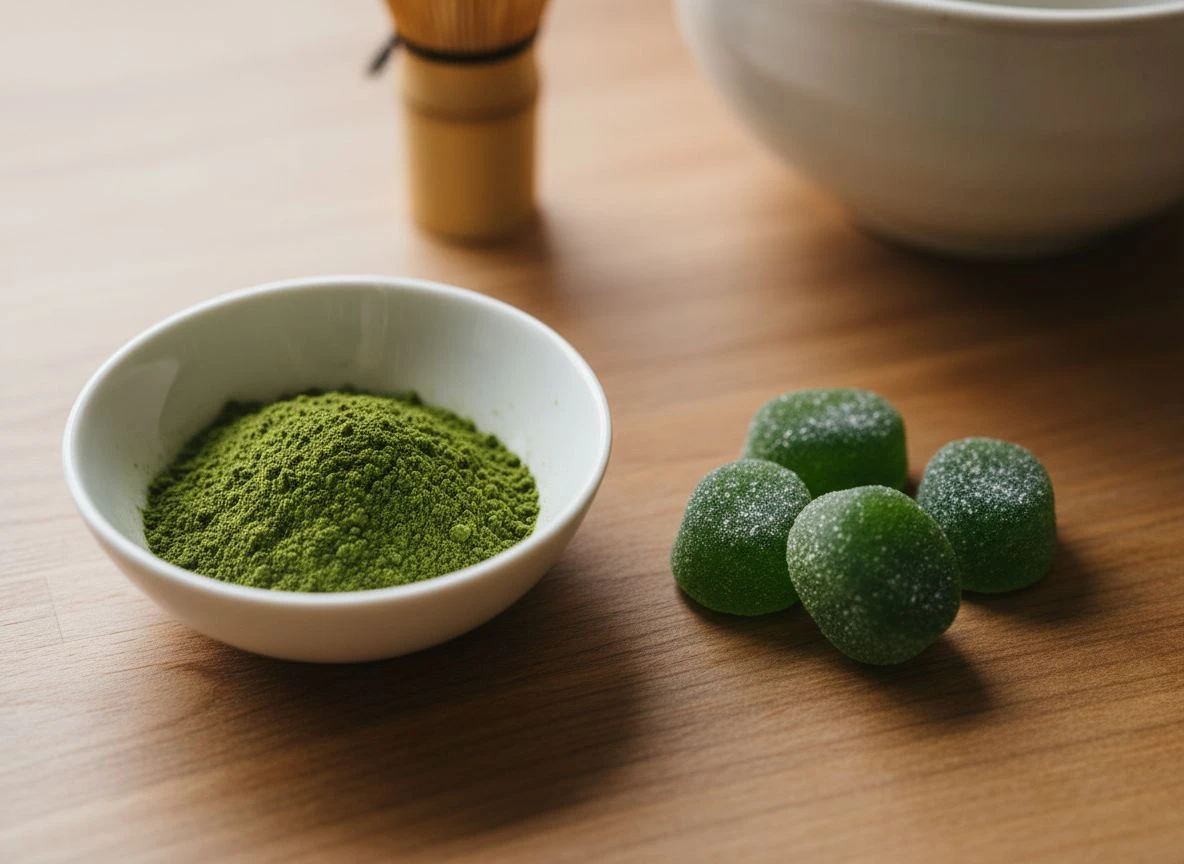
Here’s the short answer: Matcha gummies are dietary supplements that embed matcha powder or its extracted compounds into a chewable, sweetened matrix. They’re designed for convenience, not to replace the ritual of tea. Their efficacy hinges entirely on what’s actually inside that gummy shell.
My own journey into gummies started with classic pill fatigue. After struggling with traditional vitamin D capsules, I discovered that a gummy wasn’t just more enjoyable—it ensured I never missed a dose. That personal win made me curious: could this format work for something as nuanced as matcha?
Technically, a matcha gummy is a delivery system. At its core, it contains either:
- Matcha Powder: The real deal—finely ground, shade-grown green tea leaves. This provides the full spectrum of compounds, including chlorophyll and fiber.
- Green Tea Extract: Often standardized to contain a specific percentage (typically 30–50%) of the key antioxidant, EGCG. This is more concentrated but may lack other elements present in the whole leaf.
This active ingredient is then suspended in a gummy matrix. It’s made of a gelling agent (like pectin for vegan options or gelatin) and sweeteners (cane sugar, tapioca syrup, or sugar alcohols). Remember, these are regulated as dietary supplements. The FDA does not approve them for efficacy or safety before they hit shelves—manufacturers are responsible for their own quality control.
So, in essence, you’re trading the ceramic bowl and bamboo whisk for a factory-molded candy. It promises a measured, portable dose. Whether that trade is worthwhile depends on what, and how much, they managed to pack into that chewy square.
Do Matcha Gummies Really Work?
Here’s the short answer: They can deliver the key bioactive compounds found in matcha, like EGCG and L-theanine, so they technically “work.” But whether you feel any meaningful benefit depends entirely on two things: the dosage packed into each gummy and what specific “work” you’re expecting it to do. It’s not magic; it’s just chemistry in a chewable form.
To cut through the marketing, we need to stop asking if they work and start asking what they work for. The effects are compound-specific.
Antioxidant Benefits of Matcha Gummies
If your goal is simply to get more of matcha’s superstar antioxidant, EGCG, into your system, then yes—a well-formulated gummy can work for this.
The key is the dose. Research on metabolic benefits often uses doses of 300–500 mg of EGCG daily. Looking at the market, most gummies deliver between 100–250 mg of EGCG per serving (often 1-2 gummies) [4]. So, a two-gummy serving can place you in the lower-to-mid range of clinically studied doses. It’s a legitimate, convenient delivery method for this compound. You’re getting the antioxidant, full stop.
L-Theanine for Calm Focus
This is where expectations need the most management. L-theanine is the amino acid that promotes alpha-wave brain activity and that signature “calm alertness.”
A typical matcha gummy might contain 15–25 mg of L-theanine [1]. For context, studies on stress and focus often use doses between 100–200 mg. So while the gummy is delivering L-theanine, the amount is relatively modest. You might notice a subtle smoothing of edges, but you shouldn’t expect the profound, zen-like focus from a ceremonial bowl. It’s a microdose of calm.
Do They Boost Your Metabolism?
Here’s where we need serious evidence-based skepticism. Yes, the combination of EGCG and caffeine can slightly increase thermogenesis and fat oxidation. A 2022 meta-analysis found that daily doses of 300–500 mg EGCG plus about 100 mg caffeine raised resting metabolic rate by an average of 4% over 12 weeks [4].
But let’s be real: a 4% bump is subtle. And as the AARP pointed out, many gummies deliver less than a third of the EGCG dose used in that research [2]. Furthermore, the weight loss linked to these compounds in studies is best described as “modest”—think fractions of a pound over months, not a magic bullet [2].
So, do they “work” for metabolism? The mechanism is there, but the effect size from a typical gummy serving is likely to be very small. It will never override diet and exercise.
Between you and me, after testing dozens of brands, my take is this: matcha gummies work as a supplemental source of specific compounds. They are not a replacement for the ritual and full-spectrum nutrition of whisked tea. But they are a valid, convenient tool—if you choose one with a transparent, adequate dose. Don’t buy them for transformational results. Buy them for a consistent, low-friction top-up of green tea antioxidants. Adjust your expectations on the “calm energy” front accordingly.
What’s your primary goal for a matcha gummy? Start there, then check the label to see if the numbers align.
Gummy vs Drink Bioavailability
Here’s the short answer: It’s complicated. A matcha gummy might not be worse for absorption than tea—it could just be different. The bioavailability of key compounds like EGCG is influenced by everything from your gut to the gummy’s recipe. It might trade peak blood concentration for a slower, more sustained release.
Understanding Nutrient Absorption
Let’s unpack this. Bioavailability simply means the proportion of a nutrient that enters your bloodstream and is available for your body to use. For EGCG, matcha’s star antioxidant, the research is pretty clear. It has notoriously low and variable bioavailability, estimated between 30–80% [3]. A significant portion of what you consume never gets absorbed. This is true whether it’s from a steaming cup or a chewy square.
Drinking tea on an empty stomach might give you a faster, higher spike in blood levels. But that doesn’t automatically mean more total absorption over time. The body’s ability to utilize these compounds is the real bottleneck, not necessarily the delivery vehicle.
How Gummy Ingredients Affect Uptake
Here’s where it gets interesting. The “food matrix” – everything else in the gummy besides the matcha extract – absolutely impacts absorption. The sugars, pectin, or gelatin create a physical barrier that must be broken down. This can potentially slow the release of compounds into your digestive system.
Now, here’s a counterintuitive twist some research points to. The very act of chewing a gummy may activate salivary enzymes and “prime” the digestive process in a way that swallowing a pill or liquid doesn’t [6]. This mechanical and chemical head start could theoretically aid absorption for some nutrients, though strong matcha-specific studies are lacking. The trade-off? That same gummy matrix might also bind to some compounds, slightly reducing the peak amount that hits your bloodstream all at once.
Sustained Energy from Gummy Matcha
This leads to the practical difference you might actually feel. A cup of matcha tea, especially on an empty stomach, delivers its caffeine and L-theanine in a relatively quick, concentrated bolus. You might feel that alert calm within 20-30 minutes.
The gummy, with its slower breakdown from the chewable matrix, likely creates a more gradual release of compounds. Think of it as a gentle ramp instead of a sharp peak. For someone sensitive to caffeine jitters, this could mean a smoother, more sustained sense of focus without the crash. One analysis even suggested this slower absorption could help maintain more stable energy levels [1]. So, while you might not get the same intense, ceremonial-grade zing, you might avoid the subsequent dip.
Look, I’ve felt this myself testing various products. The “buzz” from a gummy is undeniably milder and more drawn-out than from my morning whisked bowl. It’s not better or worse—it’s a different pharmacokinetic profile. Your goal (quick focus vs. prolonged calm) and your personal sensitivity will determine which absorption style works for you.
Is Your Matcha Gummy Authentic?

Here’s the short answer: Not always. The term “matcha” on a gummy label is not a guarantee of quality or authenticity. Many products use cheaper, less-nutritious green tea extract and call it matcha. This substitution significantly changes what you’re actually consuming.
I learned this the hard way. Early in my testing, I was excited by a gummy that prominently featured “Japanese Matcha” on its front label. But when I flipped the bottle over, “green tea extract” was the first ingredient listed. That’s a major red flag. True, stone-ground ceremonial or culinary grade matcha powder would be listed as just that: “matcha powder.” The word “extract” signals a different, often inferior, starting material.
Let’s decode the difference so you can spot it instantly on any ingredient panel.
| Ceremonial/Culinary Grade Matcha Powder | Green Tea Extract | |
|---|---|---|
| What it is | The whole, shade-grown tea leaf, stone-ground into a fine powder. | A concentrated compound isolated from tea leaves, often standardized for a specific percentage of EGCG. |
| Nutritional Profile | Delivers the full spectrum of the leaf: EGCG, L-theanine, chlorophyll, fiber, vitamins, and minerals. | Typically isolates one or two bioactive compounds (like EGCG), missing the synergistic “entourage effect” of the whole leaf. |
| On the Label | Will be listed as “matcha powder,” possibly with a grade (e.g., ceremonial). | Listed as “green tea extract,” often followed by a standardization note in parentheses (e.g., “(50% EGCG)”). |
So, does this mean gummies with green tea extract are worthless? Not necessarily—they can still deliver a dose of EGCG, which we established can “work” for antioxidants. But you’re missing out on L-theanine, chlorophyll, and the unique, balanced profile that defines real matcha’s “calm energy.”
The bottom line: If you want the authentic, nuanced benefits of matcha, look for “matcha powder” as a primary ingredient. If you see “green tea extract,” you’re buying an isolated compound in a gummy, not a true matcha experience. It’s a cheaper ingredient for manufacturers, and that savings is rarely passed to you. Let’s be real—you deserve to know what you’re actually paying for.
Matcha Gummies for Weight Loss Facts
Here’s the short answer: Matcha gummies are not a weight loss supplement. They are a convenient delivery method for compounds that may, as part of a complete lifestyle, offer a modest supportive nudge to metabolic health. Thinking of them as a magic pill is a direct path to wasted money and frustration.
Look, I get it. The marketing is seductive. “Boost metabolism!” “Support weight management!” It’s easy to hope that a tasty gummy could be the missing piece. But after testing these products and digging into the clinical data, I need to be blunt. The metabolic effects are incredibly modest and absolutely not a substitute for diet and exercise.
Let’s look at what the research—like the 2022 meta-analysis cited in our sources—actually shows. Effective doses of EGCG plus caffeine (think 300-500mg EGCG daily) raised resting metabolic rate by about 4% over 12 weeks[4]. In practical terms, for someone with a 2000-calorie maintenance intake, that’s roughly an extra 80 calories burned at rest per day. The same research points to average weight loss of around 0.2 kg (less than half a pound) over that period[2]. This is the realistic, evidence-based outcome.
Most matcha gummies deliver 100-250mg of EGCG per serving. That places you at the lower end of that studied range. So, while the bioactive compounds are present and can exert a metabolic effect, the magnitude is small. It’s a supportive nudge, not a pushing force.
This is why I frame these gummies strictly as a potential adjunct. Their real value is in consistent, convenient delivery of antioxidants and L-theanine. If you’re using them hoping they’ll counteract poor dietary choices or a sedentary lifestyle, you will be disappointed. Focus on building your foundation first. Dial in your nutrition, prioritize protein and fiber, and get moving. A matcha gummy might then be the cherry on top—a small, enjoyable habit that supports the much larger, more critical work you’re already doing.
Sugar Content in Matcha Gummies
Is the modest metabolic “boost” from EGCG negated by the sugar spike from the gummy itself? For most conventional formulas, that’s a legitimate concern. You must view this as a conscious trade-off. You’re exchanging the purity of a zero-calorie beverage for the convenience of a candy-like supplement.
Let’s be real with some simple math. To get a meaningful dose of, say, 150mg of EGCG, you might need two gummies from a popular brand. You’ll get your actives, but you’ll also ingest 6-8 grams of added sugar (that’s about 1.5 teaspoons) and 30-40 calories. A cup of traditionally whisked ceremonial matcha delivers a similar spectrum of compounds with 0g of added sugar and barely a calorie.
This isn’t to universally condemn gummies—I use them myself for consistency. But it forces a practical question: is this trade-off worth it for your goals? If you’re managing blood sugar or strictly watching calories, that added sugar is a significant downside.
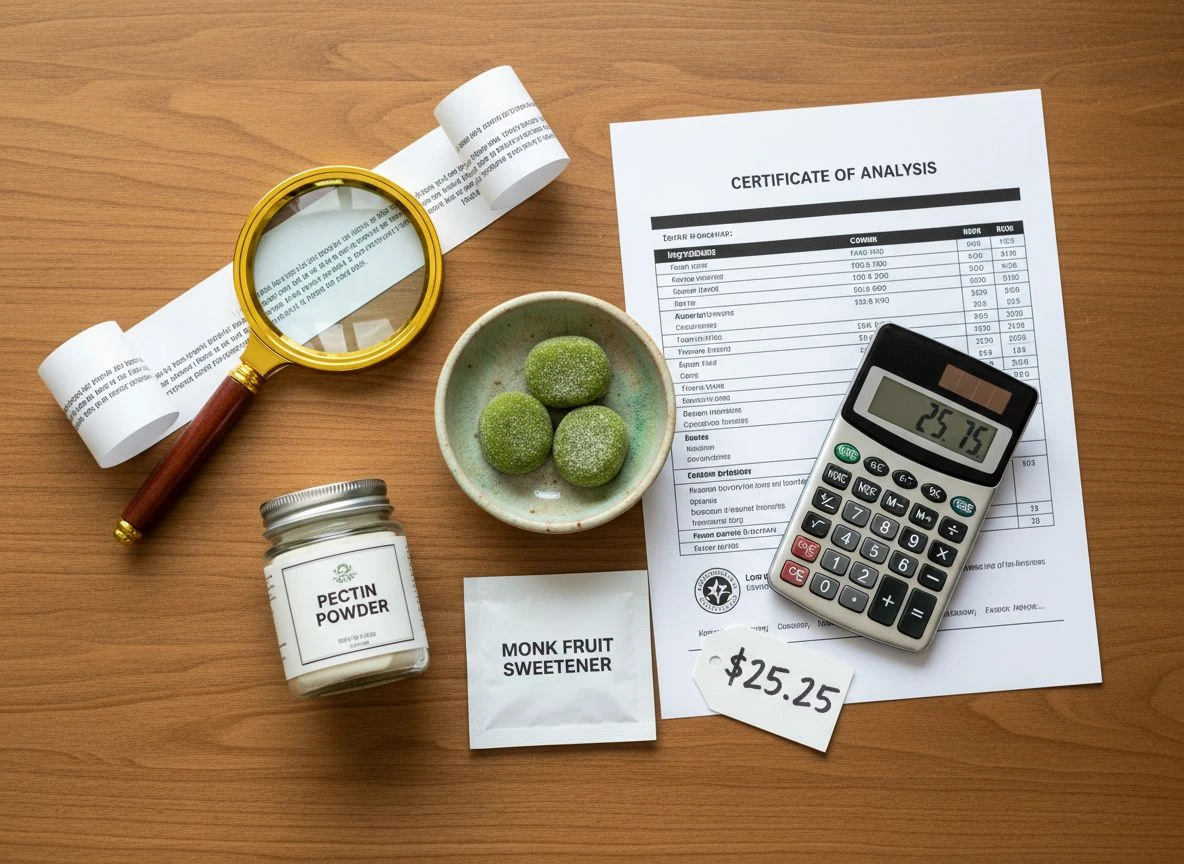
The good news? You have options. A growing number of brands use low-glycemic sweeteners like monk fruit or allulose. My advice is simple: scrutinize the “Total Sugars” line and the ingredient list. If sugar, cane syrup, or tapioca syrup are in the first three ingredients, you’re buying more candy than concentrated wellness. Opt for a low-sugar or sugar-free formulation. Then, the trade-off starts to make much more sense.
How to Choose Quality Matcha Gummies
Here’s your actionable filter. A quality matcha gummy transparently delivers a meaningful dose of bioactive compounds with minimal junk. It’s about verifying what’s actually inside the candy shell. Use this list to cut through the marketing and find a product that works.
1. Demand a Transparent EGCG Milligram Dose.
The first item on the label should be the exact amount of Epigallocatechin gallate (EGCG), not just “matcha powder” or “green tea extract.” Research shows effective metabolic support starts around 300mg daily [4]. But most gummies offer 100-250mg per serving [2]. If the dose isn’t listed, you cannot assess value. Period.
2. Verify It’s Real Matcha, Not Just Green Tea Extract.
Look for “matcha powder” or “Japanese matcha” in the ingredients. “Green tea extract” is cheaper. It may lack the full spectrum of L-theanine and phytonutrients found in shade-grown, stone-ground whole leaf powder. This is the ceremonial-grade difference trapped in a gummy.
3. Scrutinize the Sugar Source & Total.
Recall the trade-off. The “Total Sugars” should be as low as possible—ideally under 3g per serving. Check the ingredient list. Sugar, cane syrup, or tapioca syrup in the top three is a red flag. Better brands use monk fruit or allulose. You want the antioxidants, not the sugar crash.
4. Check for Third-Party Testing & Heavy Metal Screening.
This is non-negotiable for a product containing a concentrated plant powder. A Certificate of Analysis (COA) from a lab like NSF, USP, or Eurofins verifies potency. It also screens for contaminants like lead [5]. If this info isn’t easily found on their website, I’d walk away.
5. Assess the “Gummy” Itself: Pectin Over Gelatin & Clean Fillers.
I prefer pectin-based (vegan) gummies. They often have a cleaner ingredient profile. Avoid “natural flavors” and colors if you can. The ingredient list should be short and recognizable. The delivery system shouldn’t undermine the quality of what it’s delivering.
6. Calculate the Cost Per Dose of Actives.
Do the math: price per bottle ÷ servings ÷ mg of EGCG per serving. This reveals the true cost of the bioactive compounds. A cheaper gummy with a minuscule EGCG dose is often worse value than a pricier one with a robust, verified dose.
After wasting money on a few pretty packages that were basically expensive candy, I made a personal rule. If a product doesn’t pass these checks, I don’t buy it. This checklist turns skepticism into empowered shopping. It forces brands to prove their worth, moving you from marketing claims to measurable quality.
Are Matcha Gummies Safe?
The short answer is that matcha gummies are generally safe for healthy adults at recommended doses, but they’re not candy. You’re consuming a concentrated botanical extract. The main risks come from the caffeine content, potential liver strain from extremely high EGCG doses, and interactions with medications. Informed consumption is everything.
Hidden Caffeine in Matcha Gummies
This is the most common, overlooked issue. A single gummy can contain 30-50mg of caffeine. That seems modest. But if you’re stacking it on top of your morning coffee, afternoon soda, or pre-workout drink, you can easily hit nervous, jittery territory or disrupt sleep. I always check the label and mentally add it to my daily tally. For caffeine-sensitive individuals, this alone can be a deal-breaker.
Beyond caffeine, high doses of EGCG (think well over 800mg daily from all sources) have been linked in rare cases to liver stress. The doses in gummies alone are unlikely to cause this. But if you’re also taking a green tea extract capsule and drinking multiple cups, the total load matters.
Finally, the compounds in matcha can interact with certain medications. This includes blood thinners, some antidepressants, and stimulants. If you’re on any prescription, a quick conversation with your doctor is a non-negotiable step before adding these to your routine. The convenience of a gummy doesn’t negate the pharmacology of what’s inside it.
Final Verdict on Matcha Gummies

So, does matcha in gummy form actually work? The nuanced answer is yes, but only if you choose wisely and expect realistically. A well-formulated gummy can effectively deliver matcha’s key compounds like EGCG and L-theanine. It is a legitimate delivery system. But it is not a superior, magical replacement for a cup of ceremonial tea or a whole-foods diet. It’s a trade-off.
You’re trading the ritual and purity of traditional matcha for sheer convenience. And that convenience comes with a cost—a financial one (they’re pricey per dose), often a sugar-based one (scrutinize that label), and absolutely a cost in required vigilance. You must become a label detective to ensure you’re getting meaningful actives without a pile of junk.
That’s why the checklist in the previous section isn’t just advice; it’s your essential filter. Use it to find a product where the chemistry supports the convenience. Don’t just grab the prettiest package. Your goal isn’t just to eat a green candy; it’s to get the calm, focused, antioxidant benefits matcha is famous for. With the right product, you can. But the responsibility is on you—and your checklist—to make that happen.
Before you buy, apply the checklist. Found a great one? Share this article to help a friend navigate the hype.

I founded Best Gummy Reviews after discovering shocking quality gaps during my own vitamin D treatment. With 8+ years in nutrition research, I combine lab science with real-world testing to tell you what actually works. I’m thorough but straightforward—supplements should complement your healthy habits, not replace them.