

Table of Contents
Let’s be honest. Your stress-relief gummy might be doing more for your sweet tooth than your stress levels. The trend of adaptogens in gummies makes total sense—we’re all burned out. But the gummy format itself is a problem. It often means weak potency, shaky dosages, and sugary fillers. These can undo the very science the product promises.
I understand the appeal. I hit “pill fatigue” years ago, staring at a handful of capsules that felt like a chore. A chewy, berry-flavored gummy felt like a tiny reward. That feeling is driving a huge market. The global herbal medicine sector was worth USD 151.91 billion in 2021. It is projected to more than double by 2029.
But here’s the trap. The idea of a tasty ‘wellness treat’ with adaptogens in gummies often hides three big questions. Do adaptogens really work for stress? Can a gummy deliver a strong enough dose? And how do you find a good product in all the sugary hype?
Let’s unpack that. We’ll separate the real science from the marketing gloss. We’ll look at why gummies are a tough way to deliver these herbs. Finally, I’ll give you a clear checklist to find a product that actually works.
The True History of Adaptogens in Modern Gummies
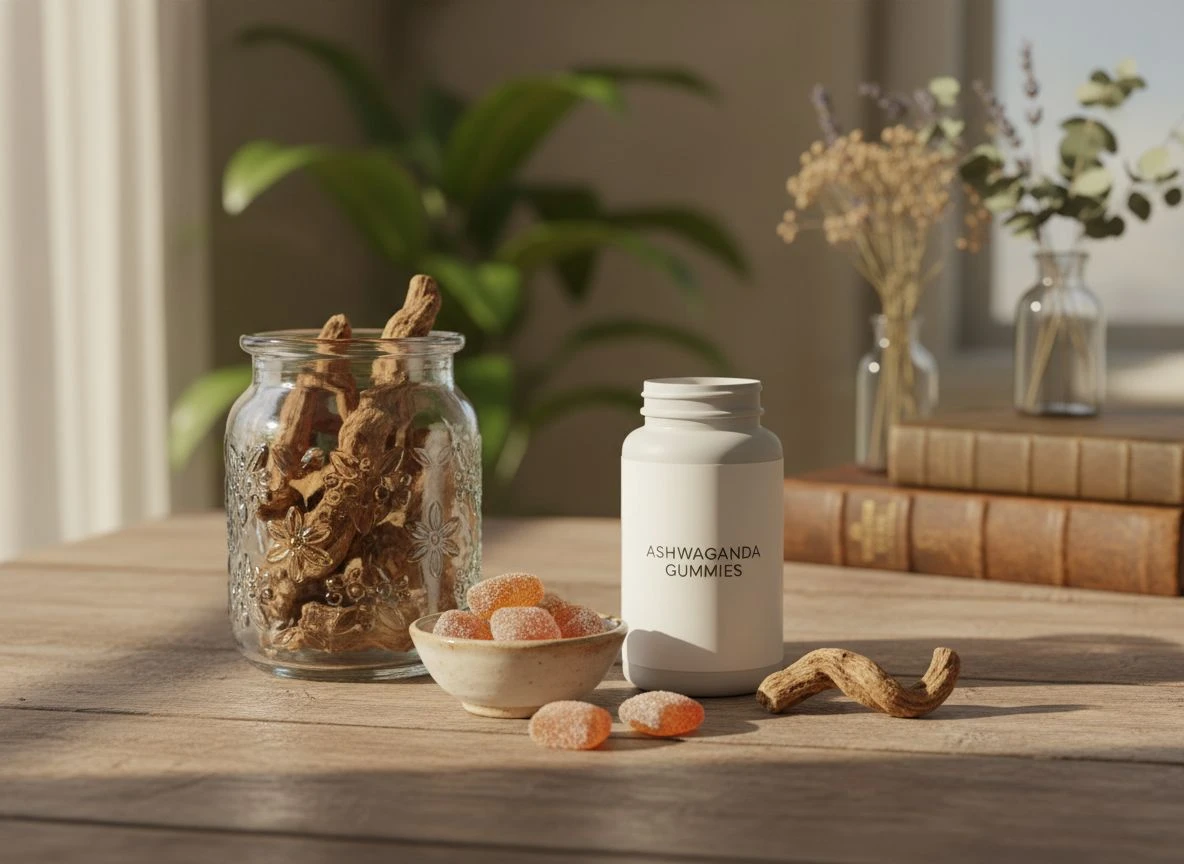
Simply put, adaptogens are a class of herbs, roots, and fungi. Think ashwagandha, rhodiola, or reishi mushrooms. They’re marketed to help your body “adapt” to stress. They’re sold as supplements, not drugs. But the word “adaptogen” has a interesting history. Its journey from a strict science term to a trendy buzzword explains a lot about today’s market.
The term has Cold War origins. It was coined in 1947 by a Soviet scientist, Nikolai Lazarev. He was looking for performance boosters for soldiers and workers in extreme conditions. His student, Israel Brekhman, set the rules. A true adaptogen had to be safe, help the whole body resist stress, and normalize functions. This was serious state-funded science.
That’s a long way from a berry-flavored gummy in a chic jar.
Today, the FDA does not recognize “adaptogen” as a formal category with set standards. It’s a marketing term, not a legal one. As Michigan State University’s CRIS center notes, any maker can use the word. A product can call itself an adaptogen for having a tiny bit of ashwagandha powder in a sugary mix.
So we have a powerful old idea—a substance that buffers stress—that’s lost its scientific rigor. It’s been repackaged for the wellness aisle. The hope from that 1940s research is real. The hype is that the label on your bottle carries none of that original promise. And the FDA isn’t checking.
What Science Says About Stress Support
Let’s look at the actual evidence. The core idea is that adaptogens help your body’s central stress response system. Think of them as a buffer. They might help your system find balance instead of swinging between high stress and crash. The research, however, is mixed and has clear tiers.
Ashwagandha’s Evidence for Stress Relief
If one adaptogen has good clinical trial support, it’s ashwagandha. The data is compelling. A 2025 systematic review looked at 23 studies. It found ashwagandha consistently helped with stress. One key study showed people under chronic stress had a 22.2% drop in cortisol and a 32.7% decrease in felt stress after 8 weeks. That’s a big, measurable change. A more recent 2026 clinical study (NCT05602389) found a full-spectrum ashwagandha extract greatly improved sleep quality. For stress and sleep, ashwagandha has moved into the “strong evidence” category for short-term use.

Other Promising Adaptogenic Herbs
Rhodiola rosea is in the next tier—”moderate evidence.” Some studies show it can reduce fatigue and improve focus under stress. Reishi mushroom and holy basil have more early findings. They show promise in animal or lab studies, but strong human trials are sparse. This hierarchy matters. A gummy with a clinical dose of ashwagandha has a stronger case than one with a blend of six under-studied herbs.
Examining Adaptogen Skepticism
Here’s the necessary reality check. Critics, like those from McGill University, point out that much of the human evidence uses short-term trials (often 8-12 weeks). We don’t have strong long-term safety data. Also, the good studies use high-quality, standardized extracts at specific doses. Most consumer gummies don’t meet that standard, as we’ll see. So, the science for ashwagandha is strong within its studied context. But that context is fragile and easily ruined by poor products.
Common Problems with Adaptogen Gummies
Here’s the uncomfortable truth most reviews skip. The gummy format is a hostile place for many herbal extracts. Putting an adaptogen in a gummy creates three big hurdles. These are heat damage during making, impractical dosages, and the trick of “blends.” These can turn a good formula into an expensive, sugary placebo.
Heat Stability in Gummy Manufacturing
Making a gummy isn’t gentle. It involves cooking a gelatin or pectin base with sugars at high heat. Temperatures often exceed 160°F (71°C) for a while. Many delicate compounds in adaptogens—like the withanolides in ashwagandha—are heat-sensitive.
Think of it like cooking herbs. A brief steam keeps more flavor and power than a long boil. That 2025 review showed a 22.2% cortisol drop. Those studies used carefully processed extracts, not raw herb cooked into candy. The gummy-making heat can break down these actives before the gummy is even bottled. You don’t have this problem with a capsule. I’ve seen lab tests where the labeled adaptogen content didn’t match the finished product. Heat damage is a prime suspect.
Accurate Dosage in Gummy Formats
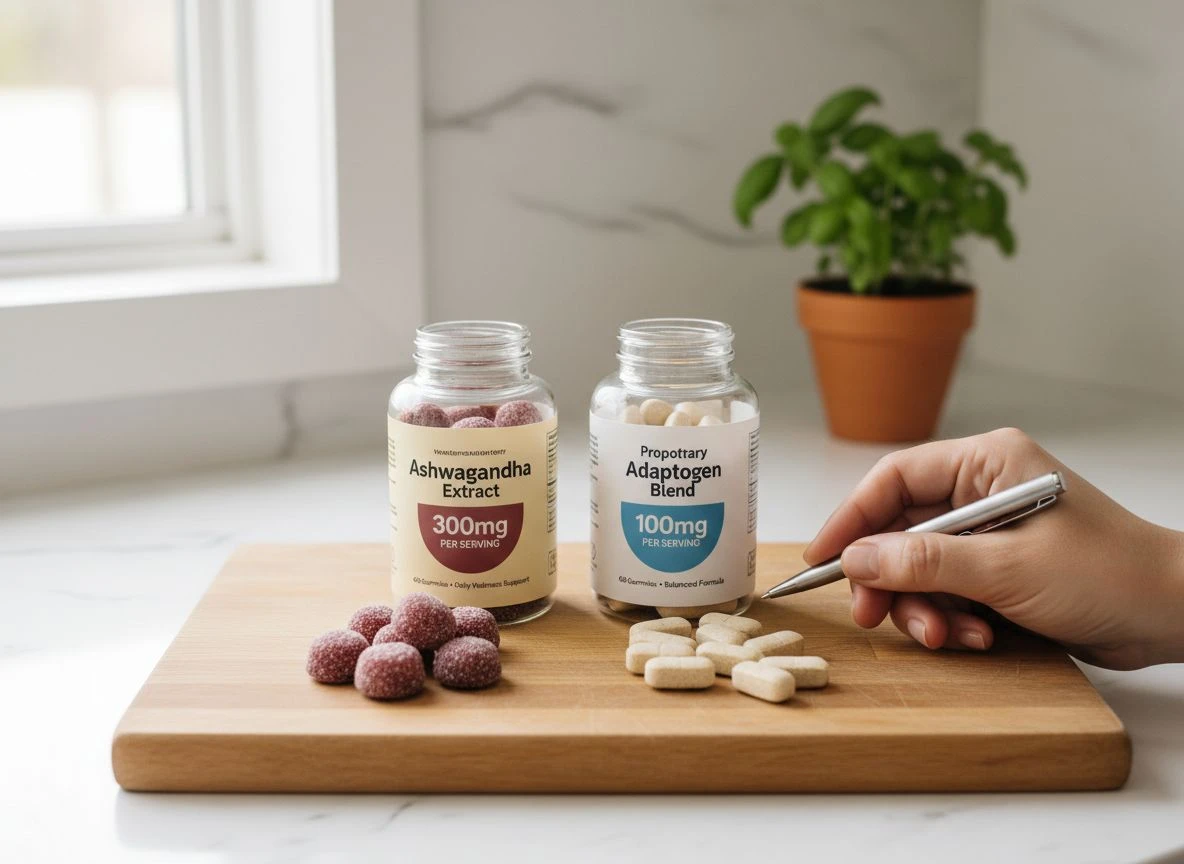
Let’s talk numbers. The effective dose of a full-spectrum ashwagandha extract in the good stress studies is typically 300-600 mg daily. Now, pick up a popular stress gummy. You’ll likely see something like “Proprietary Adaptogen Blend… 100 mg” on the label.
That’s the first red flag: a “blend.” But even if that 100 mg were all ashwagandha, it’s at best one-third of a studied dose. To fit a full 600 mg into one gummy, you’d need a horse pill, not a chewy treat. So makers face a choice. Make a huge gummy, tell you to eat too many (hello, sugar), or use a tiny dose and hope the placebo effect works.
The Truth About Proprietary Blends
This is where the fairy dusting happens. A “Proprietary Adaptogen Blend: 100 mg” is a black box. That 100 mg could be 99 mg of cheap rhodiola powder and 1 mg of good ashwagandha. Or it could be a mix of six herbs, each at a microscopic dose.
The label doesn’t have to tell you which it is. This lets a maker put “Contains Ashwagandha!” on the front while hiding useless amounts in a blend on the back. It’s an old trick. Here’s my challenge: check your current bottle. Does it show a specific amount for each herb, or just a mysterious “blend”? If it’s the latter, you can’t know if you’re getting a real dose or just marketing pixie dust.
Between the heat, the dosage math, and the label tricks, the deck is stacked. It’s hard for a gummy to deliver a true clinical dose of a good adaptogen. It’s not impossible, but it’s the exception, not the rule.
The Hidden Sugar in Stress Relief Gummies
Is your stress relief spiking your blood sugar? Here’s the ironic twist. Many stress gummies give you adaptogens with a dose of simple sugars. This can trigger the very stress hormones you’re trying to manage. A sugar-conscious formula isn’t just about calories—it’s central to the product’s job.
I’ve tasted dozens of these. The typical sugar content is 2 to 4 grams per gummy. Taking two a day adds a notable sprinkle of sugar to your diet. The problem isn’t just empty calories. When you eat that gummy, the quick sugar spike prompts an insulin release. The sudden rise and fall can feel like a stress event to your body, potentially nudging cortisol back up. You’re asking your adaptogen to clean up a mess it helped create.
This is where you separate thoughtful brands from copycats. I look for companies using tapioca syrup, allulose, or stevia. These sweeteners give the needed chew and taste without the glucose rollercoaster. It shows the maker thought about the whole body effect. The goal is sustained calm, not a sugar rush followed by a crash that feels like more stress.
How to Read a Supplement Label Correctly
Let me tell you about the first “stress support” gummy I ever bought. The bottle had serene mountains and fancy script. I felt calmer just buying it. Two weeks in, I felt nothing but a sugar crash. The problem wasn’t the idea—it was that I didn’t know how to read the label past the marketing. Here’s how to avoid that.
Step 1: Ignore the Front, Go Straight to the “Supplement Facts” Panel.
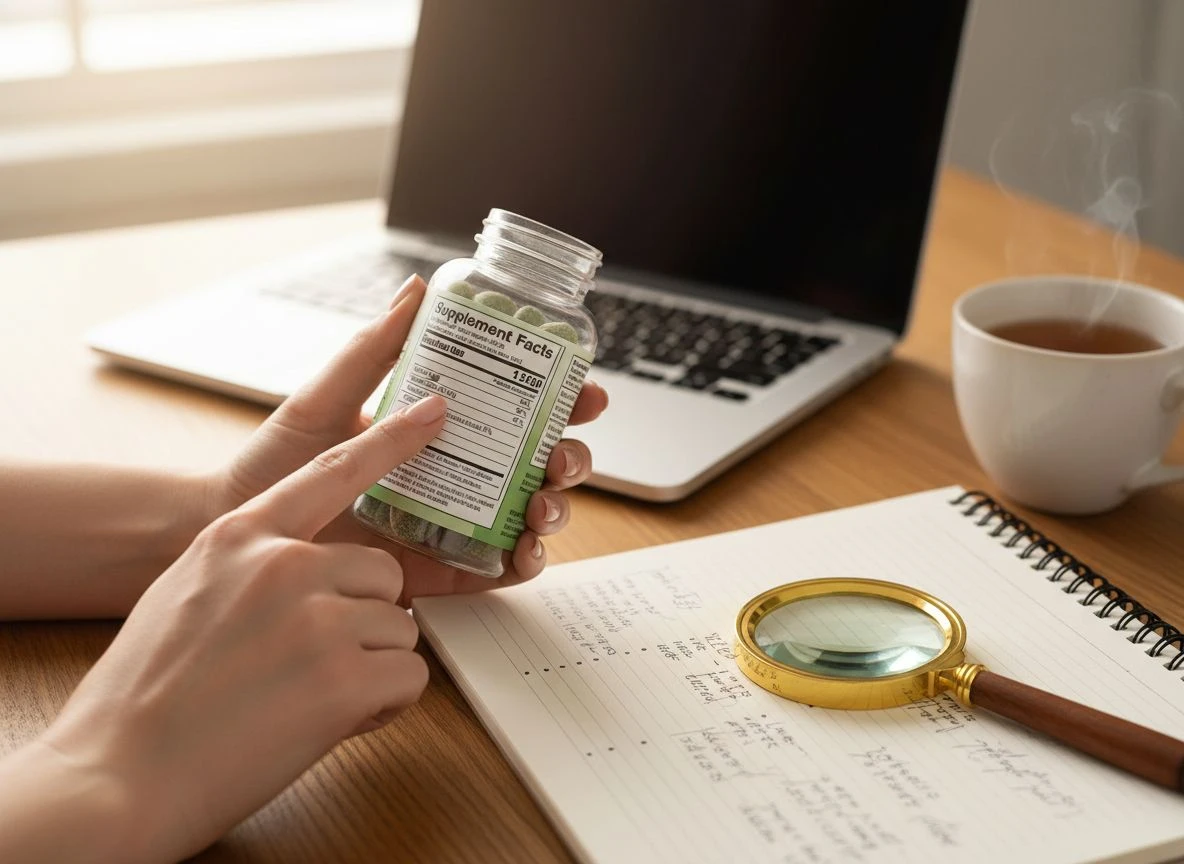
The front is for selling. The panel on the side or back is for truth. Immediately look for two things: the named adaptogens and the word “blend.” If you see “Proprietary Adaptogen Blend… 150 mg,” that’s a caution flag. A blend hides how much of each ingredient is inside. You can’t know. Good science uses specific doses.
Step 2: Look for Standardized Extracts and Specific Compounds.
This is the most critical filter for quality. Don’t just look for “Ashwagandha Root Powder.” Look for “Ashwagandha Root Extract (standardized to 5% withanolides).” That tells you they’re guaranteeing the amount of the active compounds studied in trials. If it doesn’t specify, you’re getting raw herb. The potency is a guess.
Step 3: Check the Dosage Against the Research.
Remember, the effective dose for ashwagandha extract in good studies is 300-600 mg daily. Look at your gummy label. If the “Ashwagandha Extract” line says “100 mg,” and the serving is two gummies, you’re getting 200 mg. That’s at the very low end, if it even matches the label after heat processing. The math rarely adds up to clinical levels.
Step 4: Decode the “Other Ingredients” for the Sugar-Stress Paradox.
Flip the bottle. After the actives, you’ll find the “Other Ingredients.” This is where you see the sugar—glucose syrup, cane sugar, etc. If sugars are in the first three ingredients, that gummy is mostly candy. Look for brands using tapioca syrup, allulose, or stevia to avoid a blood sugar spike.
Step 5: Find the Third-Party Testing Seal (or Lack Thereof).
This is your final trust signal. Look for a small seal like “Third-Party Tested,” “USP Verified,” or “NSF Certified.” It means an independent lab checked that what’s on the label is in the bottle and that it’s clean. No seal? You’re relying only on the maker’s word. That’s a risk, as UCLA Health and the FTC note.
It’s not magic; it’s knowing where to look. That fancy bottle I bought? Its “Adaptogen Blend” was the third ingredient—after tapioca syrup and cane sugar. Now you know how to spot that before you buy.
Essential Safety Checks for Adaptogen Gummies
Before you buy adaptogen gummies, you must do three things. Verify third-party testing, talk to your doctor, and plan to take breaks. These supplements carry risks that need your attention. Safety isn’t a side note—it’s the foundation.
1. Demand Third-Party Certification. Full Stop.
The FDA doesn’t approve supplements before they hit shelves. So you become the quality control. My rule is a stamp from an independent lab like USP, NSF, or ConsumerLab.com. This verifies what’s on the label is in the bottle. It checks for heavy metals and germs. As Michigan State University points out, the FDA often can’t act until after people report problems. Don’t be a test case. If a brand doesn’t show this certification, skip it.
2. Have a Candid Conversation with Your Doctor or Pharmacist.
This is a rule, not a suggestion. Adaptogens are biologically active. Ashwagandha may interact with sedatives, thyroid meds, or immune drugs. UCLA Health’s Dr. Hunnes advises talking to a doctor first. This is extra important if you’re pregnant, breastfeeding, have a chronic condition, or take prescriptions. Thinking “it’s just an herb” is naive and risky.
3. Commit to a Cycling Schedule.
Here’s the step most labels ignore: you need breaks. Using something constantly can make your body stop responding as strongly. It can also cause unexpected side effects. A good schedule is 5 days on, 2 days off. For longer use, try 8 weeks on, 1-2 weeks off. This lets your body reset. It also helps you see if the supplement is still working. I learned this the hard way. Taking something non-stop makes it impossible to know what’s actually helping.
Bookmark this checklist. In an unregulated space, your care is the main ingredient for safe use. This is especially true for adaptogens in gummies, where quality varies widely.
Do Adaptogen Gummies Really Reduce Stress?
Based on my testing and the research, here’s my direct take. Some adaptogens, like ashwagandha, have promising evidence for stress. But the gummy format has serious problems for delivering a good, stable dose. Your success with adaptogens in gummies depends on spotting a quality, clear formula and managing your expectations.
Do adaptogens in gummies actually work for stress?
It depends entirely on the specific ingredient and formula. A high-quality ashwagandha extract, dosed right (300-600 mg daily), has been shown in studies to reduce cortisol and stress. But many gummies have under-dosed “blends,” weak forms of the herb, or herbs with shaky evidence. The gummy itself doesn’t make it work. The proven ingredient inside does.
Why are gummies a problematic format for adaptogens?
Three reasons: heat, dose, and filler. First, the high heat in making gummies can damage delicate plant compounds. Second, it’s hard to pack 300+ mg of a dense herb extract into a tiny, tasty gummy. Third, the space is often filled with sugar to make it taste good. This can create a counterproductive “sugar-stress” cycle.
How can I tell if a stress gummy is high quality?
Ignore the pretty packaging. Turn the bottle and read the Supplement Facts panel. Avoid any product with a “Proprietary Adaptogen Blend.” Look for each adaptogen listed separately with its dose. Choose extracts standardized for active compounds (e.g., “standardized to 5% withanolides”). Finally, look for a third-party certification seal (USP, NSF) to verify what’s on the label is real.
Are there safety concerns or interactions I should know about?
Yes. Adaptogens are biologically active. Ashwagandha may interact with thyroid medication, sedatives, or immune drugs. UCLA Health’s Dr. Hunnes says to consult your doctor first, especially if you have a health condition or take other meds. You should also cycle them (e.g., 8 weeks on, 1-2 weeks off) to prevent your body from building a tolerance. For more on managing expectations, read about the truth behind stress gummies.
Making Informed Choices on Adaptogen Gummies
The answer isn’t “science OR hype.” It’s “science AND hype.” Some adaptogens, mainly ashwagandha, show genuinely promising results for stress. However, the gummy format is full of problems. These include under-dosing, stability issues, and sugary filler. They can completely wreck that potential.
After looking at the research and testing products, here’s my verdict. There is a kernel of real science that makes the hope understandable. A 2025 systematic review showing a 22% cortisol drop is meaningful. But that science used specific, high-quality extracts at precise doses. Most gummies don’t meet that standard. The hype grows in the gap between that clinical ideal and the sugary, heat-processed reality on the shelf.
Your success with adaptogens in gummies doesn’t depend on blind belief. It depends on your skill in filtering the hype. Use the science as your guide. If a gummy’s label doesn’t list a standardized extract at a dose near what studies used, it’s marketing. If it lacks a third-party seal, it’s just an assumption. The goal isn’t to dismiss the category. It’s to become the informed consumer that forces it to get better. For deeper insights, explore our guide on decoding gummy vitamin secrets.
Your most powerful tool is an educated, skeptical look at the Supplement Facts panel. Look past the serene packaging. Demand clarity. A truly effective stress-support supplement—gummy or not—earns your trust with verifiable details, not vague promises. Choose to be convinced by evidence, not just enticed by hope. Learn more about specific adaptogen ingredients like ashwagandha to make the best choice.

I founded Best Gummy Reviews after discovering shocking quality gaps during my own vitamin D treatment. With 8+ years in nutrition research, I combine lab science with real-world testing to tell you what actually works. I’m thorough but straightforward—supplements should complement your healthy habits, not replace them.