

Table of Contents
Here’s the frustrating truth about gummy vitamins and blood thinners. A handful of fresh blueberries is usually fine with your blood thinner. But a “berry blend” gummy could be a problem. The risk isn’t the berry itself. It’s the concentration and preparation. Modern evidence shows that consistent, moderate whole fruit intake is low-risk. But gummies pack potent, unpredictable extracts. These can disrupt how your medication works.
I got an email last year from a reader. Let’s call her Susan. She was meticulously avoiding spinach and kale while on warfarin. But she thought “natural elderberry and cranberry gummies” for immune support were a safe bet. Her INR levels went haywire. Her confusion was total: “It’s just fruit, right?” That’s the paradox. It’s also where most of the scary, outdated online advice fails you.
Let’s be real. Navigating food-drug interactions is confusing and scary. You’re told to avoid a list of healthy foods. Then you see conflicting advice everywhere. I’m here to cut through the noise with modern, evidence-based clarity.
The root of the confusion lies in two facts. First, the most-cited scare story comes from a single fatal case report historically linked to excessive cranberry intake. That painted an overly broad picture of danger. An NIH review found usual amounts of cranberry juice show no significant effect on warfarin in stabilized patients. The problem is volume and concentration, not the berry inherently.
Second—and this is critical—gummies aren’t fruit. They contain concentrated extracts, often from multiple berry types. The doses have no equivalent in a normal diet. That’s where the real risk is.
In this guide, we’ll dismantle the fear and build a practical framework. We’ll explain the two key mechanisms. We’ll clearly distinguish between whole fruit and gummy supplements. Finally, we’ll provide clear safety advice for Warfarin versus the newer DOACs.
Blood Thinners Explained: Warfarin vs DOACs
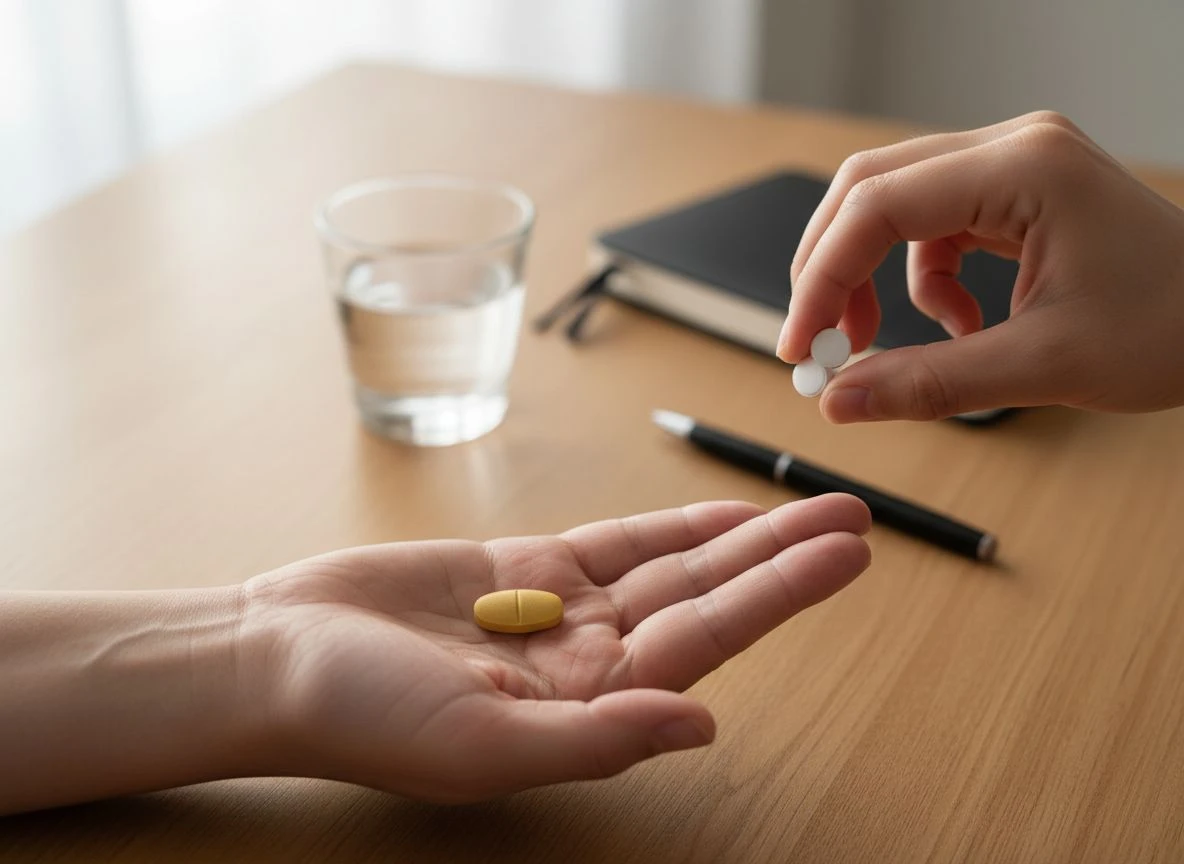
Here’s the core principle: not all blood thinners interact with food the same way. The risk from a berry gummy depends entirely on which medication you’re taking. Warfarin works by blocking Vitamin K, so dietary consistency is key. Newer DOACs (like Eliquis, Xarelto) have a different mechanism. They don’t require Vitamin K management, but they aren’t entirely interaction-free.
Let’s break down the two main classes. This distinction is everything for navigating the berry question.
How Warfarin Interacts with Vitamin K
Warfarin is the classic blood thinner. It works by blocking the recycling of Vitamin K in your liver. Vitamin K is essential for making clotting factors. This is why the old advice was to avoid kale and spinach entirely.
The modern, evidence-based approach is consistency over avoidance. You don’t need to eliminate Vitamin K. You need to consume a steady, predictable amount of it every day. A sudden surge of Vitamin K can reduce warfarin’s effect. Conversely, a sudden drop can increase it, raising bleeding risk.
The goal is stable INR levels. That comes from dietary predictability. This is why the Bolt Pharmacy guide on blueberries rightly emphasizes that moderate, regular portions are safe. It’s the inconsistency that causes problems.
Understanding Newer DOAC Medications
Direct Oral Anticoagulants (DOACs like apixaban, rivaroxaban) are different. They directly inhibit specific clotting factors. Their mechanism is independent of the Vitamin K cycle.
This is a game-changer. As noted in a systematic review by the Anticoagulation Forum, DOACs do not require Vitamin K restriction. You can eat your spinach salad or blueberries without worrying about destabilizing your medication’s core action. The Bolt Pharmacy guide confirms this.
But—and this is crucial—DOACs are not magically immune to all food interactions. They can still be affected by compounds that inhibit certain liver enzymes. This is where concentrated berry extracts in gummies could pose a risk. So while the threat profile is different, vigilance is still necessary.
Two Key Mechanisms Affecting Blood Thinners
So, if moderate whole fruit is often okay, what makes a gummy risky? The danger lies in two specific biological pathways. Concentrated berry compounds can disrupt them.
I once listened as a pharmacist counseled a patient. The patient was avoiding fresh blueberries while on apixaban (Eliquis). But his INR was still unstable. The culprit? A “cranberry-ginger immune gummy.” The pharmacist explained it wasn’t the fruit per se. It was the potent cocktail of compounds inhibiting the liver enzymes his body used to process the medication. That was the “aha” moment. The risk isn’t the food. It’s the biochemical interference at a massive dose.
Let’s break down the two main mechanisms.
Vitamin K’s Role in Blood Clotting
This one is exclusive to warfarin (Coumadin). Warfarin works by blocking an enzyme that recycles vitamin K in your liver. Vitamin K is essential for producing several clotting factors (II, VII, IX, X). When you take warfarin, you’re creating a controlled vitamin K deficiency to slow clotting.
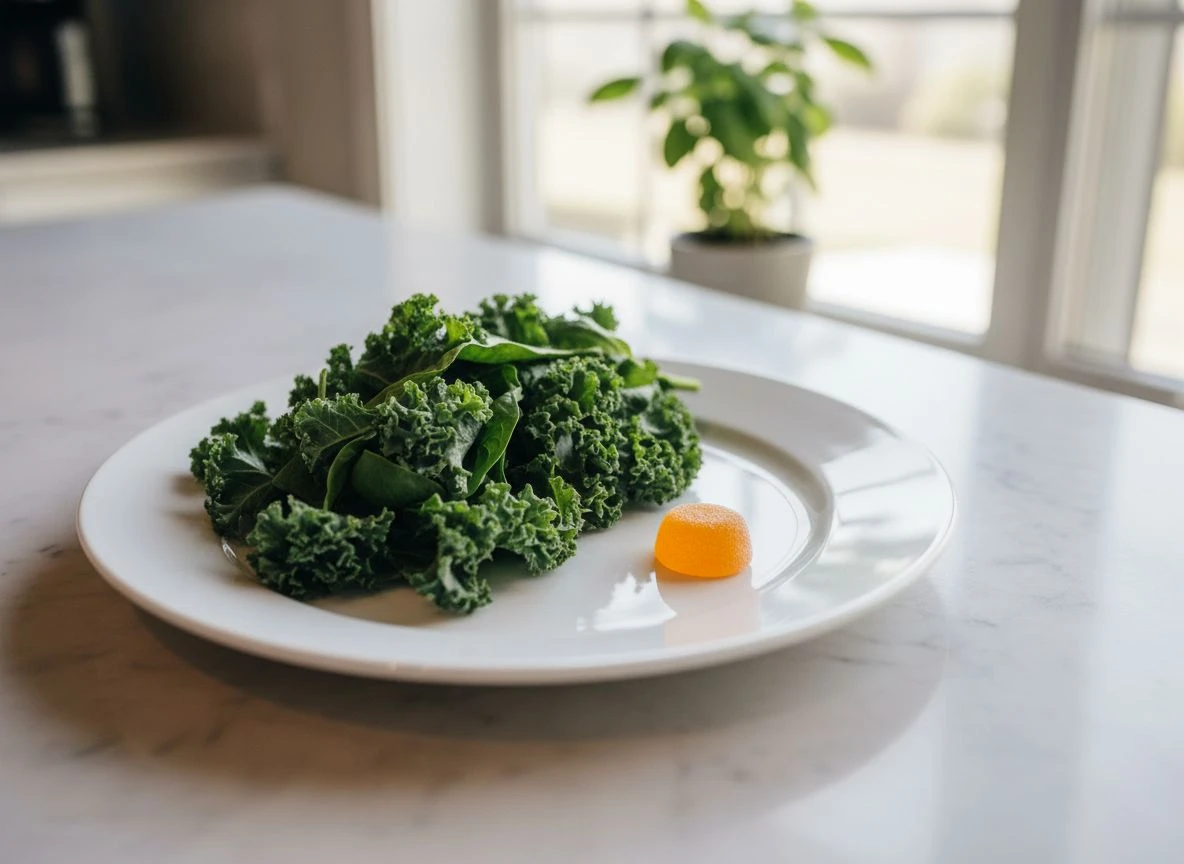
The interaction is direct. A sudden, large intake of vitamin K from any source can temporarily overwhelm warfarin’s blocking action. This leads to a rapid production of fresh clotting factors and a drop in your INR. It reduces the medication’s effectiveness. It’s a seesaw effect. The goal is consistency, not elimination. Most berries are low in vitamin K. But any ingredient adding a significant, unpredictable dose of K to your system can destabilize warfarin therapy.
Enzyme Inhibition from Berry Compounds
This is the stealthier culprit. It can affect both warfarin and some DOACs. Your liver uses a family of enzymes to metabolize and clear medications. Specific compounds in certain fruits can inhibit these enzymes.
For example, compounds in cranberry have been studied for their potential to inhibit the CYP2C9 enzyme. This enzyme is crucial for metabolizing warfarin. If the enzyme is inhibited, warfarin isn’t cleared as quickly. Its levels build up in your blood, increasing its effect and bleeding risk. Other enzymes involved with some DOACs can also be affected.
Think of it like a highway for drug clearance. These fruit compounds can cause a partial lane closure (as explained in Pharmacy Times analyses). Traffic (your medication) backs up. This leads to higher-than-intended concentrations in your system. A gummy with a concentrated extract delivers a much higher dose of these inhibitory compounds than fresh fruit ever could. It makes this “lane closure” more likely and more severe. This is a key risk when combining gummy vitamins and blood thinners.
The takeaway: Warfarin users need to be mindful of both mechanisms. DOAC users don’t need to worry about Vitamin K. But they absolutely must respect the enzyme inhibition pathway. This is precisely where potent gummy supplements become a real concern.
Berry Safety Guide for Blood Thinner Users
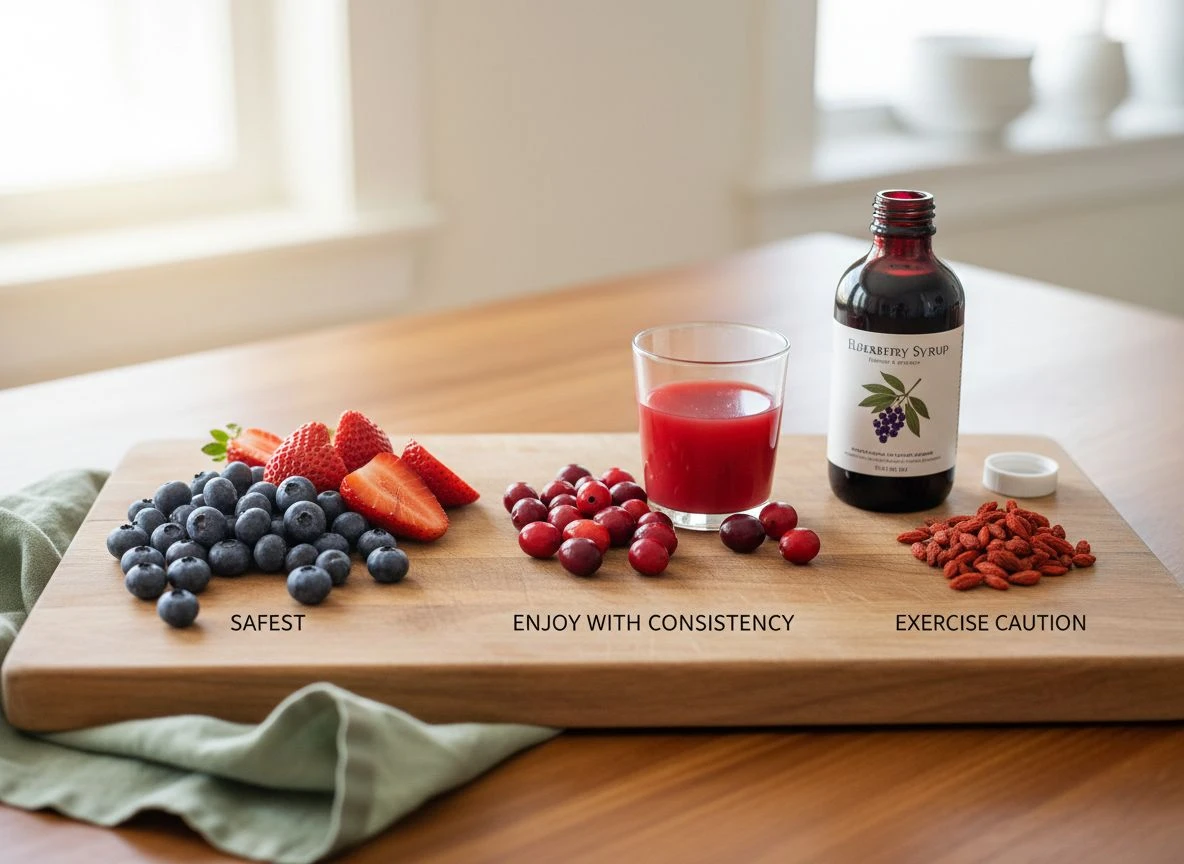
So, which berries are actually safe? The answer isn’t a simple yes/no list. It’s a spectrum based on their vitamin K content and their potential to inhibit liver enzymes. A handful of fresh blueberries is a world apart from a concentrated elderberry gummy.
I find it helpful to visualize this as a safety spectrum. Think of it in three zones: Generally Safe, Enjoy with Consistency, and Exercise Caution. This separates everyday fruit from potent extracts.
Safest Berries Like Blueberries and Strawberries
Let’s start with the good news. For most people on blood thinners, common berries like blueberries and strawberries are low-risk in normal, food-sized portions.
First, their vitamin K content is minimal. As the Bolt Pharmacy guide details, blueberries contain about 19 mcg of vitamin K per 100g. That’s trivial compared to kale. For warfarin users, a consistent half-cup won’t swing your INR. For DOAC users, it’s not even a factor.
Second, they’re low in the potent compounds that make cranberry or grapefruit problematic. They’re just fruit. In my own tracking, adding a daily handful of blueberries never moved the needle.
Managing Consistent Cranberry Intake
This is where nuance is everything. Cranberries themselves are low in vitamin K, but they contain compounds that can inhibit the CYP2C9 enzyme.
The critical word is “can.” The Anticoagulation Forum’s review concluded up to 240mL (8 oz) of cranberry juice daily is safe for stabilized warfarin patients. That’s the key—usual dietary amounts. The dangerous historical cases involved excessive, quart-sized amounts daily.
So, a splash of juice in a smoothie? Likely fine if it’s part of your normal pattern. But chugging juice for a UTI or taking a high-dose supplement? That’s a different story.
Caution Required with Elderberry and Goji
Here’s the zone where “berry” starts to mean “potent herbal supplement.” Elderberries and goji berries are rarely eaten in large, fresh quantities. We encounter them as concentrated syrups, extracts, and—you guessed it—gummies.
These berries are often marketed for immune support. Their extracts are pharmacologically active. They can influence immune response and may affect enzyme pathways. The AC Forum review also specifically flags ginger and mango as potentiators of warfarin. These are common co-stars in “immune-boosting” gummy blends.
When you see “elderberry” on a gummy label, you’re not looking at fruit content. You’re looking at a concentrated extract. This moves it from the “food” column to the “supplement” column. The interaction risk is significantly higher. It’s a prime example of the risks of gummy vitamins and blood thinners.
The bottom line: A berry’s safety depends entirely on its form and dose. Use this spectrum as a cheat sheet. Discuss it with your cardiologist or pharmacist at your next visit.
Why Berry Gummies Pose Higher Risks
The leap from eating a handful of berries to taking a berry-based gummy is a biochemical quantum leap. Whole fruit interacts through known pathways. Gummies introduce three new layers of risk. These are extreme potency, questionable additives, and dangerously opaque labeling. This is where “natural” marketing meets pharmaceutical-grade uncertainty.
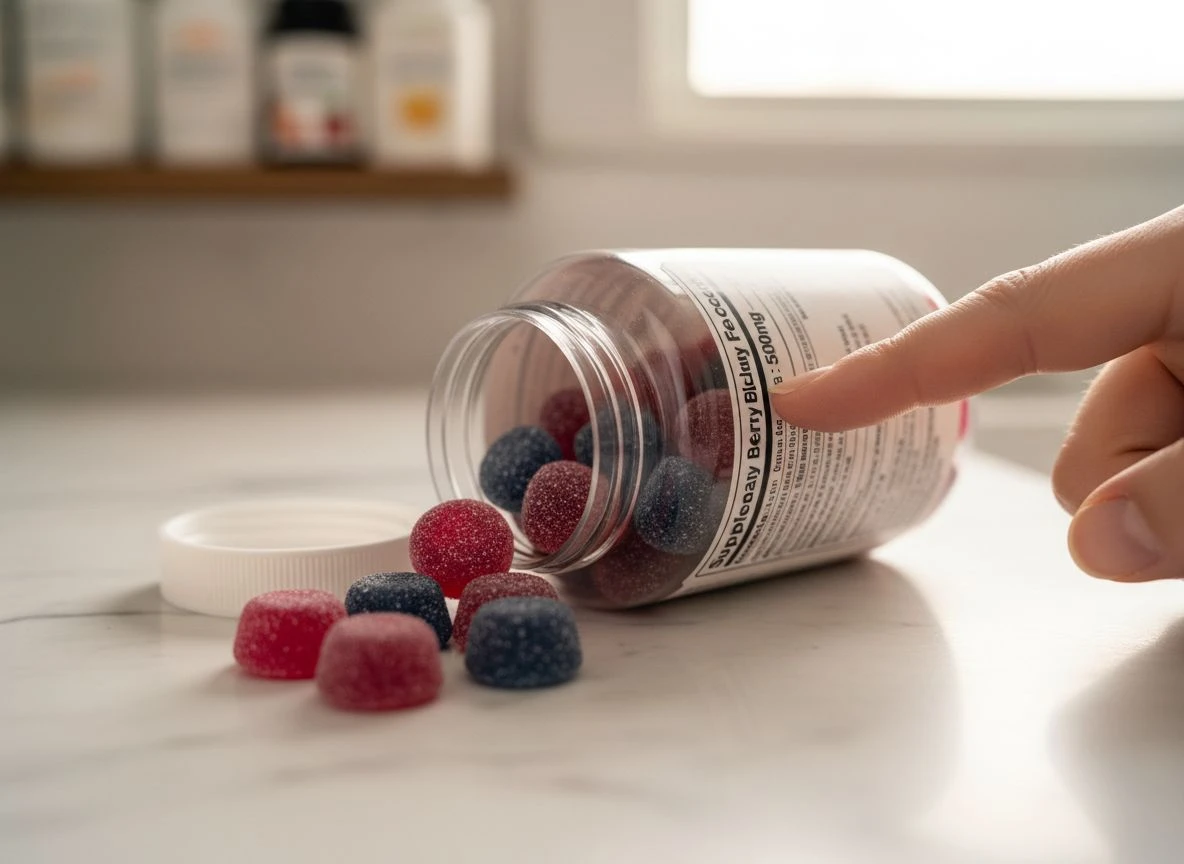
Increased Potency in Berry Gummy Extracts
Here’s the core issue everyone misses: gummies don’t contain mashed-up fruit. They contain extracts or concentrates. A “berry blend” gummy delivers a mega-dose of the very plant compounds that cause interactions.
Let’s put numbers on it. Pharmacy Times analyzed studies using 1000mg cranberry extract capsules taken three times daily. Those concentrated doses were used in trials specifically to try to trigger an interaction.
Now, look at your average “immune support” gummy. Its “proprietary berry blend” could easily deliver an equivalent or higher dose of active compounds. You’re not eating a few cranberries. You’re consuming a therapeutic—and unregulated—dose of their most active parts. This is a central danger of mixing gummy vitamins and blood thinners.
Risks from Gummy Fillers and Additives
Beyond the berry extracts, we have the gummy matrix—the stuff that makes it chewy and stable. Excipients like modified food starches and certain gums could, in theory, affect gut motility and absorption.
Could a gummy’s pectin base slightly delay stomach emptying? Might sugar alcohols affect gut bacteria in a way that influences drug metabolism? We simply don’t have studies on these specific scenarios. When you’re on a medication with a narrow therapeutic window, introducing these variables isn’t trivial. It’s another roll of the dice. For more on ingredients, see our guide to understanding gummy vitamin labels.
The Danger of Proprietary Berry Blends
This is perhaps the most egregious issue. A “Proprietary Antioxidant Berry Blend: 500mg” on a label is a black box. It tells you nothing. Is it mostly blueberry or mostly elderberry? You cannot assess your intake of interacting compounds if the label actively hides the ratios.
For someone on warfarin, not knowing the exact vitamin K source is reckless. For anyone on a DOAC, not knowing the dose of a potent enzyme inhibitor is a gamble. Manufacturers use these blends for cost-saving and secrecy, not for your safety.
Before you take another gummy, do this right now: Check the labels in your cabinet. Look for the terms “extract,” “concentrate,” or “proprietary blend.” If you see them, especially with a blood thinner prescription, you’ve identified a source of unnecessary risk. That’s the gummy problem in a nutshell.
Safe Berry Gummy Evaluation Steps
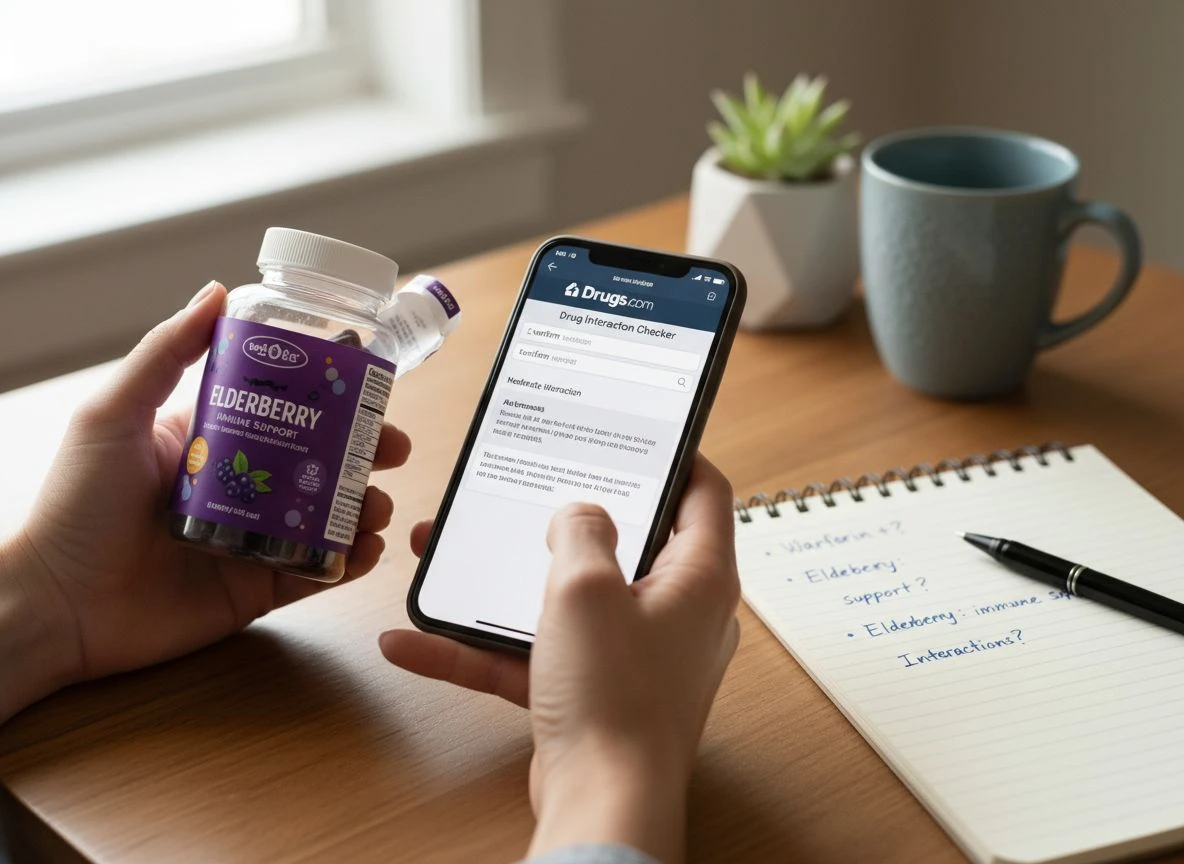
The safest path isn’t total avoidance—it’s becoming a savvy investigator. You need to look beyond the “berry” on the front of the bottle. Here’s my step-by-step checklist for vetting any berry gummy when you’re on blood thinners.
Step 1: Identify Your Blood Thinner Type
This is your starting point. Are you taking warfarin (Coumadin) or a DOAC (like Eliquis, Xarelto)? This dictates your primary concern. For warfarin, you’re managing vitamin K consistency and enzyme interactions. For DOACs, you’re primarily watching for enzyme inhibitors. Knowing your drug frames every other step.
Step 2: Read the Supplement Facts Label
This is the most critical step. Ignore the marketing. Go straight to the Supplement Facts panel.
- Look for the specific berry. Does it say “elderberry extract” or a vague “berry blend”?
- Find the dose. Is it listed in milligrams (mg)? A “proprietary blend” with no disclosed doses is an immediate red flag. Remember, studies used high-dose concentrates like 1000mg cranberry extract.
Step 3: Spot Red Flags in Ingredients
Berry gummies rarely contain just berries. Check for other known interactors:
- Ginger or Turmeric: These are potent blood-thinners themselves. The AC Forum review notes ginger can potentiate warfarin.
- St. John’s Wort: This herb can reduce the effectiveness of many medications.
- High-Dose Vitamin E or Ginkgo Biloba: Also have blood-thinning properties.
Step 4: Consult Your Doctor with the Product
Don’t just ask, “Can I take berry gummies?” That’s too vague. Say, “I’m considering this specific product. Can you review the label with me?” Bring the physical bottle or a screenshot. This allows them to assess the exact extracts against your specific medication. You can also use the Drugs.com Interaction Checker as a preliminary screen, but it’s no substitute for professional advice.
Step 5: Maintain Consistency and Monitor
If you and your provider decide a product is acceptable, the Bolt Pharmacy guide’s principle is key: be consistent. Take the same dose daily. Don’t suddenly start or stop. Don’t make other big changes at the same time. For warfarin users, stick to your scheduled INR tests. For everyone, watch for any unusual bruising or bleeding. Learn more about monitoring supplement effects.
It might feel like a lot of work for a gummy. But when a medication has a narrow safety margin, this diligence is what keeps you safe.
Are Berry Gummies Safe with Blood Thinners?
Let’s cut to the chase. You likely have specific, practical questions. Here are clear answers based on current evidence.
I take Eliquis (apixaban). Can I eat blueberries every day?
Yes, you can. DOACs like Eliquis work independently of vitamin K. As noted in the Bolt Pharmacy safety guide, DOAC users do not need to restrict vitamin K-rich foods like blueberries. The main dietary concern is potent enzyme inhibitors (like grapefruit), not the modest vitamin K in berries. Enjoy your blueberries.
My warfarin clinic told me to avoid cranberry juice. Is that still good advice?
This is where modern evidence updates old warnings. An NIH review found usual amounts of cranberry juice don’t significantly affect warfarin in stabilized patients. The historical risks are linked to excessive intake. However, you must follow your clinic’s protocol. Have a conversation with them about this evidence.
Why are berry gummies singled out as riskier than eating real fruit?
Two big reasons: concentration and unknowns. A gummy contains a concentrated extract. You’re taking a phytochemical supplement, not eating fruit. Second, the “gummy” matrix could theoretically affect absorption in ways we haven’t studied. With whole fruit, we know the dose. With gummies, both the dose and delivery are amplified and opaque. This makes gummy vitamins and blood thinners a unique concern.
Are there any berry supplements that are definitely unsafe?
Any supplement with a vague “berry blend” and no disclosed dosage is a hard avoid. Also, watch for blends that add other blood-thinning herbs like ginger or ginkgo. High-dose cranberry or elderberry extract supplements should be approached with extreme caution. Always talk to your pharmacist first. For alternatives, consider whole food vitamin sources.
Final Advice on Berries and Blood Thinners
So here’s your takeaway. You don’t need to fear berries. You need to respect concentrates and understand your medication. For warfarin, consistency in vitamin K intake is your mantra. For all blood thinners, concentration is the critical risk multiplier. The danger isn’t in a bowl of fresh strawberries. It’s in a potent, unregulated gummy that acts more like a drug than a food. This is crucial for managing gummy vitamins and blood thinners.
I know this topic feels fraught. But knowledge is your best defense. Use this article as a discussion starter. Print it out and bring it to your next appointment. Talk through your specific medication and any supplements you’re considering.
My strongest advice? Never self-prescribe a berry-based gummy while on anticoagulants. The potential for a high-dose extract to disrupt your system is a real, documented risk. Let your healthcare team be the final judge.
I’ll leave you with a hopeful image. It’s of a reader who did this research. They had an informed chat with their pharmacist. Now they confidently enjoy a bowl of fresh blueberries. Their medication remains stable and safe because they understood the mechanics. They avoided the processed, concentrated unknowns. That’s the goal with gummy vitamins and blood thinners: empowerment through clarity, not restriction through fear.

I founded Best Gummy Reviews after discovering shocking quality gaps during my own vitamin D treatment. With 8+ years in nutrition research, I combine lab science with real-world testing to tell you what actually works. I’m thorough but straightforward—supplements should complement your healthy habits, not replace them.