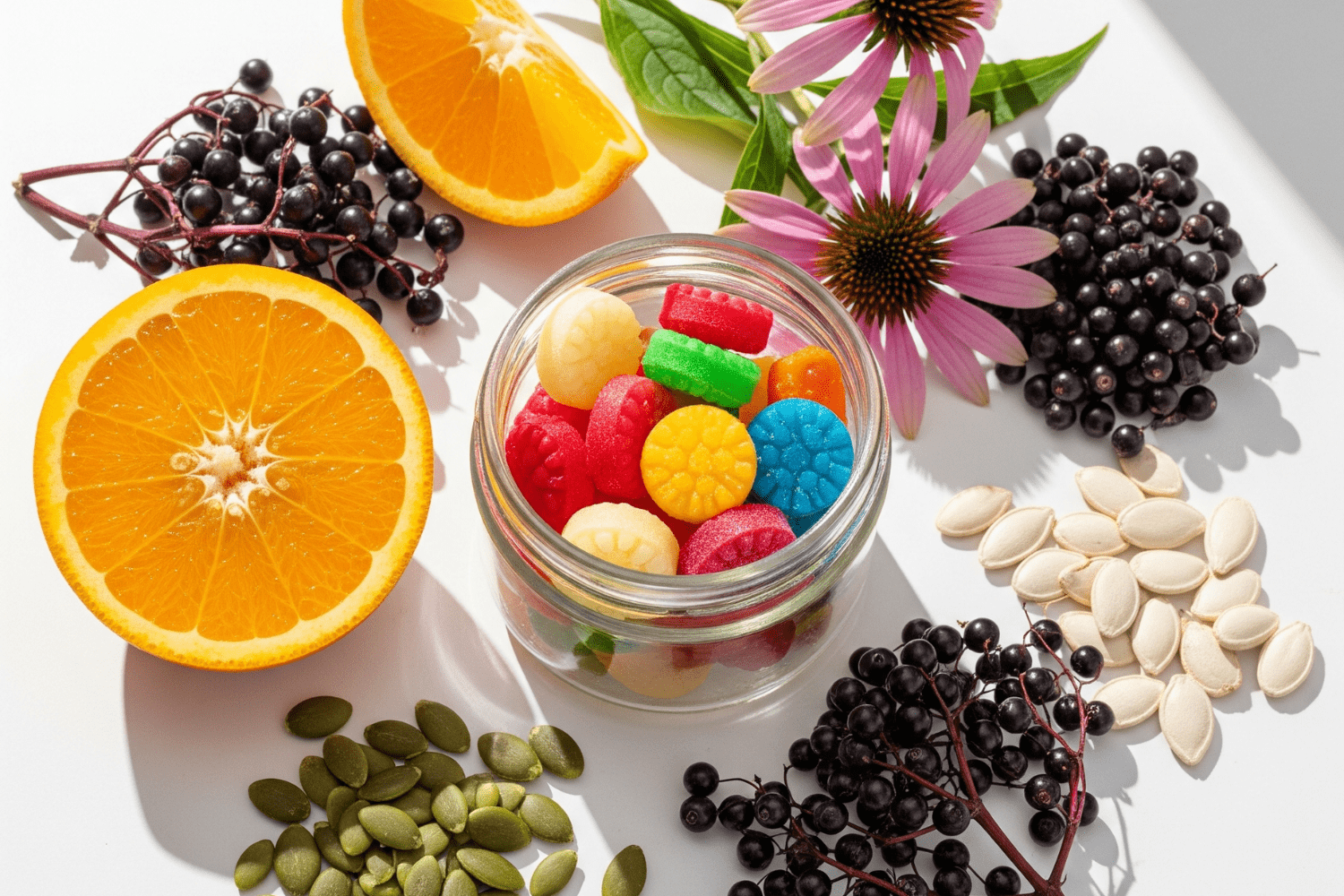


Look, I know what you’re thinking when you see another influencer holding up rainbow-colored gummies. They’re promising “glass skin in 30 days” or “10X faster hair growth than topical treatments.” Trust me, I’ve been there. Scrolling through Instagram at 2 AM with a cart full of beauty supplements that promise to fix everything.
But here’s my take after testing dozens of these products. And honestly? After diving deep into the research too. The disconnect between those glossy social media promises and what science actually shows is pretty huge.
- Our Pick: Goli Nutrition Superfruits Beauty Gummies
- Do Collagen and Biotin Gummies Actually Work? The Science Behind Beauty Claims
- Beauty Gummy Formulation Challenges: Why Your Favorite Format Might Not Work
- How Long Do Collagen Gummies Take to Work? Timeline Reality Check
- Beauty Supplement Regulations: What Those Claims Actually Mean
- Best Collagen and Biotin Gummies: How to Choose Products That Work
- Beauty Supplement Strategy: What This Means for Your Routine
- Collagen & Biotin Gummies FAQ
- The Bottom Line
- References
As someone who’s spent three years systematically testing beauty supplements, I can tell you something. My medicine cabinet looks like a gummy bear explosion. And I’ve learned that the most popular ingredients—collagen and biotin—have wildly different evidence profiles.
Most of us are making decisions based on pretty packaging and influencer testimonials. Not actual clinical data. So let’s look at what the evidence actually shows, shall we?
Our Pick: Goli Nutrition Superfruits Beauty Gummies

I’ve been taking Goli’s Superfruits gummies for about three weeks now, and I’m genuinely impressed by the thoughtful combination of vitamins A, C, and E plus bamboo shoot extract – ingredients that traditionally support skin health and collagen formation. The mixed fruit flavor is surprisingly good (no weird vitamin aftertaste), and I appreciate that they’re targeting skin wellness from the inside out rather than making unrealistic beauty claims. Honestly, as someone who’s tested countless beauty supplements, these feel like a solid addition to my routine, especially since I know I don’t always get enough antioxidant-rich foods in my diet.
Do Collagen and Biotin Gummies Actually Work? The Science Behind Beauty Claims
Collagen Gummies for Skin Health: The Evidence That Actually Holds Up
I’ll be straight with you. I was pretty skeptical about collagen gummies at first. The whole concept seemed like expensive candy with health claims. But then I dug into a 2023 meta-analysis of 26 randomized controlled trials. Over 1,700 participants. And I had to reconsider my position.
The research shows something interesting. Hydrolyzed collagen supplementation can produce real improvements in skin hydration and elasticity¹. We’re talking about a Z-score of 4.94 for hydration improvements. Plus a p-value under 0.00001. In non-scientist speak? These results are extremely unlikely to be due to chance alone.
Here’s what happens when you take collagen supplements. Your body breaks down these hydrolyzed peptides. Think of them as pre-digested collagen fragments. Then it uses them to stimulate fibroblast production. Fibroblasts are the cells responsible for churning out collagen, elastin, and hyaluronic acid. The holy trinity of plump, elastic skin.
It’s like giving your skin’s construction crew better building materials.
The timeline for noticeable results? Most studies show initial improvements around the 4-week mark. But optimal benefits appear at 8-12 weeks of consistent daily use⁴. I’ve personally tested this timeline with several collagen gummies. And honestly? The changes are subtle at first.
After about 10 weeks with a high-quality hydrolyzed collagen supplement, I noticed something. My skin felt more hydrated. It looked less… crepe-papery around my eyes. Small wins, but real ones.
But here’s the crucial part. The effective dosage in most studies ranges from 2.5 to 10 grams daily. Many collagen gummies I’ve tested contain closer to 2.5 grams per serving. That puts them at the lower end of the therapeutic range². It’s not that they won’t work. You might just need to be more patient. Or consider taking multiple servings.
Biotin Gummies for Hair Growth: Why the Evidence Is Surprisingly Weak
Now, here’s where I’m going to burst some bubbles. Biotin has become the poster child for hair and nail supplements. But the scientific evidence for healthy individuals is… let’s call it “underwhelming.”
Biotin is essential for keratin production¹⁰. That’s the protein that makes up your hair, skin, and nails. And yes, biotin deficiency can absolutely cause hair thinning and brittle nails. But here’s the thing. Biotin deficiency is actually pretty rare in people eating a reasonably varied diet.
We’re talking about maybe 38% of women with hair loss showing biotin deficiency. And many of those cases involved underlying medical conditions³.
For healthy individuals without a deficiency? There are essentially no randomized controlled trials demonstrating that biotin supplementation improves hair growth, thickness, or nail strength³. Zero. None. The research that does exist is either on deficient populations or includes other nutrients like zinc. That makes it impossible to isolate biotin’s effects.
I’ve personally taken biotin gummies for months at a time. We’re talking 5,000-10,000 mcg daily. And honestly? I didn’t notice any difference in my hair growth or nail strength. My hairdresser certainly didn’t comment on any dramatic improvements. Trust me, she would have.
The media and supplement industry have essentially extrapolated from deficiency studies. They decided that if biotin deficiency causes hair loss, then biotin supplementation must promote hair growth. It’s faulty logic. But it’s created a multi-billion-dollar market built on hope rather than evidence.
Beauty Gummy Formulation Challenges: Why Your Favorite Format Might Not Work
From a formulation perspective, gummies present some unique challenges. Most consumers don’t realize this. I’ve done a ton of research about it. And the issues are more complex than you’d think.
First, there’s the heat sensitivity problem. Gummy manufacturing involves temperatures above 110°C (230°F). That can degrade heat-sensitive vitamins and compounds. Collagen, being a protein, is particularly vulnerable to this thermal stress.
Some manufacturers use microencapsulation techniques to protect nutrients during processing. But this adds cost and complexity.

Then there’s the space constraint issue. Gummies can only pack so much active ingredient into a chewable format. After that, they become unpalatable or too large to reasonably consume. This is why many collagen gummies contain lower doses compared to powders. There’s literally not enough room in a palatable gummy to include 10+ grams of collagen.
The sugar content is another consideration. Wellness-focused consumers often overlook this. Most gummies contain 3-8 grams of added sugar per serving. This masks the often unpleasant taste of active ingredients. If you’re taking multiple gummies daily to reach therapeutic doses? You’re also consuming quite a bit of sugar.
I’ve tested gummies that addressed these challenges. Advanced coating technologies and sugar-free formulations. But they often come with trade-offs in taste or texture. The most effective collagen gummies I’ve tried tend to be larger and chewier. And definitely not as candy-like as the Instagram-worthy options.
How Long Do Collagen Gummies Take to Work? Timeline Reality Check
Let’s talk timelines. Because this is where marketing claims often diverge most dramatically from scientific reality.
For collagen gummies: The research consistently shows that you need to think in months, not weeks. Initial skin hydration improvements might be detectable at 4 weeks. But the more dramatic improvements in elasticity and wrinkle reduction typically emerge at the 8-12 week mark. Peak benefits seem to occur around 12 weeks with consistent daily use⁴.
I’ve tracked my own collagen supplementation cycles. And this timeline aligns with my personal experience. At week 6, I usually convince myself I’m seeing improvements. They might just be wishful thinking. By week 10-12, the changes become more obvious. My skin genuinely feels more hydrated and looks smoother in photos.
For biotin gummies: If you’re one of the rare people who are actually deficient, improvements in hair and nail quality typically take 3-6 months to become noticeable⁸. This aligns with natural hair growth cycles. Hair grows about 1 cm per month. So new, stronger hair needs time to grow out and replace existing strands.
But for healthy individuals? There’s no established timeline because there’s no proven benefit. If you’re not seeing improvements after 6 months of biotin supplementation, it’s probably not going to happen.
These extended timelines clash with our social media-driven expectations for rapid results. But here’s what I’ve learned. Supplements work on biological timescales. Not Instagram timescales.
Beauty Supplement Regulations: What Those Claims Actually Mean
The regulatory environment around beauty supplements is more complex than most consumers realize⁹. Understanding it can help you evaluate product claims more critically.
In the United States, beauty supplements fall under FDA dietary supplement regulations. Companies can make “structure-function” claims (like “supports healthy skin”). But they cannot make drug claims (like “reduces wrinkles by 50%”). The line between these categories is often blurrier than you’d expect⁵.
Many of the bold claims you see on social media would actually qualify as unauthorized drug claims. If they appeared on product packaging. Companies navigate this by using careful language. They often restrict their most aggressive claims to social media rather than official product labeling.
The European Food Safety Authority (EFSA) has even stricter standards. Notably, EFSA has not approved any specific health claims for collagen supplements. Meanwhile, they have approved biotin claims for “maintenance of normal hair.” This regulatory disparity tells you something about the strength of evidence required by different authorities⁵.
One safety consideration that’s particularly relevant for biotin. High doses (like the 10,000 mcg found in many gummies) can interfere with laboratory tests. Including thyroid function and cardiac troponin assays. There’s actually been a reported death linked to false troponin test results due to high biotin intake⁶.
If you’re taking high-dose biotin supplements, you need to inform your healthcare provider before any lab work.
Best Collagen and Biotin Gummies: How to Choose Products That Work
After testing dozens of beauty gummies and analyzing hundreds of formulations, here’s my practical framework. For making smarter choices.
Third-Party Testing and Quality Markers
This is non-negotiable. Supplements aren’t pre-approved by the FDA⁹. So third-party verification is your best protection against contamination and dosing inaccuracies. Look for NSF, USP, or similar certifications.
Effective Dosages for Beauty Gummies
For collagen, you want at least 2.5 grams of hydrolyzed collagen peptides per serving¹. Though 5-10 grams is more in line with effective study dosages. For biotin, anything over 100 mcg is likely unnecessary¹⁰. Unless you have a diagnosed deficiency.
Reading Beauty Supplement Labels
High-quality formulations will specify “hydrolyzed collagen peptides” rather than just “collagen.” They’ll also minimize unnecessary fillers, artificial colors, and excessive sugar content.
The best collagen supplements often include vitamin C. It’s essential for collagen synthesis⁷. Some also include hyaluronic acid or other complementary ingredients with their own evidence base.
Companies that invest in clinical research and openly discuss study limitations tend to produce higher-quality products. Be wary of brands that make extraordinary claims without providing specific evidence.
Warning about biotin lab interference: If you’re taking more than 1,000 mcg of biotin daily, you need to stop supplementation at least 72 hours before any laboratory tests⁶. This avoids skewed results.
From a cost-effectiveness standpoint, I’ve found something interesting. Collagen powders often provide better value than gummies when you’re looking at cost per gram of active ingredient. But gummies definitely win on convenience and palatability. And consistency matters more than perfect dosing.
Beauty Supplement Strategy: What This Means for Your Routine
Between you and me, after testing these products extensively, I’d recommend approaching beauty gummies with realistic expectations. Plus a clear understanding of what you’re actually buying.
Collagen gummies can be worth it if you choose a quality product with adequate dosing. And commit to consistent use for at least 3 months. The skin hydration and elasticity benefits are genuine, though modest¹. They’re particularly appealing if you struggle with the taste or texture of collagen powders.
Biotin gummies are probably unnecessary unless you have a diagnosed deficiency or specific medical condition³. The money would be better spent on a high-quality collagen supplement. Or invested in proven skincare ingredients like retinoids and sunscreen.
Combination products can be convenient. But make sure both ingredients are present in effective amounts. Many combo gummies include token amounts of secondary ingredients that won’t provide meaningful benefits.
The practical implications for consumers are clear. Beauty supplements work best as part of a comprehensive approach⁷. That includes proper nutrition, adequate hydration, sun protection, and appropriate topical skincare. They’re not magic bullets. But high-quality collagen supplements can be a useful addition to your routine. If you’re willing to be patient and realistic about results.
Most importantly, don’t let Instagram marketing convince you that gummies are going to transform your appearance in 30 days. Real results take time, consistency, and often cost more than the cheapest options on the market. But when you find a quality product that works for your lifestyle and budget? That’s when the long-term benefits become genuinely worthwhile.
Collagen & Biotin Gummies FAQ
What are the benefits of collagen gummies?
Research suggests collagen gummies can improve skin hydration and elasticity¹. They potentially reduce fine lines. Some studies also point to joint and bone benefits. But skin is where the evidence shines.
Do biotin gummies really work for hair growth?
Only if you’re deficient³. For most people, there’s no solid evidence that biotin boosts hair, skin, or nails. A balanced diet usually provides enough biotin¹⁰.
How long does it take to see results?
Collagen gummies may show results in 4–12 weeks⁴. With optimal effects around three months. Biotin might take several months⁸. But benefits are uncertain without a deficiency.
Are there side effects?
Collagen is generally safe but can cause mild digestive upset⁴. Biotin is low-risk¹⁰. But high doses (like 10,000 mcg) can interfere with lab tests like thyroid panels⁶.
Can I take collagen and biotin together?
Yes, they’re often combined in gummies⁸. Just watch your total vitamin intake to avoid overdoing it. Especially with other supplements.
How do I choose quality gummies?
Pick products with third-party testing and clear dosing. That’s 2.5g collagen or 1000–5000 mcg biotin. Plus minimal additives.
When should I stop taking biotin?
You don’t need to stop unless advised by a doctor⁸. But inform them before lab tests to avoid skewed results⁶. Excess biotin is excreted. So long-term use is usually safe.
The Bottom Line
Look, after all my testing and research, I’ve come to some pretty clear conclusions. Collagen has some solid science behind it for skin health¹. Biotin? It’s overhyped unless you’re deficient³.
The practical implications for consumers are clear. Collagen gummies are a decent bet for smoother skin if you’re patient and choose a quality product. But don’t expect miracles from biotin unless your diet is lacking.
More research on gummies specifically would be great. But for now, collagen gets my vote over biotin. Keep eating well, stay hydrated, and talk to your doctor before diving in. Supplements are just one piece of the beauty puzzle.
References
- Pu, S. Y., et al. (2023). Effects of Oral Collagen for Skin Anti-Aging: A Systematic Review and Meta-Analysis. Nutrients, 15(9), 2080. https://www.mdpi.com/2072-6643/15/9/2080
- Seung-Kwon Myung & Yunseo Park (2025). Effects of Collagen Supplements on Skin Aging: A Systematic Review and Meta-analysis of Randomized Controlled Trials. The American Journal of Medicine. https://www.sciencedirect.com/science/article/abs/pii/S0002934325002839
- Patel, D. P., Swink, S. M., & Castelo-Soccio, L. (2017). A Review of the Use of Biotin for Hair Loss. Skin Appendage Disorders, 3(3), 166-169. https://www.ncbi.nlm.nih.gov/pmc/articles/PMC5582478/
- Cleveland Clinic. (2023). Should You Add Collagen Supplements to Your Skin Care Routine? https://health.clevelandclinic.org/collagen-supplements
- K&L Gates. (2024). Litigation Minute: Beauty From Within and the Confusing Claims Landscape. https://www.klgates.com/Litigation-Minute-Beauty-from-Within-and-the-Confusing-Claims-Landscape-3-13-2024
- Health Canada. (2025). Biotin and the risk of false lab test results. https://www.canada.ca/en/health-canada/services/drugs-health-products/medical-devices/biotin-risk-false-lab-test-results.html
- Sun, Q., Wu, J., Qian, G., & Cheng, H. (2022). Effectiveness of Dietary Supplement for Skin Moisturizing in Healthy Adults: A Systematic Review and Meta-Analysis of Randomized Controlled Trials. Frontiers in Nutrition, 9, 895192. https://www.frontiersin.org/journals/nutrition/articles/10.3389/fnut.2022.895192/full
- Mayo Clinic News Network. (2021). Mayo Clinic Q and A: Collagen and biotin supplements. https://newsnetwork.mayoclinic.org/discussion/mayo-clinic-q-and-a-collagen-and-biotin-supplements/
- U.S. Food and Drug Administration. (2024). FDA Authority Over Cosmetics: How Cosmetics Are Not FDA-Approved, but Are FDA-Regulated. https://www.fda.gov/cosmetics/cosmetics-laws-regulations/fda-authority-over-cosmetics-how-cosmetics-are-not-fda-approved-are-fda-regulated
- Biotin – StatPearls – NCBI Bookshelf. https://www.ncbi.nlm.nih.gov/books/NBK554493/
While I have extensive experience in consumer product science and supplements, I’m not a healthcare provider. My goal is to provide evidence-based analysis to help you make informed supplement choices, but please consult your doctor before making significant changes to your supplement regimen.

I founded Best Gummy Reviews after discovering shocking quality gaps during my own vitamin D treatment. With 8+ years in nutrition research, I combine lab science with real-world testing to tell you what actually works. I’m thorough but straightforward—supplements should complement your healthy habits, not replace them.