

Table of Contents
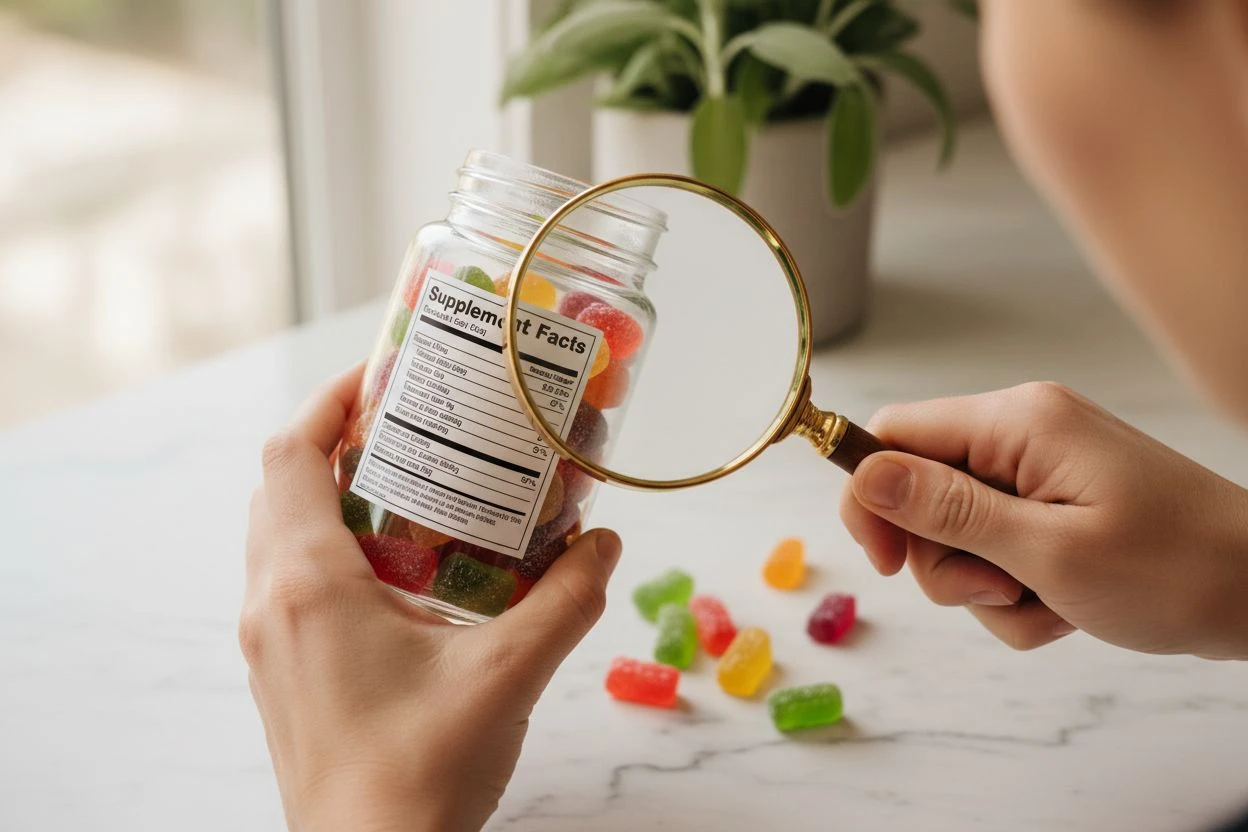
Let’s be honest. That tasty gummy vitamin you’re taking might not give you what the label promises. I learned this the hard way. It taught me why learning how to read gummy vitamin label is crucial. After years of gagging on chalky pills—I call it “pill fatigue”—switching to gummies felt like a win. They were delicious! But my excitement faded. I realized the fun flavors sometimes hid a disappointing truth. That truth includes shaky quality, hidden sugars, and nutrients that could break down before you even open the bottle. This experience taught me the critical importance of knowing how to read a gummy vitamin label.
Here’s the reality we need to accept. Finding a tasty alternative to pills is great. But the supplement label can be very misleading. Gummy vitamins are regulated by the FDA as dietary supplements. This means the agency does not approve them for safety or effectiveness before they hit shelves [Source 2: kemin.com]. The burden is on the manufacturer. Sometimes, making a product taste amazing outweighs making it nutritionally solid.
That’s why I wrote this guide. I’ll teach you how to read a gummy label like a pro. You’ll learn to spot the hidden flaws in about 30 seconds. This turns you from a passive buyer into an informed skeptic.
We’ll start by unpacking the regulatory gray area. Then, we’ll decode the “Supplement Facts” panel line by line. We’ll identify filler ingredients that offer zero benefit. I’ll also show you how to verify a brand’s quality claims beyond its marketing. By the end, you’ll never look at a bottle of gummy bears the same way again. That’s a very good thing.
Navigating Supplement Regulation Loopholes

Let me be straight with you. Your favorite gummy vitamin has almost certainly never been formally approved for safety or effectiveness before you bought it. A reader once emailed me, genuinely shocked. She discovered the premium brand she’d trusted for years operated in this exact regulatory gray area. Her assumption—that someone was checking these things—is the most common and dangerous misconception in the supplement aisle.
This isn’t about fear. It’s about understanding where the system’s safeguards are weak. Your own scrutiny is your first line of defense.
Does the FDA Approve Gummy Vitamins
Here’s the reality. The FDA regulates gummy vitamins under the Dietary Supplement Health and Education Act (DSHEA) of 1994. Under this law, the agency’s role is mostly reactive. As Source 2 clearly states, the FDA holds manufacturers responsible for their product’s safety and label accuracy. But it does not conduct pre-market reviews or approvals.
Think of it this way. The FDA sets the rules. It can penalize players who break them. But it doesn’t check every player’s equipment before the game starts. The manufacturer must ensure their gummy is safe, contains what the label says, and is free of contaminants. The FDA steps in after a product is on the market if problems pop up. The practical result? The burden of proof is on you. You often have to verify the brand’s claims yourself.
Common Contaminants in Vitamin Gummies
This reactive model is why contaminants are a serious risk. Without mandatory pre-market testing, supplements can contain unwanted hitchhikers. These include heavy metals (lead, arsenic, cadmium), pesticides, or bacteria [Source 6: uclahealth.org]. These don’t come from the vitamins themselves. They can be introduced through raw ingredients, water used in making the product, or poor facility conditions.
For gummies, the risk is a bit unique. The sugary, moist base is a great breeding ground for microbes if not preserved well. The fruit flavors or colors can sometimes be sources of heavy metals if they come from contaminated soils. This is why voluntary third-party testing for contaminants is so critical. It’s a check on a system that doesn’t require one by default.
The takeaway? Don’t trust the front of the bottle. The regulatory environment makes your skepticism not just reasonable, but necessary.
How to Read a Gummy Vitamin Label
This fast guide is where marketing meets science. A good audit focuses on four things: the serving size and nutrient amounts, the % Daily Value, the dreaded proprietary blend, and the sugar content. Your goal is to see if the numbers support the promises. You also need to spot any shortcuts hiding in plain sight.
Alright, pause and grab a bottle from your cabinet to follow along. Let’s break it down.
Check Serving Size and Nutrient Levels
First, find “Serving Size.” Is it one gummy or two? This dictates your real cost and intake. Next, look at “Amount Per Serving.” This is the claimed dose. Here’s my rule of thumb from comparing hundreds of labels. For any core nutrient you’re actually buying this for, it should provide at least 50% of the Daily Value (DV). If a vitamin C gummy only offers 20mg (22% DV), that’s a uselessly low dose. You’re basically buying candy. I use this 50% threshold as a quick filter. Honestly, it disqualifies a surprising number of pretty-looking products.
The “% Daily Value” column is your quick guide. Aim high for nutrients you want, like Vitamin D. Also scan for any that hit 100% or more. This is crucial for minerals like zinc or magnesium. Exceeding the upper limit there isn’t wise.
The Problem with Proprietary Blends
Now, scan the “Ingredients” list. See a phrase like “Proprietary Energy Blend”? It’s usually followed by a list of herbs and a single total weight (e.g., “500mg”). This is a major red flag.
As the NIH’s guide clearly explains, a proprietary blend only lists the total weight of all ingredients combined. It hides the individual dose of each part. That 500mg blend could contain 490mg of cheap filler and 10mg of the expensive, active ingredient you want. You have no way to know if you’re getting an effective dose.
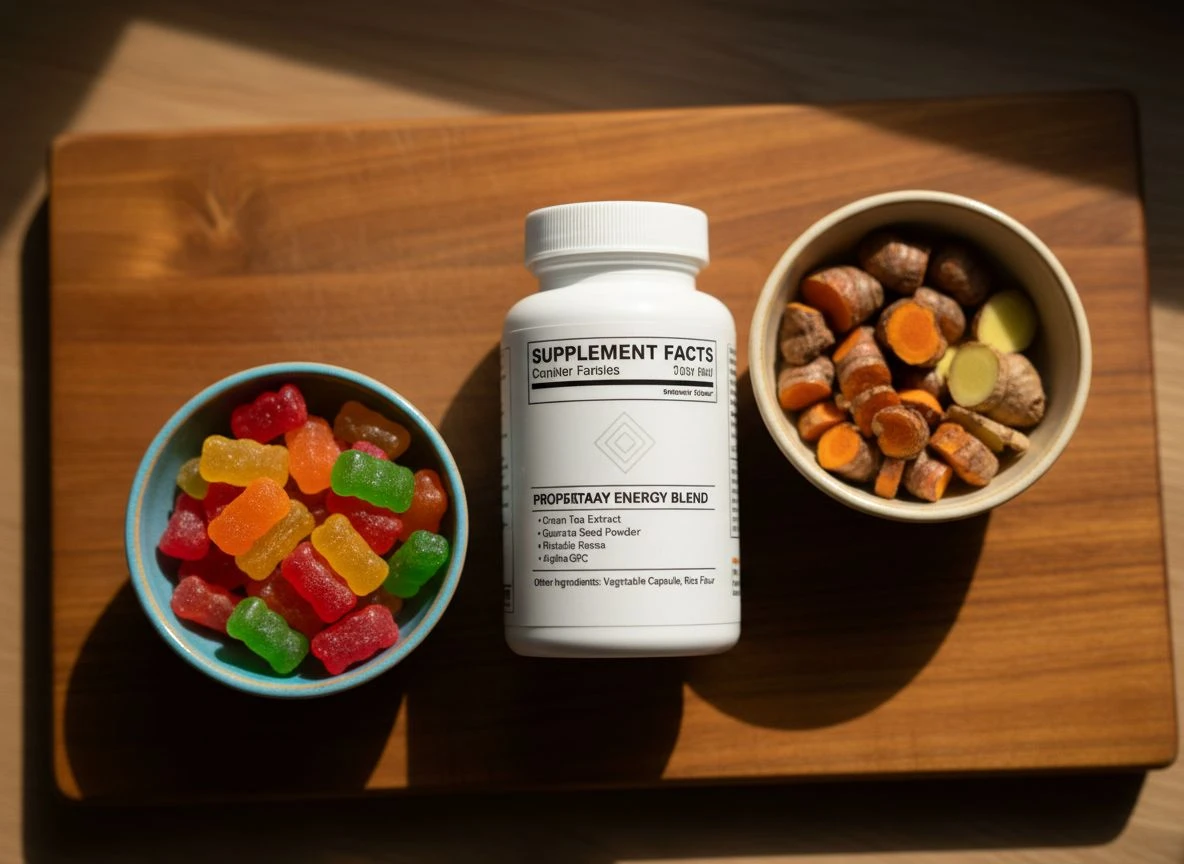
If you must consider a product with a blend, remember the label order rule. Ingredients are listed in descending order by weight. The first item in the blend is the most abundant. If “organic cane sugar” or “maltodextrin” is first… you see the problem.
Hidden Sugar in Vitamin Gummies
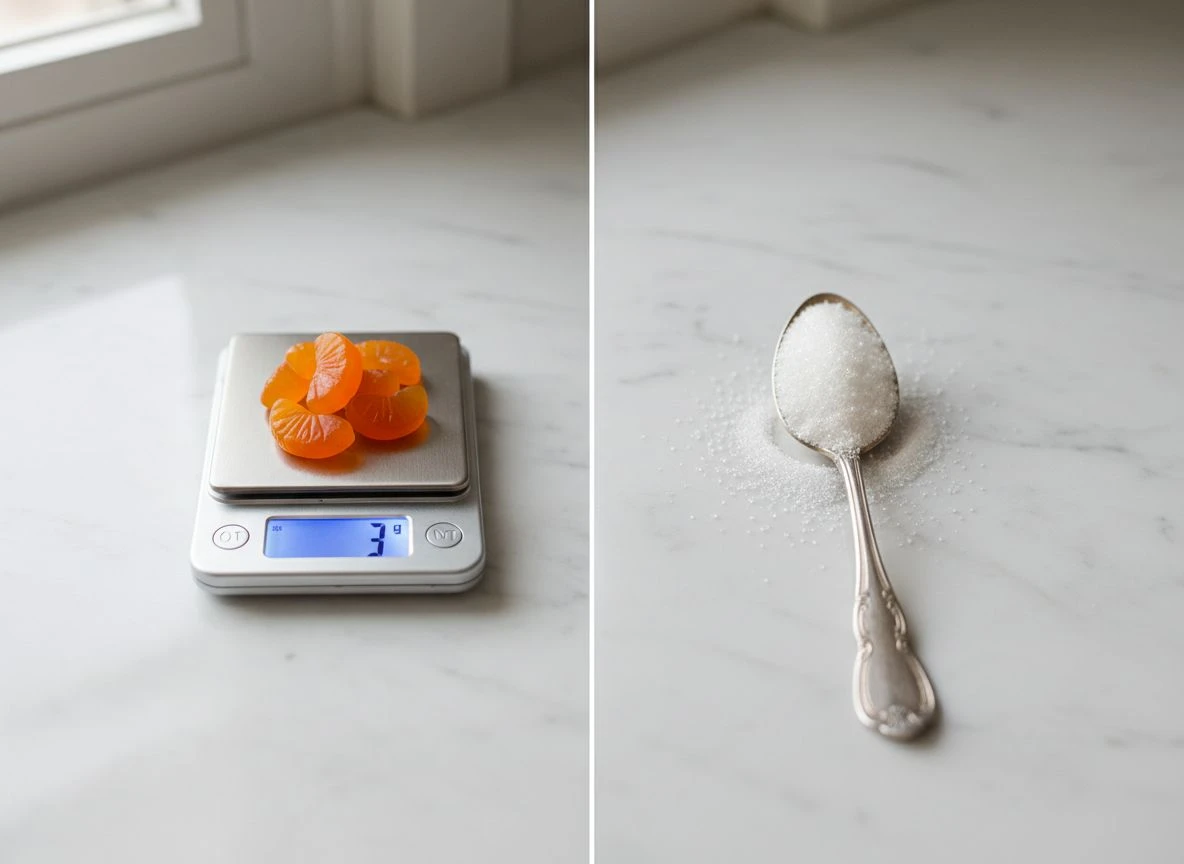
Finally, let’s talk about the gummy’s dirty little secret: the sugar-to-nutrient ratio. Look back at the “Amount Per Serving.” Find the grams of the primary active ingredient (e.g., Collagen: 2.5g). Then, find “Total Sugars” or “Added Sugars.”
Here’s my simple rule. If the grams of sugar meet or exceed the grams of the primary active ingredient, it’s a candy-first product. A “beauty gummy” with 2g of collagen but 3g of added sugar is more like a sour patch kid than a serious supplement. Your goal is to find products where the nutrient amount decisively wins that battle.
In 30 seconds, you’ve looked for meaningful doses, exposed hidden blends, and called out sugary imposters. That’s the power of a focused audit. This is the core skill of how to read a gummy vitamin label.
Gummy Vitamin Potency Over Time
Here’s the bottom line. Gummies are inherently less stable than pills. Heat and moisture degrade nutrients trapped in the sugary gel. So, manufacturers often “overage” (add extra) to meet the label claim at expiration. A responsible “best by” date is based on real shelf-life testing, not a guess. While overage compensates for loss, it’s a key reason you should never double-dose.
Let’s get into the messy chemistry. When you choose a gummy over a tablet, you’re trading stability for taste. That gelatin or pectin base? It’s a moist environment where sensitive nutrients start breaking down almost immediately. Think of it as a constant, slow-motion battle.
As the industry experts at KorNutra put it, a gummy is a “battle of chemistry.” Water-soluble vitamins like B12 and C are especially vulnerable. The heat during manufacturing and the humidity on the shelf steadily chip away at potency. This is why that bottle left in your hot car is a ticking clock.
This brings us to the industry’s open secret: overage. Because degradation is predictable, good manufacturers deliberately add more of a nutrient than the label states. If a gummy claims 1000 IU of Vitamin D, they might make it with 1200 IU. This ensures it still delivers at least 1000 IU by the “best by” date. [This practice is standard, as noted in manufacturing guides](https://www.kemin.com/na/en-us/blog/human-nutrition/5-essential-tips-gummy-supplements), but it’s rarely disclosed.
The practical result? A “best by” date should come from validated shelf-life testing. The product is stored in controlled conditions and tested over time. If a brand can’t tell you how they set their expiration date, it’s a major red flag. A guessed date means you have no idea if you’re getting 100% or 40% of the dose on the label.
Finally, a crucial safety note. This overage is why taking a double serving is risky. You might be getting much more of certain nutrients. For minerals like zinc or selenium, which have narrow safe ranges, this is especially important. You must stick to the serving size. The overage is there to ensure you get what you paid for by the date, not to give you a bonus. When you know how to read gummy vitamin label, you understand this critical point.
Gummy Supplement Fillers and Additives
The “Other Ingredients” list tells the real story about what you’re eating. This is where cheap fillers, problematic sweeteners, and potential allergens hide. Your job is to spot the unnecessary additives that can turn a healthy habit into a gut problem. A key part of how to read gummy vitamin label is mastering this list.
I once heard from a reader. She couldn’t figure out why her new “sugar-free” multivitamin caused intense bloating. The culprit? Maltitol, a sugar alcohol listed in the “Other Ingredients.” As industry experts frequently point out, maltitol is notorious for causing gut distress. It’s a classic red flag hiding in plain sight.
Let’s categorize this minefield:
- Sweeteners: This is the big one. You’ll find sugar (cane syrup, sucrose), sugar alcohols (maltitol, sorbitol), or alternatives like monk fruit.
- Red: Maltitol, high-fructose corn syrup, excessive sugar (>3-4g/serving).
- Yellow: Sorbitol, xylitol (better tolerated but can still cause issues in large doses).
- Green: Organic cane sugar (in moderation), monk fruit, stevia, inulin (a prebiotic fiber).
-
Binders & Gelling Agents:
This gives the gummy its shape. Gelatin (from animals) is common. Pectin is the plant-based alternative. Both are fine, but they tell you if the product is vegan or not.
-
Colors & Flavors:
“Natural flavors and colors” is better than artificial ones (like Red 40). But it’s vague. The best brands specify the source, like “colored with beet juice.” A long list of unrecognizable additives is, as
, a warning sign of a highly processed product.
-
Preservatives:
Citric acid is common and generally fine. Others, like potassium sorbate, help with shelf life but might be avoided by those seeking “cleaner” labels.
Finally, scan for allergen warnings. Look for statements like “processed in a facility that also handles…” This is critical for those with severe allergies. If you have a sensitivity, prioritize brands that are certified gluten-free or made in dedicated allergen-free facilities. Your gut will thank you.
Inspect Your Gummies for Quality
Before you learn how to read gummy vitamin label, your senses can spot major red flags. A quality gummy should look and feel consistent—no sweating, sticking, or weird smells. If the physical product seems off, it often points to poor manufacturing or improper storage.
Look, I keep a bottle of discount multivitamin gummies as a reference for what not to buy. When I open it, there’s a faint, chemical cherry smell. It doesn’t smell like fruit. The gummies are fused into a single lump. They have a greasy sheen. This is what I call “a bad sign.”
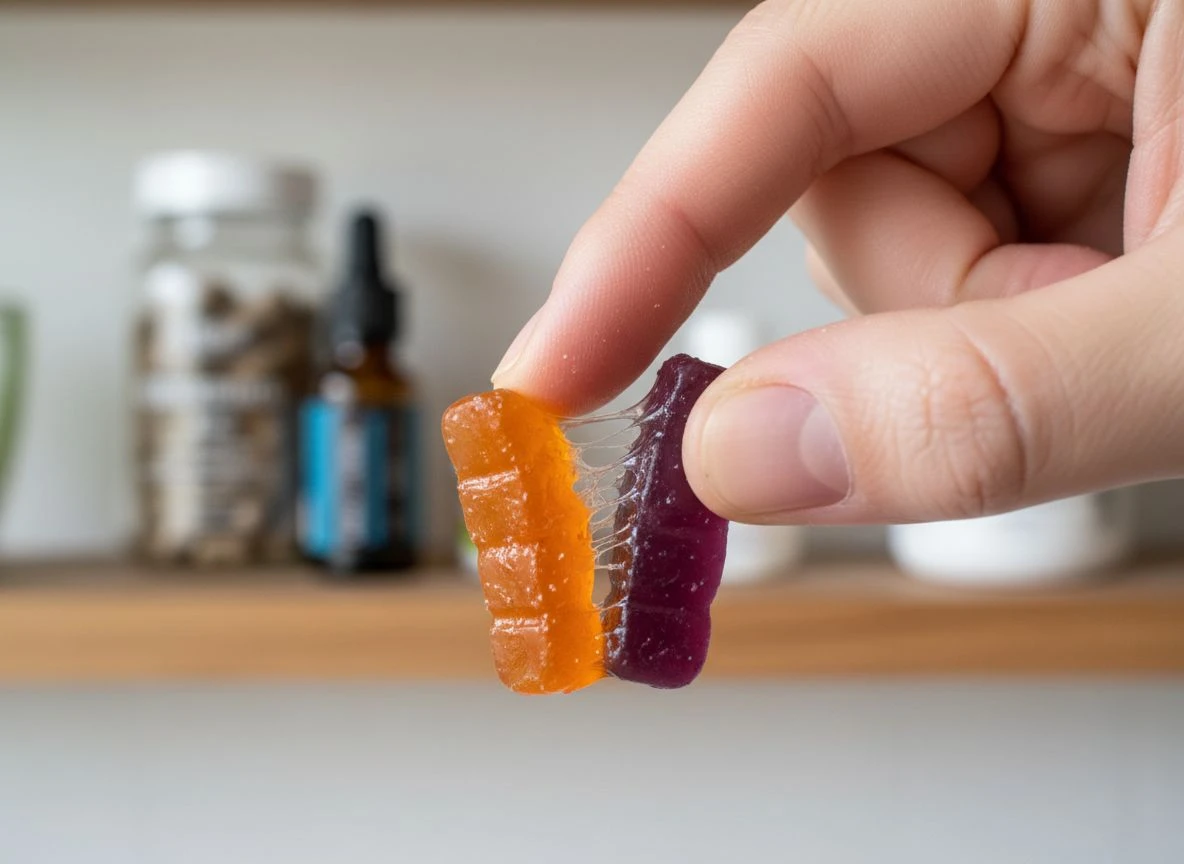
Here’s what to check with your own eyes and fingers:
- Excessive “Sweating” or Oiliness: A slight sheen can be normal. But a greasy feel or visible liquid pooling means the fats are separating. This signals the formula is unstable.
- Fused or Stuck-Together Gummies: This is a cardinal sin. It means the gummies absorbed moisture and melted together. This happens with poor packaging or storage in humidity.
- Inconsistent Color or Shape: Look across the batch. Are they all the same color and shape? Inconsistent or shrunken gummies suggest poor quality control.
- An “Off” Smell: Pop the bottle. It should smell faintly of its flavor. It shouldn’t smell like chemicals, rancid oil, or nothing at all (which can mean heavy use of artificial masks).
These flaws aren’t just cosmetic. They relate directly to stability. A gummy that can’t survive on a shelf certainly won’t survive the “Gym-Bag Stress Test.” This is the idea that quality gummies should withstand some heat and moisture without melting. If yours are already sticky in the bottle, they’ve already failed.
Next time you open a new bottle, perform this simple touch test. Separate a gummy. Is it tacky? Does it leave residue on your fingers? That’s your first clue that something isn’t right.
Verify Third-Party Supplement Testing
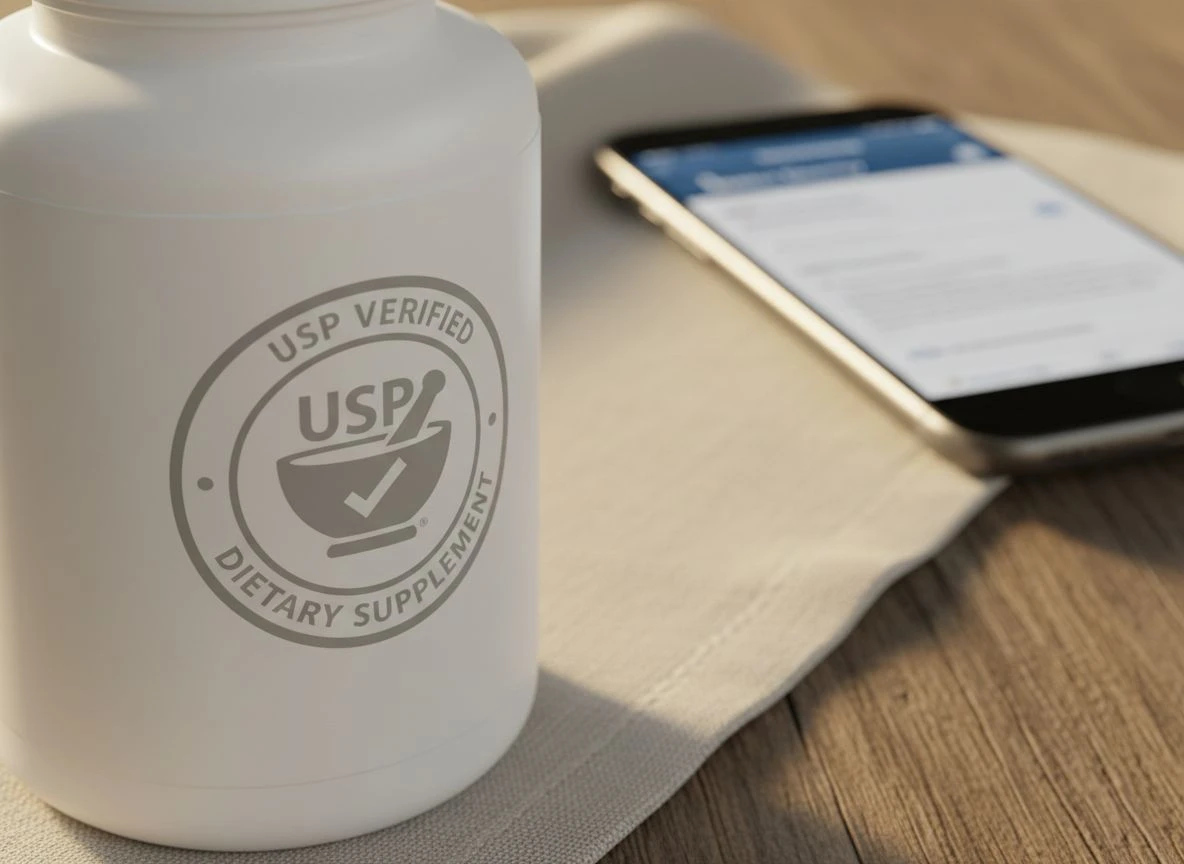
Here’s the most reliable shortcut to quality: a legitimate third-party verification seal. It means an independent group tested the product. They confirmed it contains what the label says, in the right amounts, without harmful contaminants. Ignore vague claims like “Quality Tested.” Look for specific seals from USP, NSF, or ConsumerLab.com. Knowing how to read gummy vitamin label includes looking for these seals.
Here’s the thing—any brand can say they do third-party testing. A real seal means they paid an independent, non-profit organization to audit them, and they passed. These bodies verify ingredient accuracy and test for contaminants like heavy metals and microbes.
Let’s break down the major players:
- USP Verified: The United States Pharmacopeia seal means the product meets strict standards for purity, potency, and manufacturing quality. It’s a gold standard.
- NSF Certified for Sport: From the National Sanitation Foundation. This certification is huge for athletes. It also screens for over 280 substances banned by major sports groups. The standard NSF mark means it’s been tested for safety and label accuracy.
- Informed-Choice/Informed-Sport: Similar to NSF for Sport. This is a trusted global program for athletic supplements. It ensures they are free from contaminants.
Now, the critical step most people miss: a real seal is verifiable. The brand should link directly to the certifying body’s online directory. I always click through. If that USP shield on the bottle isn’t backed by an entry on the official USP website, it’s meaningless.
My final, pro advice? Don’t hesitate to ask a brand for their Certificate of Analysis (CoA) for your specific batch. As industry insiders note, a good company will provide this document. It details the lab results confirming potency and purity. If they refuse or dodge the question, consider it a massive red flag. This seal isn’t just a sticker. It’s your proof.
Your Gummy Vitamin Buying Checklist
You are no longer a passive consumer. You’re now armed with a critical eye. This isn’t about cynicism—it’s about cutting through the noise to find the genuinely great products. To make it stick, here’s your actionable checklist. Download or screenshot this for your next purchase. It encapsulates everything you need to know about how to read gummy vitamin label.
Your Gummy Label Due Diligence Checklist:
- Verify the Vault: Look for a legitimate third-party verification seal (USP, NSF, ConsumerLab). Then, actually click through to the certifying body’s online directory. Confirm it’s current and valid. This is your strongest shortcut.
- Scrutinize the “Other Ingredients”: Check the list below the Supplement Facts. If sugar (or syrups) is a top ingredient, pause. Be wary of cheap fillers like maltitol or a long list of artificial colors.
- Decode the “Supplement Facts” Panel:
- Ensure key nutrients meet at least 50% of the Daily Value.
- Reject proprietary blends that only list a total weight for active ingredients.
- Calculate the sugar-to-nutrient ratio. If grams of sugar rival or exceed grams of the key active, it’s candy in disguise.
- Understand the “Best By” Date: Know that manufacturers often use “overages.” A recent production date or long shelf life remaining is ideal.
- Perform a Physical & Claim Audit: Check for sweating, sticking, or odd smells. Be very skeptical of any “miracle cure” or disease-treatment claims. They’re illegal for supplements and a giant red flag.
This is what I run through with every bottle I test. It takes 60 seconds. It separates the quality contenders from the marketing hype. Fantastic, effective gummies absolutely exist. Finding them just requires this critical eye. For vetted examples that pass this test, explore our in-depth reviews.

I founded Best Gummy Reviews after discovering shocking quality gaps during my own vitamin D treatment. With 8+ years in nutrition research, I combine lab science with real-world testing to tell you what actually works. I’m thorough but straightforward—supplements should complement your healthy habits, not replace them.