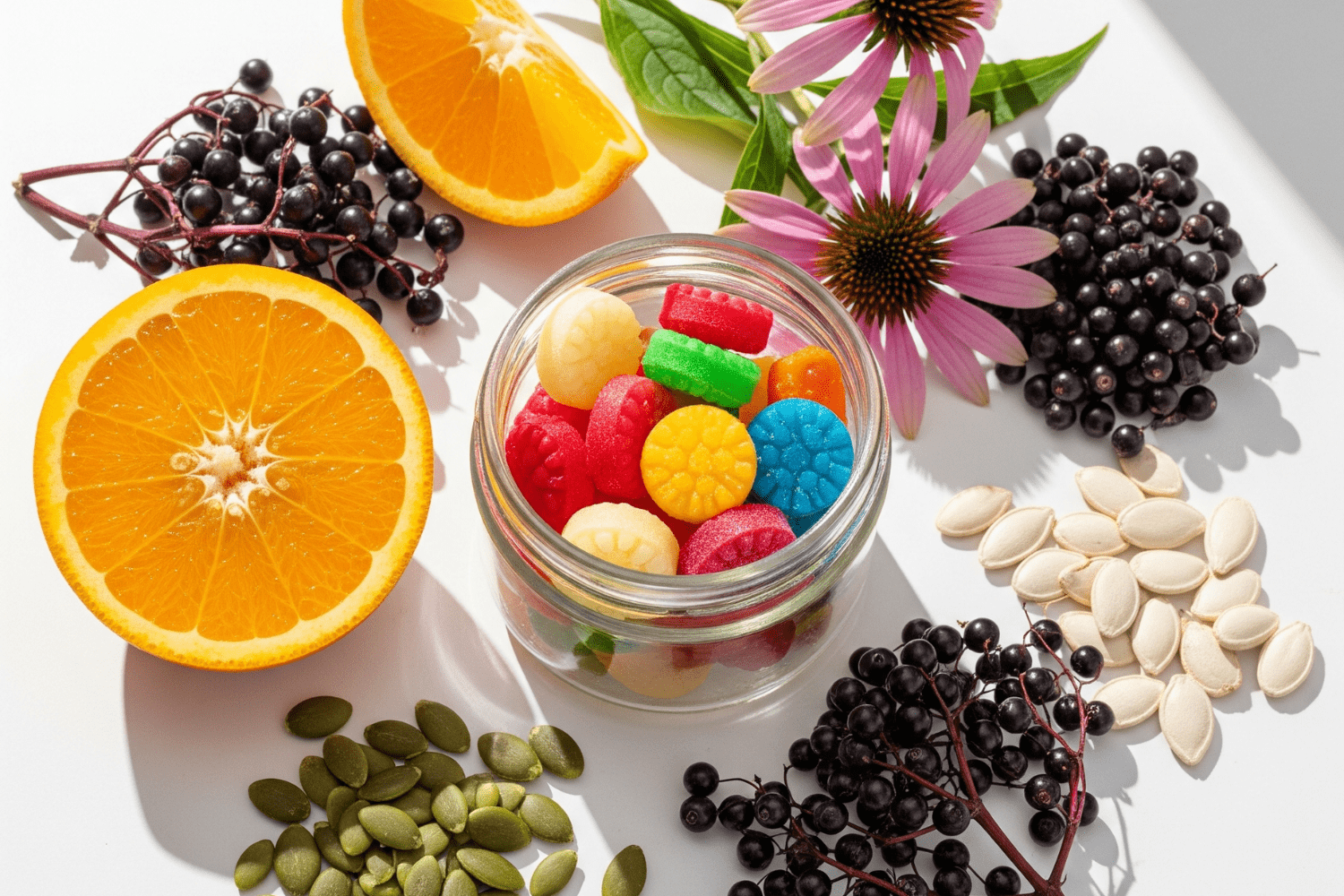


Okay, let’s talk about nootropic gummies – specifically, which brain gummies actually work and which ones are basically expensive candy. When cognitive gummies first started popping up everywhere, I rolled my eyes so hard I probably improved my own brain function. Another supplement trend promising to unlock your mental superpowers? Please.
But here’s the thing – after months of digging through research papers and actually testing these memory gummies myself, I discovered something way more interesting than the marketing hype suggests. The truth about brain supplements is messier, more nuanced, and honestly… more useful than what most brands want you to know.
The numbers are pretty wild, though. The global nootropics market hit $2.81 billion in 2024. Cognitive enhancement gummy supplements are growing even faster at 9.6% annually through 2030 (1). That’s not just clever marketing – people genuinely want memory support and cognitive enhancement solutions that don’t involve choking down those massive horse pills.
Here’s what I found after all this research: Some nootropic ingredients in focus gummies actually do support cognitive function. But there’s this huge gap between what the studies show works and what you’ll find in most store-bought brain health gummies. And if you’re over 60 looking for memory improvement gummies, or you’re a busy professional trying to optimize focus and concentration… well, this gap matters more than you’d think.
- Our Pick: Sunday Scaries Mushroom Gummies
- Brain Gummies Research: What Actually Works
- Nootropic Gummies Manufacturing: Hidden Problems
- Nootropics Regulations: What You Need to Know
- Best Cognitive Support Gummies: Buying Guide
- Cognitive Enhancement: Setting Realistic Expectations
- Nootropic Gummies FAQ: Your Questions Answered
- Q: How do brain gummies dosages compare to research studies?
- Q: How long before I see cognitive benefits from focus gummies?
- Q: Are brain health gummies safe for daily long-term use?
- Q: Can I take cognitive gummies with my medications?
- Q: How do I spot quality nootropic gummies that work?
- Q: How do I know if brain gummies are actually working?
- Q: Any sugar-free cognitive gummies for diabetics?
- Q: Should I cycle brain health gummies or take them continuously?
- Best Cognitive Support Gummies: My Bottom Line
- References
Our Pick: Sunday Scaries Mushroom Gummies

Sunday Scaries’ Mushroom Gummies pack a solid nootropic punch with 100mg each of Lion’s Mane and Chaga plus 30mg of natural caffeine – a combination that actually makes sense from a formulation perspective, unlike some of the kitchen-sink blends I’ve tested lately. The blood orange flavor genuinely surprised me (in a good way), and I appreciate that they’re transparent about their 30mg caffeine content since too many “natural energy” products leave you guessing. Look, I’m always skeptical about gummy delivery for functional mushrooms, but the dosages here are respectable and the third-party testing gives me confidence they’re delivering what’s on the label.
Brain Gummies Research: What Actually Works
Let me walk you through the heavy hitters in cognitive gummies. I’ve been testing these brain supplements for years now. The research tells a story that’s both more promising and way more complicated than brands want to admit.

Bacopa Monnieri: Best Memory Gummies Ingredient
This one actually impressed me. Bacopa monnieri has the strongest evidence of any ingredient I’ve looked at in memory gummies. It’s this Ayurvedic herb with compounds called bacosides that help your brain’s communication systems work better – which is exactly what you want from natural cognitive enhancement gummies (2,3).
The research is solid here. One study took 76 people aged 40-65 and gave them 300 mg daily of standardized bacopa extract for 84 days. Compared to the placebo group, these folks showed real improvements in retaining new information (4). Another study with 60 healthy elderly subjects found better attention, cognitive processing, and working memory with both 300 mg and 600 mg daily over 12 weeks (5).
Here’s what caught my attention though – you need 8-12 weeks of consistent use before you see benefits from these memory support supplements. This isn’t some instant brain boost. It’s more like slowly training your brain to work more efficiently. The mechanism involves multiple pathways, including protective antioxidant effects that build up over time (6).
Now here’s where it gets frustrating with most brain health gummies: Most products contain 50-150 mg per serving. Way below the 300-450 mg range that actually works in studies. I’ve tested nootropic gummies claiming “research-backed dosages” that deliver maybe half of what the studies used.
For my older readers dealing with memory concerns? This dosage gap in cognitive enhancement gummy supplements is particularly annoying because you’re not getting the full benefit you could be.
Lion’s Mane: Top Focus Gummies Ingredient
This is where things get really interesting from a science perspective. Lion’s mane – one of the most popular ingredients in focus gummies for concentration – contains these unique compounds called hericenones and erinacines that can cross the blood-brain barrier and stimulate nerve growth factor production (7,8).
Think about that for a second. We’re talking about potentially supporting the growth of new brain cells. That’s genuinely remarkable stuff for cognitive function improvement gummies.
Recent research from the University of Queensland identified exactly which compounds are responsible for these effects (9). But here’s where I have to pump the brakes – the human evidence for lion’s mane in brain gummies is still pretty thin.
The most promising study involved 41 healthy adults aged 18-45 who took 1.8 g daily for 28 days. They showed improved performance on cognitive tasks, with some effects showing up as early as 60 minutes after taking it (10). Another study with older adults experiencing mild cognitive issues found improvements with 3 g daily for 16 weeks, though benefits dropped off after stopping (11).
The gummy reality for focus and concentration gummies: Studies use 1.8-3.2 g daily. Most brain health gummies give you 500-1000 mg per serving. You’d need multiple servings to get close to research levels. Plus, lion’s mane tastes… earthy. Mushroomy. It’s challenging to make that palatable in cognitive gummies without messing with the active compounds.
Phosphatidylserine: Memory Support That Works
PS is a phospholipid that’s essential for brain cell membrane function. Your brain needs it for proper neurotransmission – which is why it shows up in so many brain supplements and memory improvement gummies. The thing is, PS levels naturally decline as we age (12,13).
A 2022 review looked at nine studies with 961 participants. The conclusion? PS at 100-300 mg daily positively affects memory in older adults with cognitive decline, with no significant side effects (14). The standard effective dose seems to be 300 mg daily, usually split into multiple doses in quality memory support supplements.
But here’s the manufacturing challenge with nootropic gummies – PS is fat-loving and prone to oxidation. It’s tricky to get into gummy form while keeping it stable (15). Many brain gummies use PS powder mixed with other stuff, which might affect how well your body absorbs it.
Ginkgo Biloba: Mixed Results for Brain Fog
Ginkgo probably has the longest research history of any ingredient in cognitive enhancement supplements. But honestly? The evidence for brain fog relief is all over the place. One big analysis of nine trials using standardized EGb761 extract found modest benefits for cognitive function in dementia patients using 240 mg daily for at least 12 weeks (16,17).
However – and this is important for anyone considering gummies for brain fog – large studies in healthy people have failed to show consistent cognitive benefits (18).
Safety heads-up for older readers: Ginkgo can mess with blood-thinning medications. Definitely talk to your doctor before adding it to your brain supplements routine.
Nootropic Gummies Manufacturing: Hidden Problems
Here’s where my expertise in supplement manufacturing becomes really relevant. Making nootropic gummies involves high temperatures, acidic conditions, and lots of moisture. These conditions create problems for cognitive enhancement ingredients that most brands don’t want to discuss.

Brain Gummies Stability: What You’re Not Getting
I’ve seen lab reports showing significant breakdown of heat-sensitive ingredients during brain health gummies production. PS can undergo oxidation when exposed to gummy manufacturing conditions (19). Some mushroom extracts, including lion’s mane, may lose active compounds under high processing temperatures.
The moisture content in cognitive gummies (typically 10-20%) creates an environment where ingredients can interact with the gelatin-sugar mixture. This might affect both stability and how well your body absorbs them over time (20).
That’s why proper packaging and storage become critical for maintaining potency in nootropic gummies. I’ve tested brain gummies that lost significant potency after just a few months in less-than-ideal storage conditions.
Focus Gummies Absorption: The Unknown Factor
What really bugs me is how little research exists on whether nootropic ingredients work the same way in cognitive enhancement gummy supplements. We know how bacopa extract performs in capsules, but does mixing it with gummy ingredients affect absorption?
Honestly? We don’t have enough data on brain supplements in gummy form. Some manufacturers are using special techniques or adding absorption enhancers, but it’s not consistent across the industry.
Brain Health Gummies Taste: Real Manufacturing Challenge
Let’s be honest – most nootropic ingredients taste awful. Bacopa is intensely bitter. Lion’s mane is earthy and mushroomy. Ginkgo has its own… distinct character. Making effective focus and concentration gummies that actually taste good is genuinely challenging.
Effective taste masking often requires either higher sugar content (bad news for diabetics) or artificial flavoring systems that health-conscious consumers want to avoid. I’ve tested brain gummies with 4 grams of sugar per serving (ridiculous) and others using natural fruit concentrates with less than 1 gram.
The difference in both taste and health impact is huge, especially if you’re managing blood sugar while looking for memory support.
Nootropics Regulations: What You Need to Know
The supplement industry operates under DSHEA – the Dietary Supplement Health and Education Act from 1994. This creates a very different world than prescription medications. Manufacturers are responsible for safety and proper labeling before marketing brain supplements, but they don’t need pre-market approval (21).
Here’s what this means practically: The FDA and FTC have specifically warned companies about making unsubstantiated health claims for nootropic gummies and cognitive enhancement supplements (22). You’ll see claims like “supports cognitive function” or “promotes mental clarity,” but claims like “treats memory loss” or “prevents dementia” are off-limits.
Red flags to watch for in brain health gummies: Any cognitive gummies claiming to treat, cure, or prevent specific cognitive conditions is operating outside the rules. Also be skeptical of claims promising dramatic enhancement or immediate results from memory improvement gummies.
Best Cognitive Support Gummies: Buying Guide
After testing dozens of nootropic gummies and analyzing hundreds of brain supplements, here’s my framework for making smart decisions about cognitive enhancement gummy supplements:
Focus Gummies Quality: What Actually Matters
Standardized Extracts: Look for specific extract details rather than generic plant powders in memory gummies. Bacopa should specify bacoside content (usually 20-55%). Ginkgo should reference EGb761 or similar standardized preparations.
Third-Party Testing: This is non-negotiable for me when evaluating brain health gummies. Companies that invest in independent testing are showing real commitment to quality beyond just marketing.
Transparent Dosing: Avoid proprietary blends that hide individual ingredient amounts in cognitive gummies. You need to know exactly what you’re getting from your nootropic supplements.
Manufacturing Standards: Look for cGMP certification and facility information when choosing brain supplements.
Nootropic Gummies That Work: Dosage Reality
Here’s how research dosages stack up against typical brain gummies formulations:
- Bacopa: Research shows 300-450 mg daily works; most memory gummies give 50-150 mg
- Lion’s Mane: Studies use 1.8-3.2 g daily; focus gummies usually contain 500mg-1g
- Phosphatidylserine: Effective range 100-300 mg daily; cognitive gummies often provide 20-100 mg
- Ginkgo: Research uses 120-240 mg standardized extract; brain health gummies often have less than 100 mg
Brain Supplements: Different Needs, Different Priorities
If you’re 60+: Focus on products with research-backed dosages for memory support, especially bacopa and PS in your cognitive enhancement supplements. Pay attention to sugar content if you’re managing diabetes. Always check with your doctor about potential medication interactions with nootropics.
Brain health gummies for students: Look for products that balance convenience with meaningful dosages. You’re probably better informed about ingredient research, so don’t settle for underdosed formulations just because they taste good.
If you’re a busy professional: Focus and concentration gummies need to fit your lifestyle, but don’t compromise on dosages that actually work for cognitive enhancement.
Cognitive Enhancement: Setting Realistic Expectations
Let me be completely straight about what brain gummies can and can’t do. I’ve been taking various nootropic formulations for months now. The effects are real but subtle.
Cognitive Enhancement Timeline: How Long It Takes
Research shows timelines that are longer than most people expect from brain supplements:
- Bacopa in memory gummies: 8-12 weeks for full memory benefits
- Lion’s mane in focus gummies: Maybe some quick effects, but sustained benefits need weeks
- PS in cognitive gummies: Gradual improvements over 4-8 weeks
- Ginkgo for brain fog: When it works, benefits show up after 4-6 weeks
Brain Health Gummies Benefits: What to Expect
Here’s the reality check about nootropic gummies: we’re talking about modest improvements, not dramatic transformations. In my experience with cognitive enhancement gummy supplements, benefits are more like fine-tuning than overhauling.
You might notice slightly better recall from memory improvement gummies. Improved focus during long tasks from concentration supplements. Less mental fatigue from brain fog gummies. But you’re not suddenly going to develop photographic memory.
The most honest way I can describe it? Quality brain supplements seem to help maintain and optimize what you already have, rather than creating new capabilities.
Nootropics Results: Why They Vary So Much
Genetics, baseline cognitive function, stress levels, sleep quality, and overall health all influence how you’ll respond to cognitive gummies. What works for me might not work the same for you. That’s completely normal with brain health supplements.
Nootropic Gummies FAQ: Your Questions Answered
Q: How do brain gummies dosages compare to research studies?
A: This is the million-dollar question about cognitive enhancement gummy supplements, and honestly, it’s where most products disappoint. Research typically uses higher dosages than commercial brain health gummies provide. Effective bacopa studies use 300-450 mg daily, while many memory gummies give 50-150 mg per serving. This gap means you might get more subtle effects than research shows, or you may need multiple servings to approach research levels.
Q: How long before I see cognitive benefits from focus gummies?
A: Timeline varies a lot by ingredient in nootropic gummies. This is where managing expectations becomes crucial. Bacopa in memory support supplements typically needs 8-12 weeks of consistent use for full memory benefits – it’s not quick. Lion’s mane might show some effects within hours, but sustained benefits from brain supplements require weeks of regular use. If you’re looking for immediate dramatic changes from cognitive gummies, you’ll be disappointed regardless of what you choose.
Q: Are brain health gummies safe for daily long-term use?
A: The nootropic ingredients I’ve reviewed are generally well-tolerated for most adults at recommended dosages, but everyone’s different. The longest safety studies I found were 16-24 weeks, so we don’t have extensive long-term data on cognitive enhancement supplements. Ginkgo might increase bleeding risk, especially if you’re on blood thinners. I recommend starting with shorter cycles (8-12 weeks) and taking breaks to see how you feel with brain supplements.
Q: Can I take cognitive gummies with my medications?
A: This needs individual medical advice, but there are known interactions with nootropics. Ginkgo can mess with blood thinners, antidepressants, and diabetes medications. Lion’s mane might affect blood sugar. Bacopa could potentially enhance effects of certain brain-related medications. Always check with your healthcare provider before combining brain health gummies with prescriptions.
Q: How do I spot quality nootropic gummies that work?
A: Focus on standardized extracts with specific potency guarantees, third-party testing verification, and transparent dosage info in cognitive enhancement gummy supplements. Avoid proprietary blends that hide individual amounts. Look for companies providing batch-specific test results. Be skeptical of dramatic claims or promises of immediate results from brain supplements. Quality manufacturers reference published research and give realistic timelines for memory improvement gummies.
Q: How do I know if brain gummies are actually working?
A: This is trickier than it seems because cognitive changes from nootropic supplements are often gradual and subjective. I recommend keeping a simple daily log of mental clarity, focus during tasks, and memory recall for at least 4-6 weeks before judging cognitive enhancement gummy supplements. Look for trends rather than day-to-day changes. Consider having a trusted friend or family member give observations about your cognitive performance – sometimes others notice changes from brain health gummies before we do.
Q: Any sugar-free cognitive gummies for diabetics?
A: Yes, though choices are more limited in brain supplements. Some manufacturers use sugar alcohols like erythritol or natural sweeteners like stevia in their nootropic gummies. But heads up – sugar-free formulations often have different textures and might cause digestive issues in sensitive people. Even “sugar-free” brain gummies can affect blood glucose through other carbs, so monitor your levels when starting any new cognitive enhancement supplements.
Q: Should I cycle brain health gummies or take them continuously?
A: Research doesn’t give clear guidance on cycling nootropics, but based on available studies and my own testing of cognitive gummies, I lean toward cycling. Most trials run 8-16 weeks, suggesting benefits plateau after a while. I personally do 2-3 month cycles with 1-2 week breaks to assess baseline function and avoid developing tolerance to brain supplements.
Best Cognitive Support Gummies: My Bottom Line
After all this research and testing, here’s what I actually recommend: nootropic gummies can provide modest benefits when formulated properly, but most commercial brain health gummies fall short of research-validated dosages.
For memory support if you’re older: Bacopa shows the strongest evidence in memory improvement gummies, but you need products providing at least 250-300 mg daily of standardized extract. PS at 100+ mg daily can add extra support in cognitive enhancement supplements.
For focus and mental clarity if you’re younger: Lion’s mane shows promise for long-term brain health, but effective dosages are hard to achieve in focus gummies without multiple servings. Think of this more as a long-term investment than an immediate performance booster from brain supplements.
Quality over marketing in nootropic gummies: Choose companies that invest in third-party testing, use standardized extracts, and make realistic claims about benefits and timelines for cognitive enhancement.

Look, these brain supplements work best as part of a bigger picture that includes good sleep, regular exercise, stress management, and eating well. The convenience of cognitive gummies shouldn’t replace these fundamentals, but when chosen wisely, they can meaningfully support your cognitive goals.
The brain health gummies market will keep evolving as formulation tech improves. But sustainable benefits from nootropic supplements require evidence-based choices and realistic expectations about what these cognitive enhancement gummy supplements can actually deliver.
References
- Grand View Research. (2024). U.S. Nootropics Market Size & Share | Industry Report, 2030. https://www.grandviewresearch.com/industry-analysis/us-nootropics-market-report
- Roodenrys, S., et al. (2002). Effects of a Standardized Bacopa monnieri Extract on Cognitive Performance, Anxiety, and Depression in the Elderly. https://pmc.ncbi.nlm.nih.gov/articles/PMC3153866/
- NCBI Bookshelf. (2024). Bacopa monnieri – StatPearls. https://www.ncbi.nlm.nih.gov/books/NBK589635/
- Sage Journals. (2019). Bacopa monnieri, a Neuroprotective Lead in Alzheimer Disease. https://journals.sagepub.com/doi/full/10.1177/1177392819866412
- Wiley Online Library. (2012). Effects of 12-Week Bacopa monnieri Consumption on Attention. https://onlinelibrary.wiley.com/doi/10.1155/2012/606424
- Frontiers. (2021). The Neurocognitive Effects of Bacopa monnieri and Cognitive Training. https://www.frontiersin.org/journals/aging-neuroscience/articles/10.3389/fnagi.2021.638109/full
- PMC. (2023). The Acute and Chronic Effects of Lion’s Mane Mushroom Supplementation. https://pmc.ncbi.nlm.nih.gov/articles/PMC10675414/
- Alzheimer’s Drug Discovery Foundation. (2024). Lion’s Mane & Your Brain. https://www.alzdiscovery.org/cognitive-vitality/ratings/lions-mane
- University of Queensland. (2023). Mushrooms magnify memory by boosting nerve growth. https://www.uq.edu.au/news/article/2023/02/mushrooms-magnify-memory-boosting-nerve-growth-0
- PMC. (2023). The Acute and Chronic Effects of Lion’s Mane Mushroom Supplementation. https://pmc.ncbi.nlm.nih.gov/articles/PMC10675414/
- Medical News Today. (2024). Lion’s Mane mushrooms: Uses, benefits, and side effects. https://www.medicalnewstoday.com/articles/323400
- Very Well Mind. (2024). Phosphatidylserine: Benefits, Side Effects, and Dosage. https://www.verywellmind.com/the-benefits-of-phosphatidylserine-89496
- Cleveland Clinic. (2023). Phosphatidylserine: What It Is, Benefits, Side Effects & Uses. https://my.clevelandclinic.org/health/drugs/25129-phosphatidylserine
- Kang, E. Y., et al. (2022). Effect of Phosphatidylserine on Cognitive Function in the Elderly: A Systematic Review and Meta-Analysis. Korean Journal of Family Medicine, 43(1), 47–56. https://koreascience.kr/article/JAKO202210261444695.page
- Kim, H. Y., et al. (2023). Phosphatidylserine: An Overview on Functionality, Processing Techniques, and Applications. Food Chemistry Advances, 3, 100345. https://www.sciencedirect.com/science/article/pii/S2590259823000328
- Frontiers in Pharmacology. (2020). An Updated Review of Randomized Clinical Trials Testing the Improvement of Cognitive Function of Ginkgo biloba Extract. https://www.frontiersin.org/journals/pharmacology/articles/10.3389/fphar.2019.01688/full
- BMC Geriatrics. (2010). Effects of Ginkgo biloba in dementia: systematic review and meta-analysis. https://bmcgeriatr.biomedcentral.com/articles/10.1186/1471-2318-10-14
- PMC. (2016). An Overview of Systematic Reviews of Ginkgo biloba Extracts for Mild Cognitive Impairment and Dementia. https://pmc.ncbi.nlm.nih.gov/articles/PMC5138224/
- Merieux NutriSciences. (2023). Something to Chew On: Analytical Challenges in Testing Gummies. https://www.merieuxnutrisciences.com/na/something-to-chew-on-analytical-challenges-in-testing-gummies/
- Paladugu, N., et al. (2021). Correlation Between Physical and Sensorial Properties of Gummy Confections with Different Formulations During Storage. Gels, 7(4), 256. https://pmc.ncbi.nlm.nih.gov/articles/PMC8292526/
- FDA. (2024). Questions and Answers on Dietary Supplements. https://www.fda.gov/food/information-consumers-using-dietary-supplements/questions-and-answers-dietary-supplements
- Federal Trade Commission. (2019). FTC and FDA Send Warning Letters to Companies Selling Dietary Supplements. https://www.ftc.gov/news-events/news/press-releases/2019/02/ftc-fda-send-warning-letters-companies-selling-dietary-supplements-claiming-treat-alzheimers-disease
While I have extensive experience in consumer product science and supplements, I’m not a healthcare provider. My goal is to provide evidence-based analysis to help you make informed supplement choices, but please consult your doctor before making significant changes to your supplement regimen.

I founded Best Gummy Reviews after discovering shocking quality gaps during my own vitamin D treatment. With 8+ years in nutrition research, I combine lab science with real-world testing to tell you what actually works. I’m thorough but straightforward—supplements should complement your healthy habits, not replace them.