
Table of Contents
What’s the biggest threat to your vitamin gummy? It might not be your sweet tooth, but a basic physics problem. Here’s the truth: a gummy isn’t a stable pill. It’s a living matrix—a humid, acidic gel that’s actually hostile to the nutrients it carries. The DIY recipes online fail because they can’t solve the core stability equation. Professional labs spend millions to crack it.
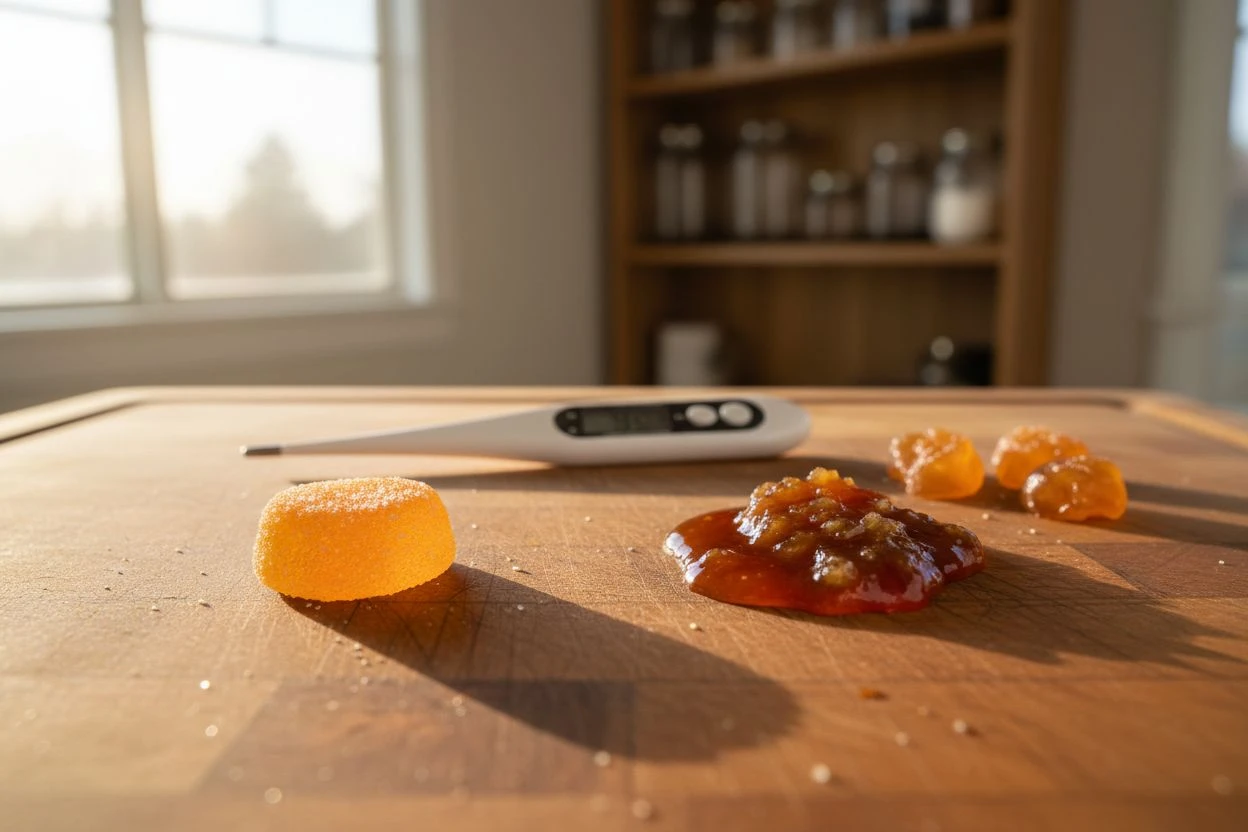
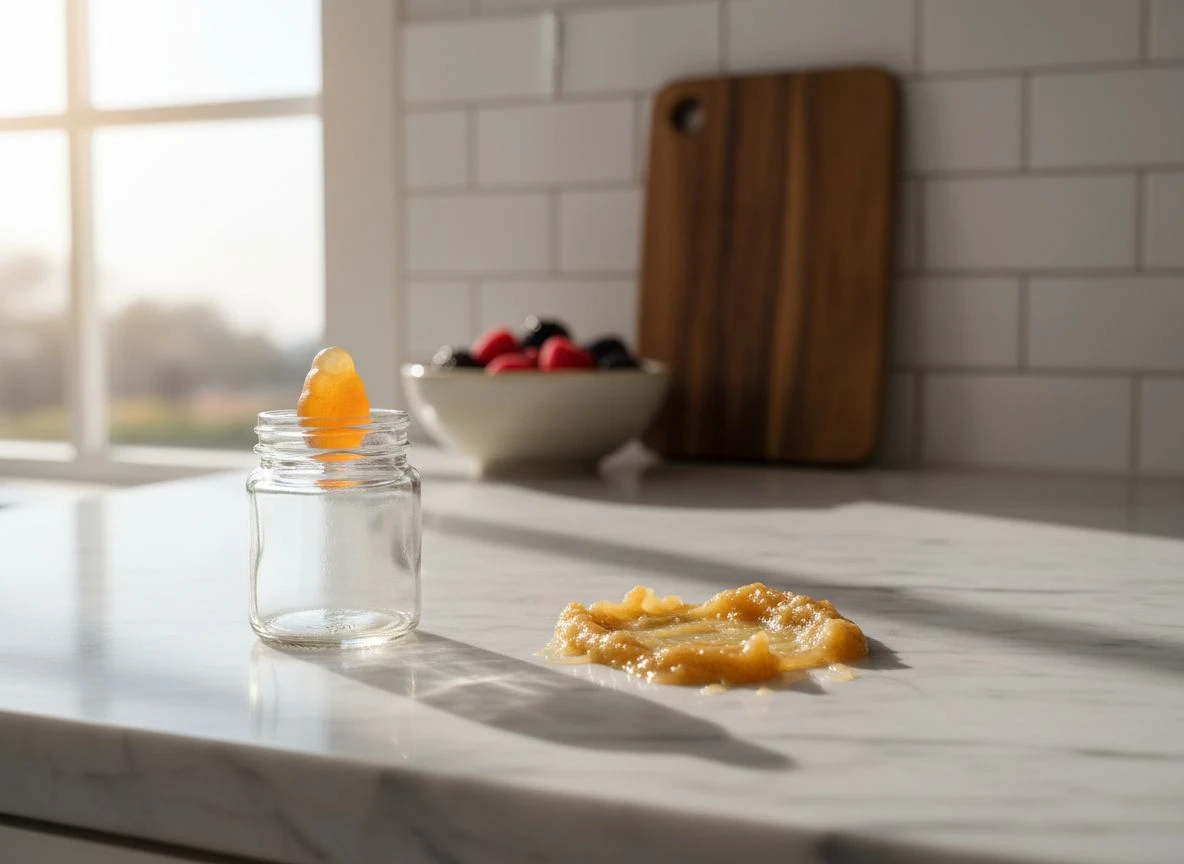
I learned this the hard way. Early on, I tried a “simple” DIY vitamin C gummy recipe. They looked perfect out of the mold. But within a week in a sealed pantry container, they were a sticky, discolored puddle. The vitamin C had oxidized. The pectin broke down. I was left with expensive, degraded syrup. My kitchen, with its changing humidity and no precision controls, was a nutrient deathtrap.
Gummies seem simple, right? Sugar, gelatin, flavor, vitamins. How hard can it be? That’s exactly where the gap between candy and real supplement becomes a chasm. Every part of that cheerful, chewy matrix works against long-term stability. The high moisture content (which makes it chewy) gives a highway for chemical reactions that break nutrients down. The tasty fruit flavors often create an acidic environment that dismantles sensitive vitamins like B12. Even fixing grittiness—by using micro-ionized forms of minerals—adds another layer of complex formulation to prevent separation.
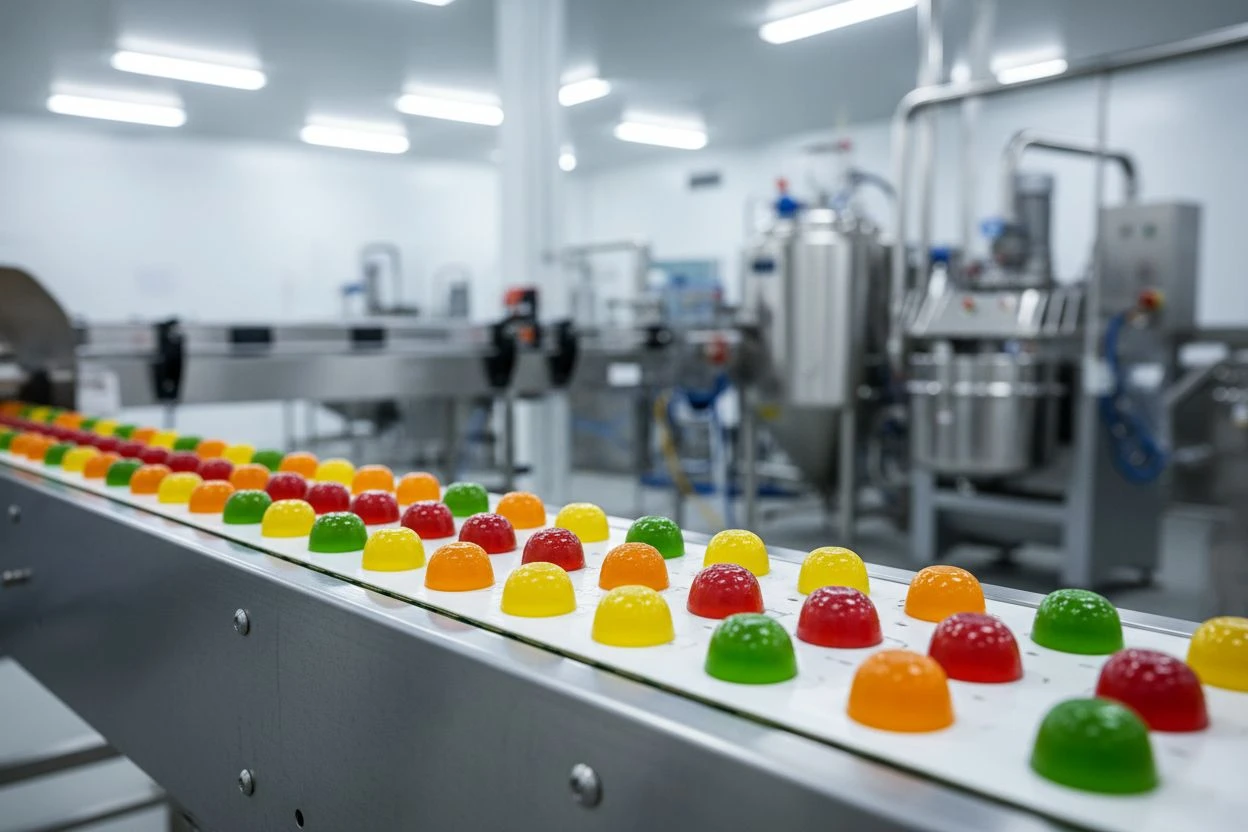
I’ve tested dozens of brands. The ones that keep their potency from the first gummy to the last aren’t using magic. They use meticulous, often proprietary, manufacturing tech that accounts for heat and moisture. This isn’t just cooking. It’s controlled biochemical engineering.
So, let’s pull back the curtain. We’ll move past basic “how gummies are made” into Gummy Manufacturing 201. We’ll cover the precise science of degradation and the advanced tech that stops it. You’ll learn why “water activity” matters more than moisture, which vitamins hate heat, and how ingredients can accidentally destroy each other. By the end, you’ll never look at a gummy bottle—or a kitchen recipe—the same way.
Understanding Gummy Texture and Spoilage Risks
Here’s the technical truth that separates hobbyists from pros: the total moisture content in your gummy is almost irrelevant. The real predictor of its stability—and its eventual doom—is water activity (a_w). This measures the energy state of water molecules. A gummy can feel dry but still have sky-high a_w, creating a hidden playground for degradation and mold.
What Is Water Activity in Gummy Making?
Think of your gummy as a crowded room. Total moisture content is just a headcount of all water molecules. Water activity, though, measures how many are free to mingle, cause trouble, and join chemical reactions. “Bound” water is locked up by ingredients like sugars. “Free” water is mobile. That mobility drives nutrient breakdown and microbial growth.
I learned this from a formulator. He had a perfect-looking, dry-to-the-touch probiotic gummy batch fail. “The moisture meters said we were golden,” he told me. “But the a_w meter told the real story. We had enough free water for mold to throw a party, and it did.” The gummies never felt wet, but the water activity was above 0.6—firmly in the microbial danger zone. Measuring only moisture is like checking a car’s fuel but ignoring the engine temperature. You’re missing the critical data.
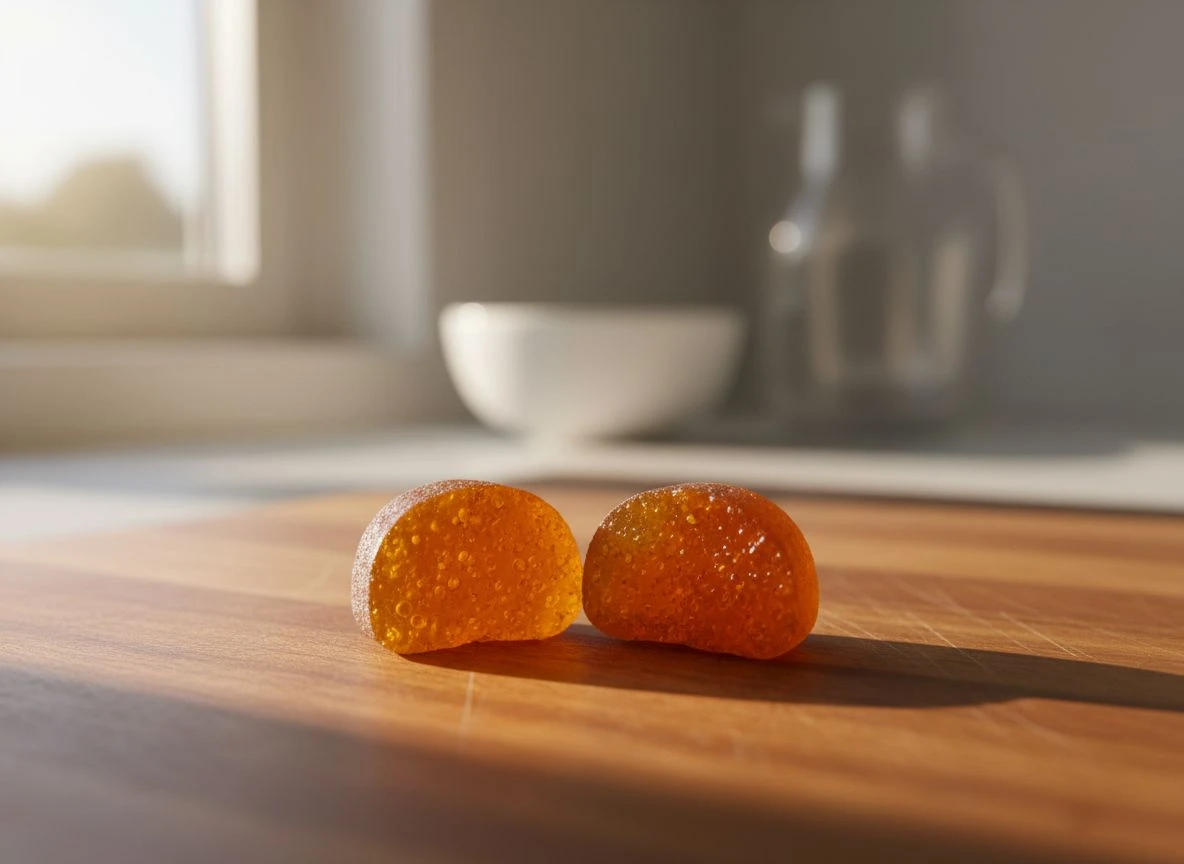
Safe Water Activity Levels for Gummy Stability
Water activity isn’t just about mold. It speeds up nearly every chemical reaction that destroys nutrients. Here’s the breakdown:
- a_w > 0.6: Welcome, microbes. Yeast, mold, and bacteria can grow. This is the absolute failure point.
- a_w 0.3 – 0.6: The primary chemical degradation zone. Most gummies live here, unfortunately. In this range, free water molecules fuel oxidation and hydrolysis. These are the two main processes that dismantle vitamins like C and B12. The higher the a_w, the faster the breakdown.
- a_w < 0.3: Generally safe for chemical stability. But it’s nearly impossible for a palatable, chewy gummy to hit this.
The manufacturing goal is to drive a_w as low as possible while keeping an edible texture. That’s the tightrope.
Preventing Gummy Case Hardening
This is where humidity control in the drying room is non-negotiable. If the air is too dry (low relative humidity), the gummy’s exterior dries out fast. It forms a hard shell—case hardening. That shell seals in all the internal moisture and high a_w. It creates a soggy, unstable center that can never properly cure. You get a gummy that’s leathery outside, a syrup pit inside, and a nutrient-degrading mess throughout.
The ideal drying phase, as industrial dehumidification guides note, keeps a relative humidity (RH) of 35-40%. This lets moisture migrate evenly out of the entire gummy matrix. It lowers the overall water activity without trapping it inside. It’s a slow, controlled exodus, not a panicked lockdown.
So when a brand brags about “low moisture,” ask yourself: are they talking about the irrelevant headcount or the true culprit? The culprit is the energetic, free water ready to break down your vitamins. The difference is everything.
Heat-Resistant Gummy Vitamins Explained
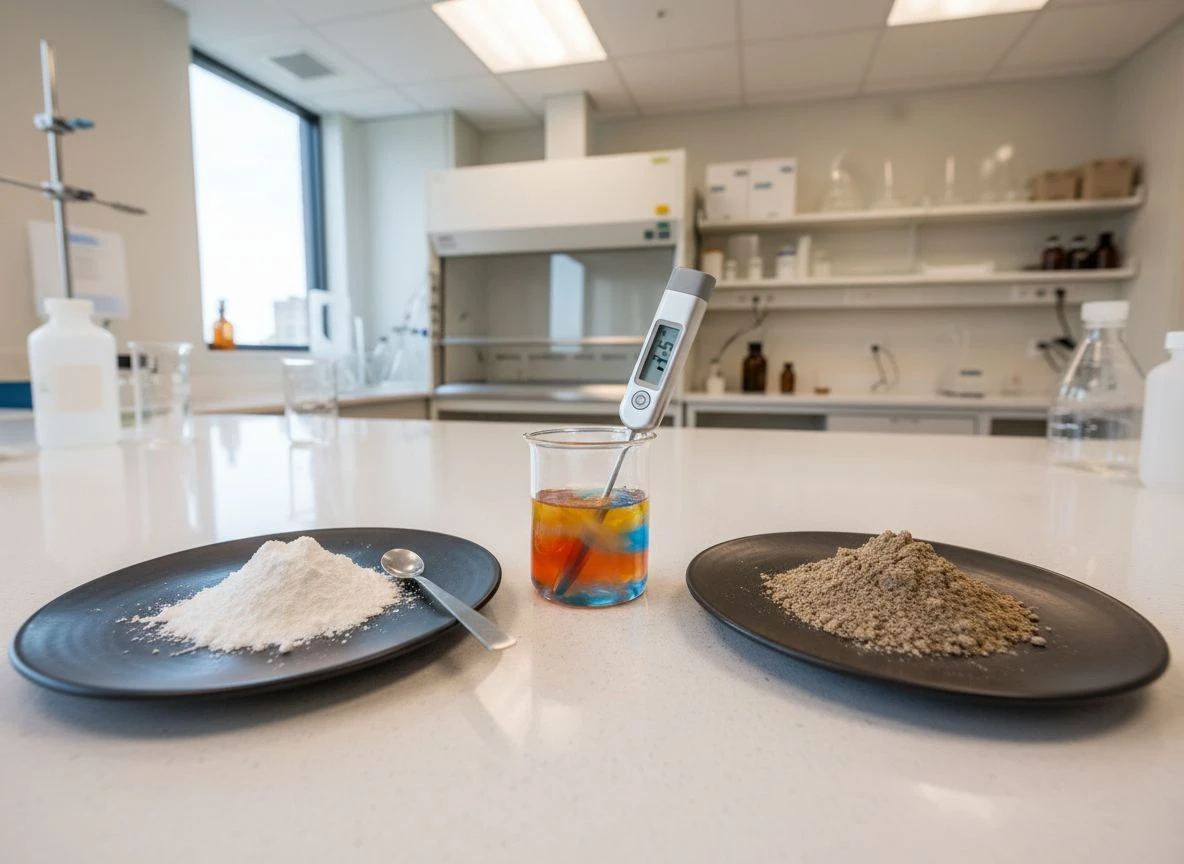
Here’s the breakdown. Not all nutrients in your gummy panic at the same temperature. Some start breaking down at mild heat. Others are chemically rugged but cause physical havoc in the matrix. Knowing this hierarchy explains why a “one-temperature-fits-all” process is a sure way to waste expensive ingredients.
The most sensitive players are probiotics and vitamin C. Let’s start with vitamin C (ascorbic acid). Research is clear: it begins to degrade above 70°C (158°F). That’s common in many mixing and depositing phases. But damage starts earlier. A 2026 NIH-published study on vitamin C gummy stability found a problem. Under accelerated conditions of 40°C (104°F) and 75% relative humidity—simulating a hot, humid warehouse—conventional vitamin C gummies degraded significantly in just weeks. Heat supercharges oxidation. It turns your antioxidant into a brownish, ineffective compound.
Then there are probiotics, the ultimate divas. Their goal isn’t just chemical stability; it’s survival. Most standard gummy cooking temperatures are a death sentence for delicate bacterial cultures. This is why good probiotic gummy brands use proprietary, low-temperature processes. Some use stabilized spores designed to withstand the heat. If they don’t, you’re paying for dead cells.
B vitamins are in the middle. They’re more stable than vitamin C but can still fall apart under prolonged heat. This is especially true in the acidic environment of a fruit-flavored gummy. Riboflavin (B2) also breaks down in light. So heat plus light is a double whammy.
Now, here’s the curveball: minerals like calcium and iron are heat-stable. Their atoms don’t break down under thermal stress. So why are they a manufacturing headache? It’s about physics and chemistry within the matrix. First, their raw forms are gritty. That ruins the smooth chew. Solving that requires micro-ionization—turning them into ultrafine powders. Second, and more critical, minerals like iron can act as pro-oxidants. In a warm, moist gummy, they can speed up the destruction of their sensitive vitamin neighbors (like vitamin C). You can’t just toss them in. You have to engineer their isolation.
So, what does a practical heat-sensitivity matrix look like for a formulator?
| Nutrient | Primary Heat Risk | Key Manufacturing Solution |
|---|---|---|
| Probiotics | Cell death at >40-50°C | Low-temp processing; spore forms; adding after cooking |
| Vitamin C | Oxidation/degradation >70°C | Encapsulation (liposomal, casein gel); antioxidant co-factors |
| B Vitamins | Degradation in heat+acid | pH buffering; microencapsulation; less time at high heat |
| Minerals (Ca, Fe, Zn) | Not heat degradation | Micro-ionization for texture; barriers to stop pro-oxidant effects |
The takeaway? A quality gummy isn’t just cooked; it’s engineered in layers. The best products treat each nutrient by its place in this hierarchy. They use technologies like encapsulation and precise temperature control during production. This is how they deliver what’s actually on the label.
How Gummy Ingredients Degrade Each Other
Here’s a hidden risk. Even with perfect heat and moisture control, the ingredients inside a gummy can start a chemical chain reaction. They destroy each other’s potency. It’s a failure of formulation, not just process. Nutrients trapped together speed up each other’s demise.
The most common culprit is mineral-catalyzed oxidation. Think of minerals like iron as tiny, reactive metal pieces. In the moist, oxygen-rich gummy environment, they can act as catalysts. They speed up the oxidation of sensitive vitamins. This is the brutal irony behind formulas that pair vitamin C with iron for “enhanced absorption.” In reality, that un-encapsulated iron can rapidly oxidize the vitamin C it’s meant to help you absorb. Your antioxidant turns into a useless, browned compound. I’ve seen batches fail stability testing because no one accounted for this pro-oxidant effect inside the matrix.
Then there’s pH-driven hydrolysis. The delightful tartness from citric or malic acid in fruit flavors creates an acidic environment. This is hostile to certain vitamins. Research indicates vitamins like cyanocobalamin (B12) and vitamin A are especially vulnerable to breakdown in low-pH conditions over time. The very acids that make a gummy tasty can quietly dismantle the nutrients you bought it for.
Even physically, ingredients work against each other. As one source notes, calcium can reduce the water-holding capacity of a gelatin base. This forces formulators to change the entire gelling system. The change can accidentally affect how the matrix holds moisture. It might raise water activity and put everything else at greater risk.
The takeaway? A gummy is an ecosystem. Smart formulation isn’t just about what to include. It’s understanding the relentless chemistry that happens after the mixing bowl is empty.
Calculating True Gummy Vitamin Overages
Here’s the short answer. To guarantee a gummy meets its label claim at expiration, makers often add 20–50% more of a nutrient than what’s listed. This “overage” makes up for inevitable losses during making and storage. But it’s a precise calculation, not a guess. Add too little and you fail compliance. Add too much and you risk unexpected toxicity.
So, how do quality managers find that number? They’re solving for three things: processing loss, shelf-life degradation rate, and a safety margin.
First, there’s the immediate hit from initial processing. Mixing, heating, and depositing the gummy batter can degrade sensitive ingredients right away. Vitamin C might lose 5-15% of its potency just from the heat. That loss has to be baked in from the start.
The bigger variable is the expected degradation rate over the shelf life. This is where water activity (a_w) and packaging come in. A gummy in a permeable pouch in a humid climate degrades faster than one in a blister-packed foil pouch in a cool, dry place. Formulators use stability data—often from accelerated aging studies—to model how much potency drops each month. If a nutrient is projected to lose 30% over 24 months, the overage must at least cover that.
Finally, they add a small safety margin (often 5-10%). This accounts for batch-to-batch variability. It ensures they consistently exceed the label claim, not just barely meet it.
Think like a quality manager. Your goal isn’t to maximize overage; it’s to minimize it while still guaranteeing potency. Why? Because excessive overages aren’t just wasteful—they can be dangerous. For nutrients with upper tolerance limits, like vitamins A or D, a gummy with a 50% overage could push someone toward toxicity over time.
The best manufacturers use precise, nutrient-specific data. They keep overages as low and as safe as possible. It’s a hidden sign of quality: enough overage to ensure you get what you paid for, but not so much that it becomes a liability.
Choosing Protective Gummy Coatings
To stop heat and moisture from destroying nutrients, you can’t just fight the environment. You have to shield the ingredient itself. This is where encapsulation tech separates basic gummies from advanced ones. Think of it as choosing the right armor for each knight in your supplement castle.
The best proof is from a 2026 NIH-funded study. Researchers tested conventional vitamin C gummies against ones made with In Situ Soft Sphere Integrated (ISSI) liposomal tech. After two brutal weeks at 60°C and 75% relative humidity, the conventional gummies degraded significantly. The liposomal ones? Zero degradation. The vitamin was perfectly protected inside its lipid fortress. That’s the power of smart encapsulation.
Lipid Coatings for Gummy Moisture Control
This is your best defense against humidity. Tech like the liposomes in the NIH study, or phospholipid encapsulation, wraps the nutrient in a fatty layer. It’s inherently water-repellent. It’s like giving a water-soluble vitamin a tiny raincoat. This is crucial because water molecules drive hydrolytic degradation and microbial growth. You’ll see this with high-end vitamin C and CoQ10. Yes, some brands tout “Golden Shield” tech. That’s often a fancy term for a basic starch coating. True lipid encapsulation is more sophisticated and expensive. But as the stability data shows, it works.
Polymer Coatings for Heat Protection
For fighting heat during processing and physical abrasion, polymer matrices are the go-to. A perfect example is encapsulating Vitamin C in a casein gel. Research notes this shields against oxygen, moisture, and light. These protein or polysaccharide-based networks (like gums, starches, or special pectins) create a physical cage. They absorb the kinetic energy from heat. This stops it from directly breaking the nutrient’s chemical bonds. They’re also great for masking mineral grit. They prevent reactive ingredients from touching each other inside the gummy.
Adding Coatings Without Melting Gummies
Here’s the catch. You can’t toss these delicate microcapsules into an 85°C melting pot. The process would destroy them. Advanced manufacturers use post-gelation infusion or “cold-process” blending. The protective shells are gently mixed into the syrup after it cools. It must be below the degradation threshold of the core nutrient. Then it’s deposited. This needs precision timing and temperature control. But it’s the only way to ensure the encapsulation you paid for survives its own manufacturing.
Humidity Control for Gummy Manufacturing
Here’s the truth. You can formulate the perfect gummy with cutting-edge encapsulation. But if your manufacturing environment is out of whack, it’s all for nothing. The real battle for stability is fought in the air itself. Keeping a precise relative humidity (RH) between 35% and 40% during drying isn’t a suggestion. It’s the non-negotiable rule. It prevents texture disasters and preserves your investment in those sensitive nutrients.
You can see the results of an imbalance on the shelf. Sticky packaging, where gummies fuse to the liner or each other? That’s a classic sign the drying room humidity was too high. It trapped moisture at the surface. The opposite problem is case hardening. The exterior dries too fast in low humidity, forming a crust. It seals liquid syrup inside. That batch is a total loss. Hitting that 35-40% RH sweet spot allows uniform moisture migration out of the gummy. You get a stable, shelf-ready texture.
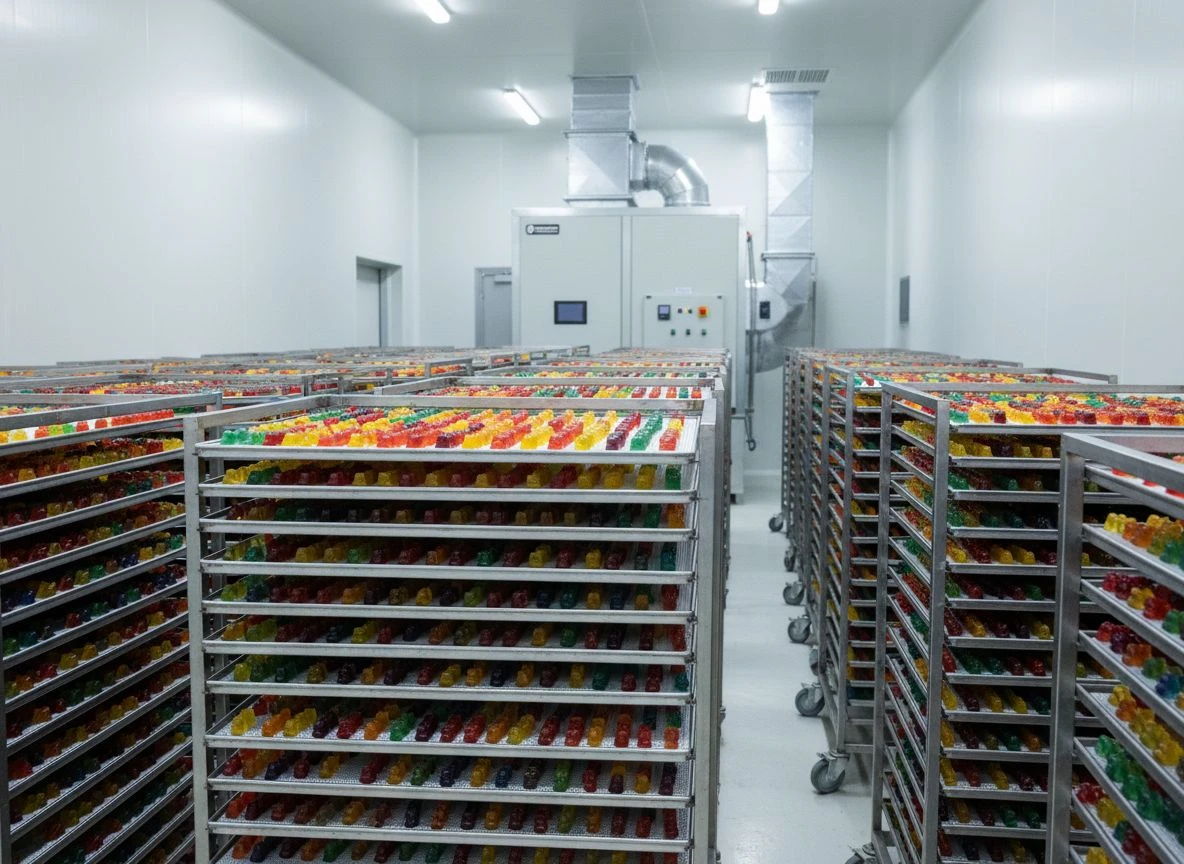
Here’s the thing about scaling up. More product in the drying room means more moisture released from the product. A small test batch might not overwhelm a basic system. But full-scale production pumps gallons of water into the air. This is where equipment choice becomes critical. Standard refrigerant dehumidifiers struggle to maintain low humidity efficiently and consistently. For 24/7 production, desiccant dehumidifiers are far better. They use a silica-coated honeycomb wheel to adsorb moisture from the air. They can keep that tight RH window no matter the ambient load.
Modern facilities don’t just set a dial and hope. They use networked sensor tech for real-time monitoring and process control. Sensors placed throughout the drying space give continuous data. This allows for automated adjustments to dehumidifier output and air circulation. It closes the loop. It ensures every gummy, in every corner of the room, dries under identical, optimal conditions. It’s the final, critical piece of the environmental control puzzle.
How to Test Gummy Supplement Stability
Here’s the uncomfortable truth. A label claim is just a promise. The proof is in the validation. For gummies, that validation is mechanically tricky. Standard grinding methods to homogenize samples for analysis generate heat. Enough heat to melt the gummy matrix. It thermally degrades vitamins before the test even begins. Accurate potency data needs labs to use specialized, cryogenic or temperature-controlled homogenization. Your stability is only as good as your testing.
This creates a paradox. To prove a gummy can withstand heat, you must first analyze it without applying destructive heat. That’s why quality control isn’t a single test. It’s a protocol. It starts with HPLC (High-Performance Liquid Chromatography) assays. These quantify exact nutrient levels. Microbial swabs ensure safety.
But the real validation is accelerated stability testing. This is where the degradation principles we’ve discussed get tested. Labs store samples at harsh conditions, like 40°C and 75% relative humidity. This simulates months of shelf life in just weeks. If a gummy’s vitamin C plummets under these stresses, the formulation has failed. It doesn’t matter what the initial assay said.
This testing is the only way to move beyond hopeful overages to predictable stability. It reveals if the encapsulation shields hold. It shows if the moisture barrier is real. It proves if your manufacturing environment was truly controlled. Without it, you’re just guessing. And in nutraceuticals, guessing isn’t good enough.
Why Is My Gummy Supplement Failing?
When your gummy batch goes wrong, the symptom is just the start. Here’s a diagnostic map. It connects common problems back to their root cause in the process, so you can fix it next time.
Problem: Low Final Potency (Nutrient Degradation)
- Check: Was the sensitive nutrient (e.g., Vitamin C, probiotics) added before high-heat steps (≥70°C)?
- Yes → Solution: Reformulate. Switch to adding it after processing (cold-mix) or use protective tech like lipid encapsulation for that ingredient.
- No → Check: Is the water activity (a_w) too high (>0.5) in the final product?
- Yes → Solution: Extend controlled drying (35-40% RH). Or, reformulate with humectants to bind more free water.
- No → The degradation is likely oxidative. Solution: Review packaging. Use nitrogen flushing and high-barrier, opaque packaging.
Problem: Texture Inconsistency (Too Hard, Too Soft, Gritty)
- Check: Is the issue gritty mouthfeel from minerals?
- Yes → Solution: Use micro-ionized mineral forms and increase mixing time. This needs testing.
-
Check:
Is the base vegan (pectin)?
- Yes → This is a calibration issue. Solution: Precisely control calcium source and addition timing for cross-linking. This is notoriously hard to scale.
- No (Gelatin) → Check: Was the gelatin hydrated properly (40-50°C for 30-60 mins)?
- No → Solution: Standardize hydration time/temp.
- Yes → The issue is moisture migration. Check drying room RH logs for spikes or drops outside 35-40% RH. Correct environmental controls.
Problem: Microbial Growth or Unexpected Melting
- Check: Is the water activity (a_w) above 0.6?
- Yes → The product is inherently unstable. Solution: This is a formulation failure. You must reformulate to lower a_w with different sweeteners/humectants. Then re-run accelerated stability testing.
- No → The contamination was introduced after production. Solution: Audit packaging line sanitation and sealing integrity.
Making Informed Gummy Supplement Choices
So, after all this science, what’s the practical takeaway? Gummy stability isn’t magic. It’s a battle against physics and chemistry. You win with smart formulation, precise process control, and rigorous testing. When these three align, modern manufacturing can hit that 95%+ yield of stable, potent nutrients. When one leg is weak, you get guessing. And in nutraceuticals, guessing isn’t good enough.
The final product in your hands is the result of this entire journey. High-quality, bioavailable ingredients are the non-negotiable start. Airtight, high-barrier (often opaque) packaging is your last defense against moisture and oxygen. And controlled, cool, dry storage by you, the consumer, is the essential final step. It preserves what the manufacturer worked so hard to create.
This is why my strongest advice is to look for brands that openly discuss their manufacturing standards. A company transparent about using jacketed mixers, desiccant dehumidifiers, cold-mix addition, or accelerated stability testing is showing you their work. They’re investing in the invisible infrastructure that makes the visible label claim trustworthy. Your most powerful tool is asking: “How do you know this will last?” The answer should involve more than hope.

I founded Best Gummy Reviews after discovering shocking quality gaps during my own vitamin D treatment. With 8+ years in nutrition research, I combine lab science with real-world testing to tell you what actually works. I’m thorough but straightforward—supplements should complement your healthy habits, not replace them.